Suspension and tires
Uneven Tire Wear: Causes and Diagnostic Steps
Published:
Edited and fact-checked by: Jacob Bowen
General information; vehicle-specific diagnosis requires an inspection. How we prepare our guides · This page reserves space for ads. Advertising policy · Privacy choices
The quick answer
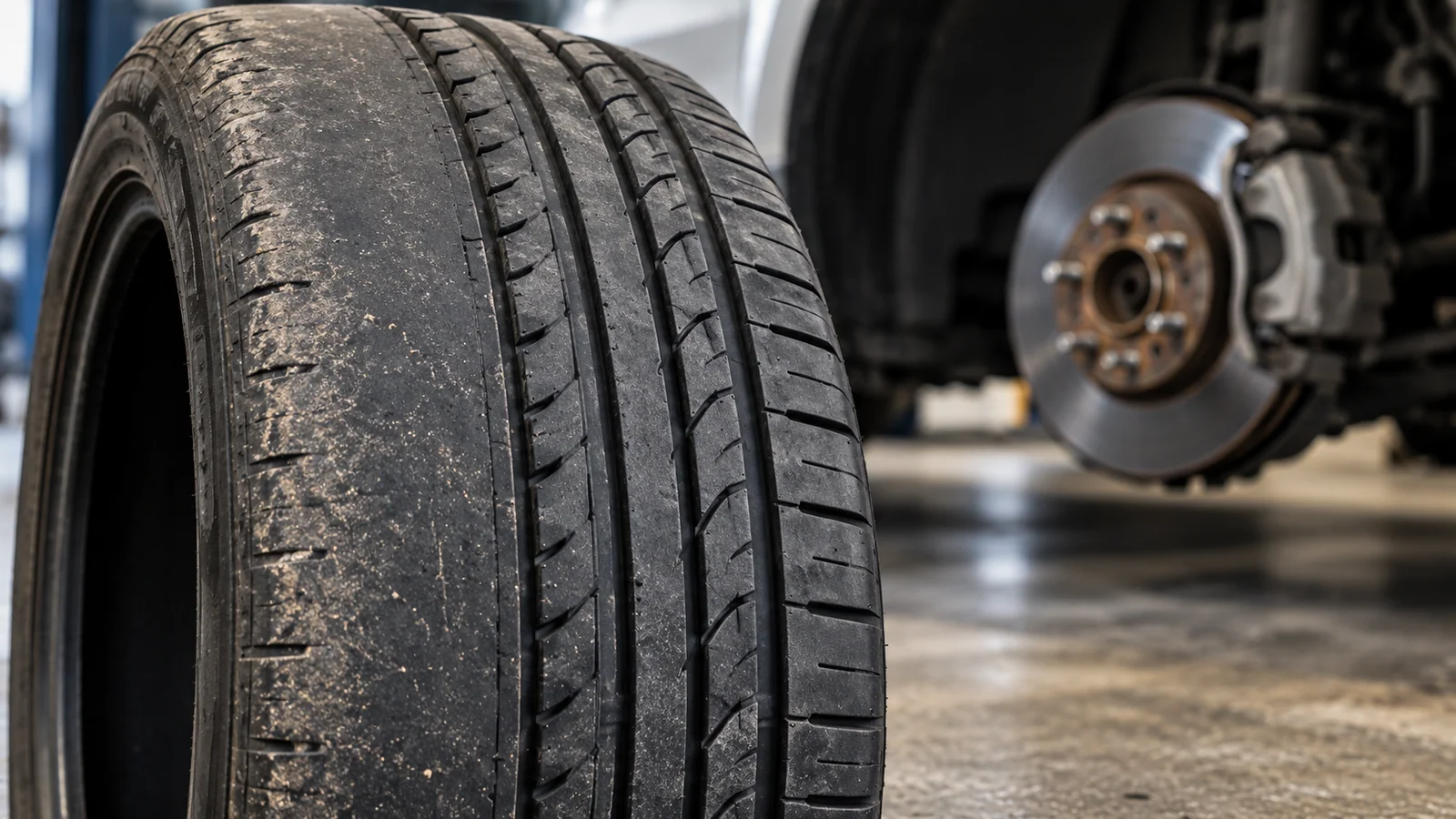
Uneven tire wear means the tire and vehicle need an inspection, starting with cold inflation pressure, tread condition, alignment and relevant steering or suspension wear. The pattern helps guide that inspection, but it does not prove a single cause. Correct the cause and assess whether the tire itself is still safe; an alignment cannot replace missing tread.
When does uneven tire wear need immediate attention?
Have a severely worn tire, sudden pressure loss or a change in handling assessed promptly. Do not judge the whole tire from the deepest-looking groove. Wear can be concentrated at an edge that is difficult to see with the wheels pointed straight ahead.
NHTSA advises replacing tires when tread is worn to 2/32 inch and checking the built-in wear indicators. That is not a promise that every tire above that depth is safe regardless of damage or uneven wear.
What can different wear patterns tell you?
A pattern is a clue to investigate, rather than a diagnosis made from a photograph. Continental links alignment-related edge wear with camber and feathering with toe. The measured alignment and condition of the vehicle determine what actually needs correction.
| What you notice | What to investigate |
|---|---|
| One edge wearing faster | Alignment measurements, including camber, and relevant component condition |
| Tread blocks with a feathered feel | Toe alignment and its underlying cause |
| Front or rear tires wearing differently | Pressure, axle-specific alignment and the vehicle's permitted rotation pattern |
What should you check before booking an alignment?
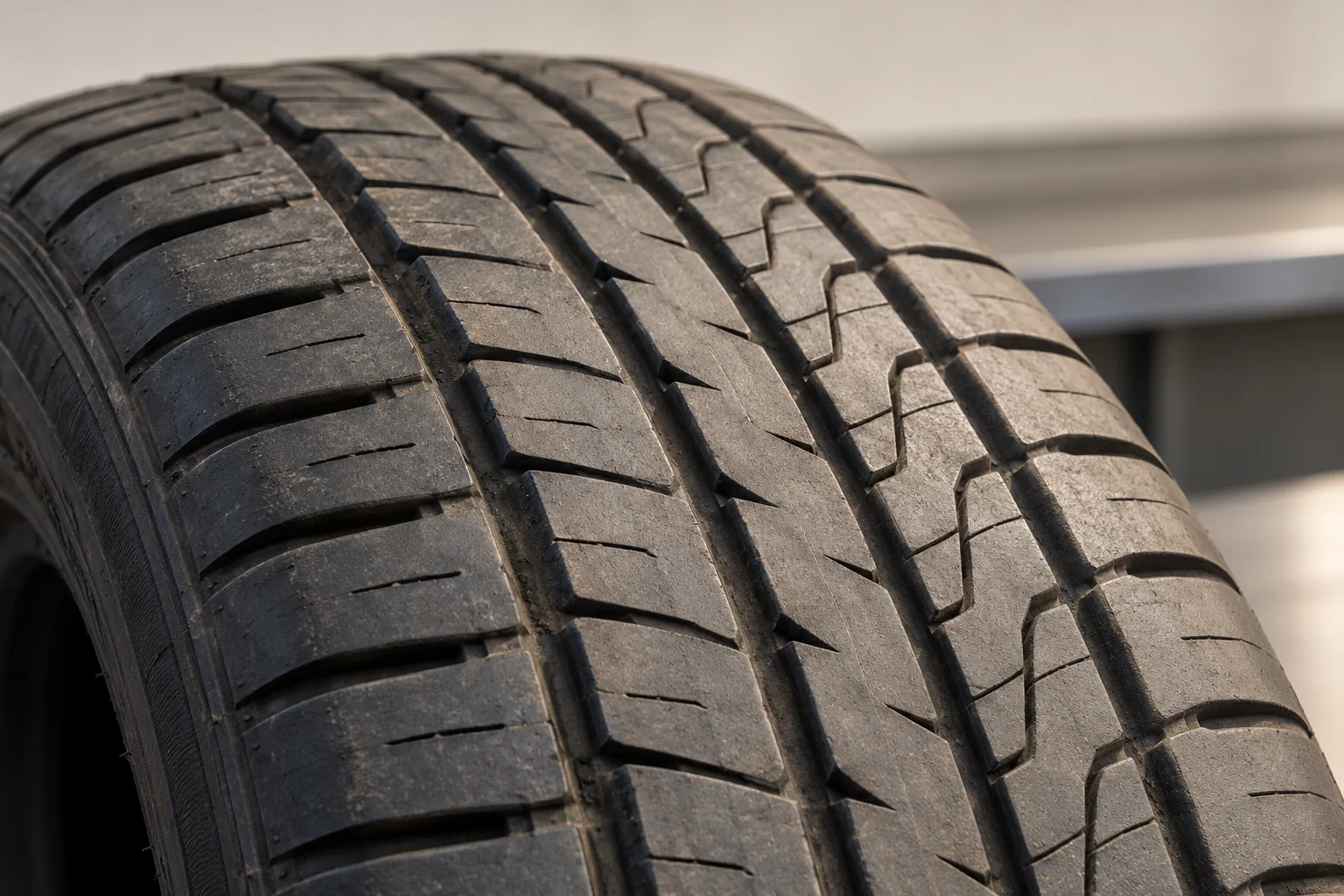
Measure inflation pressure when the tires are cold and use the vehicle's label or owner's manual for the target. NHTSA defines cold for this check as not driven for at least three hours. A pressure warning is not a substitute for a gauge check.
Tell the shop about pothole or curb impacts, pulling, an off-center steering wheel and any vibration. Ask for tread measurements and an inspection for worn or damaged parts as well as alignment readings.
Will an alignment fix already unevenly worn tires?
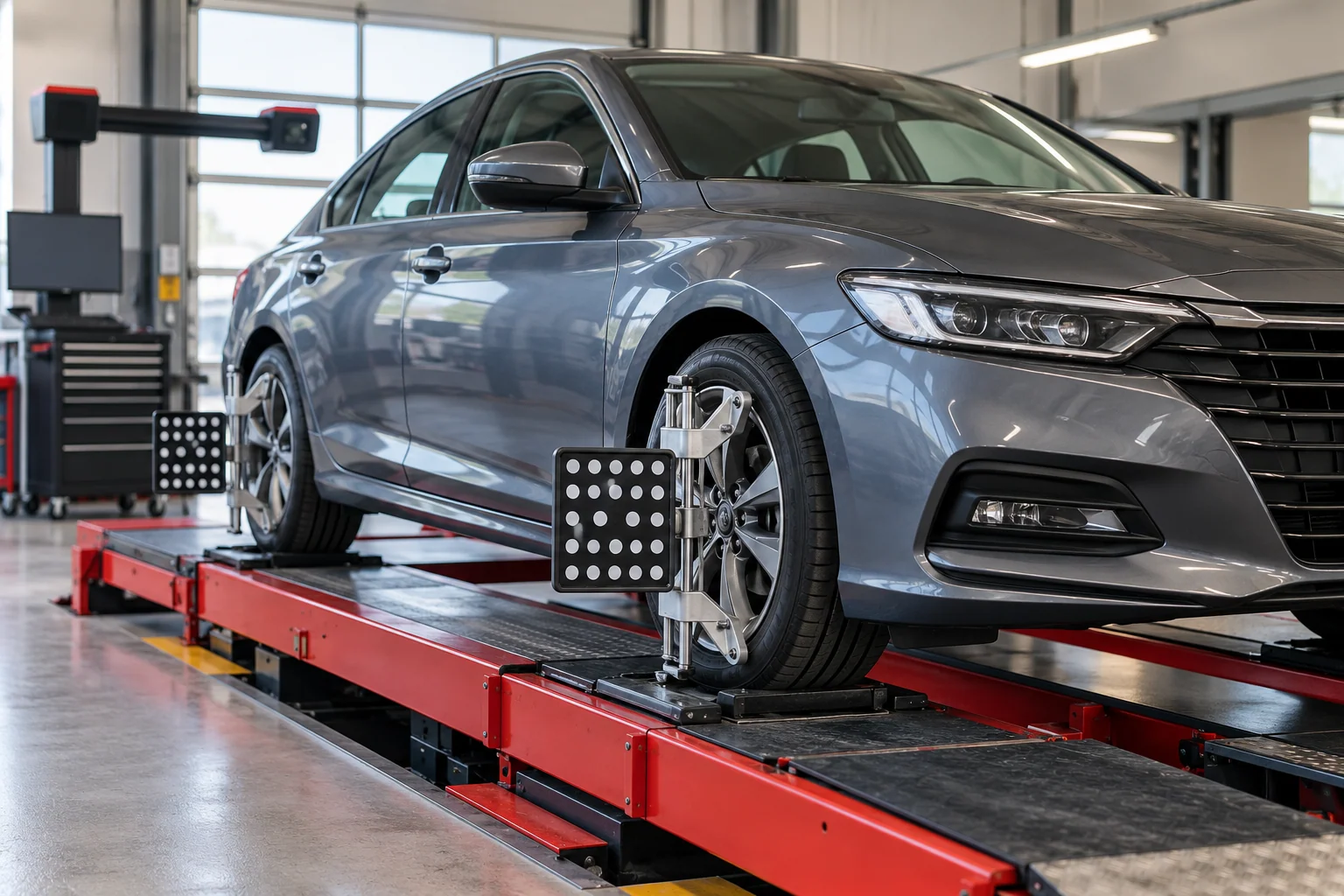
It can correct an alignment problem causing wear, but it cannot restore the rubber already lost. The tire may still need replacement based on the remaining tread and condition.
Ask for the before-and-after alignment report and an explanation of any components requiring repair. Michelin notes that rear alignment adjustment is available on many vehicles, so a front-end-only service is not automatically the complete answer to rear tire wear.
Can rotating the tires solve uneven wear?
Rotation can help manage wear as part of maintenance; it does not correct an alignment defect or make a damaged tire serviceable. Follow the vehicle's permitted pattern and interval. Different front and rear sizes or other fitment limits can restrict rotation.
Trailer tires need guidance for the trailer's tire, axle and loading arrangement. Do not copy a passenger-car pressure or alignment specification simply because the wear looks similar.
What should you monitor after the cause is corrected?
Keep the alignment and tread records, maintain the specified pressure, and recheck wear during routine inspections. If the pattern continues or handling changes, return with those records so the shop can investigate what remains unresolved.
Sources & further reading
- Michelin — Wear Problems : Symptom Uneven Wear | Michelin USA
- NHTSA — Tire Safety Ratings and Awareness | TireWise | NHTSA
- continentaltire.com — Wheel Alignment Explained: Symptoms, Timing, and Tire Impact | Continental Tire
Vehicle designs and maintenance requirements vary. Consult the owner’s manual for your exact vehicle and seek a qualified inspection for a specific fault.