Suspension and tires
Car Pulls to One Side: Causes and Diagnostic Steps
Published:
Edited and fact-checked by: Jacob Bowen
General information; vehicle-specific diagnosis requires an inspection. How we prepare our guides · This page reserves space for ads. Advertising policy · Privacy choices

The quick answer
A car that pulls to one side may have unequal tire pressure, a tire problem, uneven braking, alignment trouble or worn steering and suspension parts. Start with the tires and note whether the pull happens while braking or during steady driving. A sudden or strong pull needs prompt inspection; an alignment alone will not repair a damaged tire or dragging brake.
What can you safely check first?
After parking safely, inspect for a visibly low or damaged tire and check cold pressures against the vehicle placard. Do not use the maximum pressure on the tire sidewall as the vehicle's inflation target.
If the pull appeared suddenly after a pothole or curb strike, or the car is difficult to control, stop and arrange help. Visible damage or a substantial pressure loss needs attention before further driving.
Does the road slope explain the pull?
Road crown can create a mild tendency to drift toward the shoulder. That is different from a consistent strong pull on suitable level pavement.
Tell the technician where and when it happens. Keep both hands in control; do not let go of the wheel or change lanes to perform a pull test. A controlled assessment can account for road slope without guessing from a single stretch of road.

Why does the car pull only when braking?
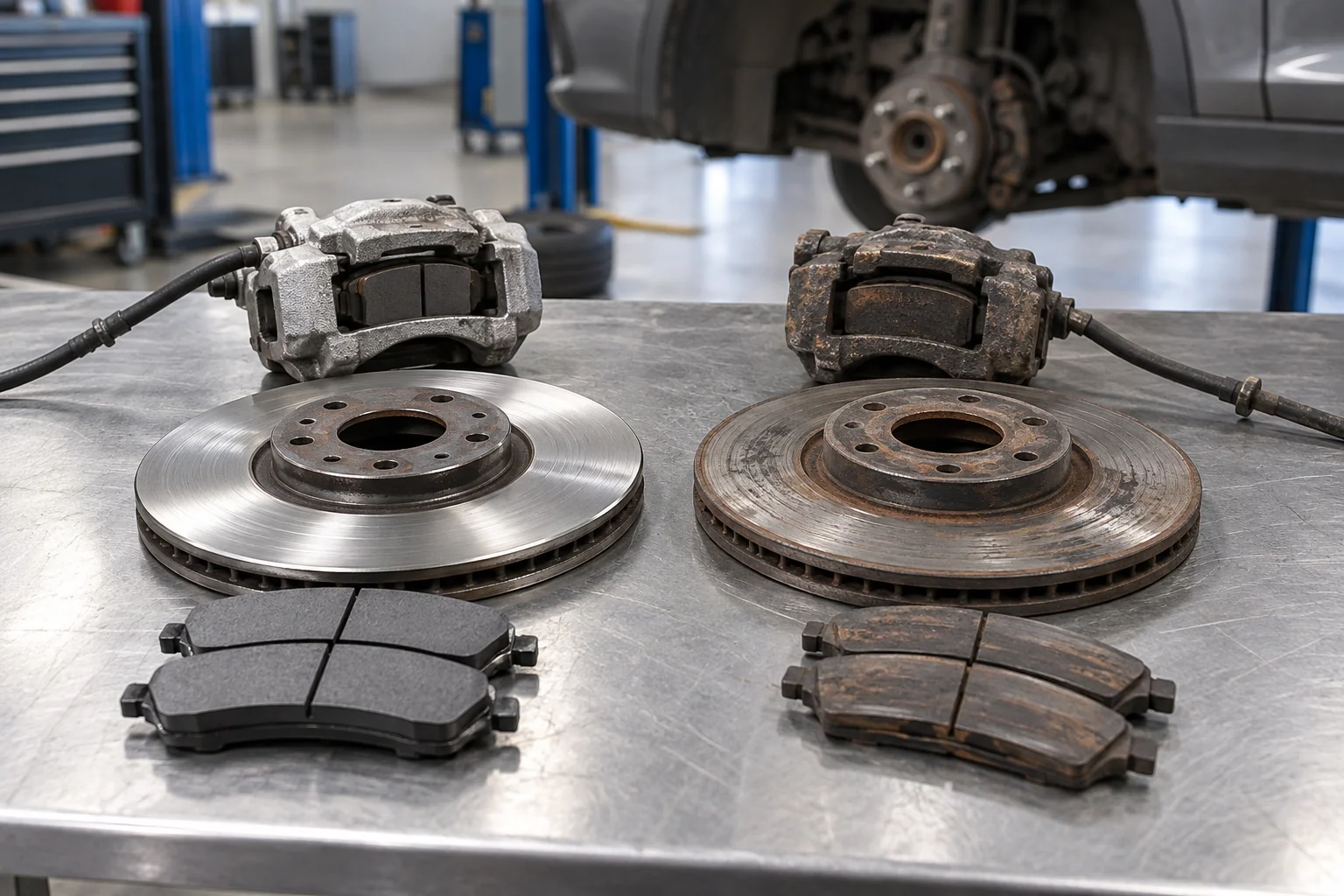
Unequal braking can steer the vehicle to one side. MOOG recommends inspecting brake friction surfaces, leakage and caliper operation when the complaint occurs during braking.
The direction alone does not identify the failed caliper. A brake that fails to apply and a brake that fails to release require different checks. Have both sides inspected, including heat or wear evidence, rather than choosing a part based on left versus right.
Should you get an alignment straight away?
Have tire condition and steering/suspension integrity checked first. MOOG points out that impact damage can affect steering before an obvious tire-wear pattern develops. Loose or damaged components need repair before a meaningful final alignment.
Tires can also create directional pull even when the alignment is within limits. A tire shop can investigate using a permitted rotation or position-comparison method that respects tire direction, sizes and the vehicle's requirements. A new-tire complaint deserves inspection rather than an assumption that all new tires are fault-free.
What should a successful repair include?
Correct the demonstrated tire, brake or mechanical fault, then adjust alignment where required. Ask for the measured alignment results compared with the vehicle specifications and verification that the original pull has improved.
If the vehicle still pulls, continue the investigation. Repeating an adjustment without checking tires, brake drag and component condition can leave the cause untouched.
Sources & further reading
- MOOG — Diagnosing Steering, Suspension, & Steering Knuckle Problems
- Michelin — Handling Problems : Symptom Pulling to One Side | Michelin Canada
- MOTOR — Wheel Alignment Diagnostic Tips
Vehicle designs and maintenance requirements vary. Consult the owner’s manual for your exact vehicle and seek a qualified inspection for a specific fault.