Ignition and engine control
Car Stalls or Shuts Off While Driving: Causes and Diagnostic Steps
Published:
Edited and fact-checked by: Jacob Bowen
General information; vehicle-specific diagnosis requires an inspection. How we prepare our guides · This page reserves space for ads. Advertising policy · Privacy choices

The quick answer
An engine stall means the engine has stopped running unexpectedly. Fuel delivery, ignition, engine-control signals or electrical power can cause a car to shut off while driving; the symptom alone cannot identify the failed part. Steer toward a safe stopping place and be prepared for heavier steering or braking. A car that starts again still needs diagnosis before you trust it in traffic.
What should you do if the engine shuts off while driving?
Keep control of the vehicle and bring it to a safe stop. Engine shutdown can reduce steering and brake assistance, so more effort may be needed. Do not deliberately switch the ignition off while moving or select Park before stopping. Follow your owner's manual for the vehicle's emergency stopping and restart instructions.
Once safely stopped, arrange roadside help if the engine will not restart, keeps stalling or has another serious warning. Repeated restarts are not a repair. Tell the shop whether it cranks normally afterward, starts only after cooling down or will not crank at all.
Does stalling at idle mean the same thing as shutting off at speed?
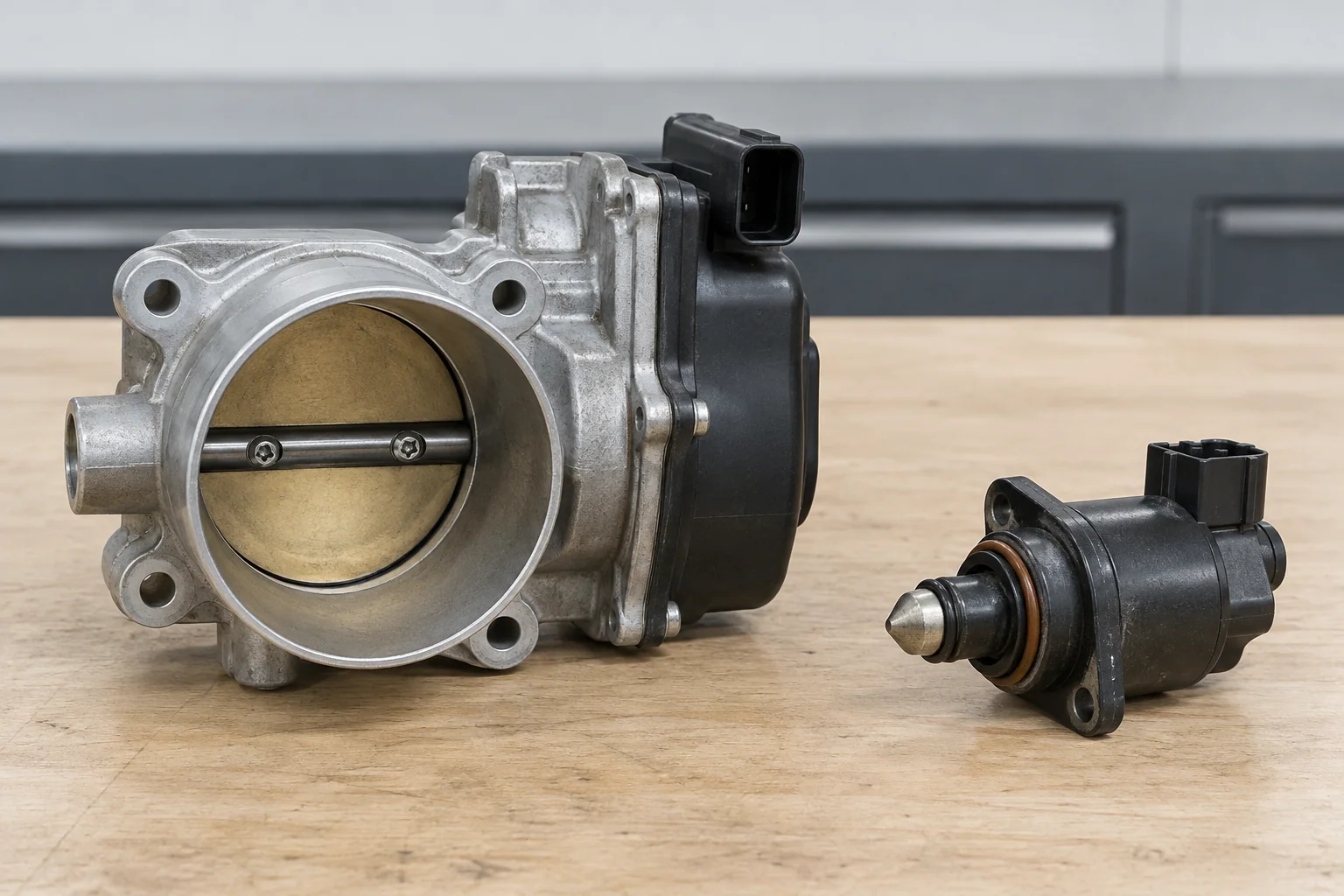
The conditions help narrow the tests. Stalling as you stop or idle can involve mixture control, an intake leak, idle-air control or an engine that cannot cope with an added load. A sudden shutdown while driving can involve lost ignition, fuel delivery or electrical supply.
Those are test directions, not diagnoses. Engines use different throttle, ignition and fuel-system designs. A repair that fits an older engine with an idle-air valve may not apply to an electronically controlled throttle.
What details should you record for the technician?
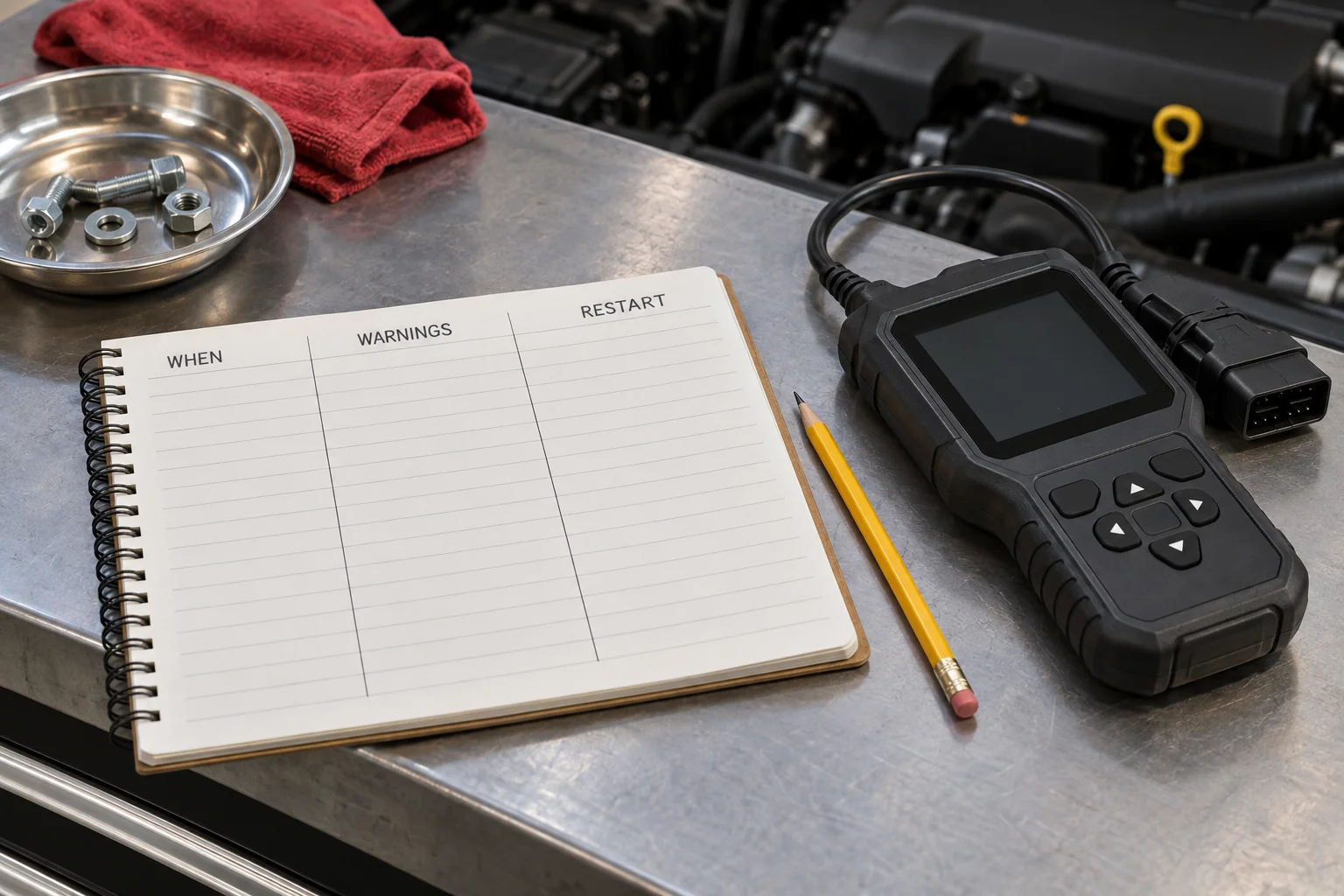
Write down the pattern after you are safely parked. Intermittent faults are easier to investigate when the shop knows the circumstances rather than only hearing that the car sometimes dies.
- Whether the engine was cold, warming up or fully hot, and whether cooling down changed restart behavior.
- Whether it happened while idling, stopping, accelerating, crossing a bump or using the air conditioning.
- Whether the engine sputtered first or stopped abruptly, and whether the dash or other electrical equipment also lost power.
- Any recent refueling, repair, wet-weather exposure or dashboard message.
- Whether the warning light appeared before the stall or only after the engine stopped.
How can a shop diagnose a stall with no check-engine light?
A scan is still useful. Stored, pending or history codes and recorded operating data can provide clues even when the light is off. Avoid clearing codes before the inspection.
The technician should check electrical supply and grounds and, where possible, record what disappears during the failure: engine-speed or timing information, ignition and injector operation, fuel pressure or communication with a control module. A normal reading after the engine restarts may miss the fault.
A published Underhood Service case involving a 1999 Dodge Dakota with a 5.2-liter engine illustrates the approach. During a warm stall, the technician found that fuel pressure remained within specification while injector/ignition control and PCM communication were lost. That combination redirected the electrical investigation. It did not justify another fuel pump based only on the stall.
What repair should you authorize?
Ask what test links the proposed repair to the shutdown. A pump needs evidence of a delivery or electrical fault; a sensor needs appropriate signal and circuit checks. A control-module diagnosis should account for its power, grounds, wiring and communication.
After repair, the shop should verify operation under the conditions that produced the complaint and recheck relevant data. If the fault could not be reproduced, ask what was tested and what recording or follow-up plan remains. A parts replacement followed by one successful start does not establish that an intermittent stall is fixed.
Sources & further reading
- Underhood Service — Diagnostic Dilemma: 1999 Dodge Dakota Intermittent Stall Complaints
- AA1Car / Larry Carley — Why Is My Engine Stalling?
- AA1Car / Larry Carley — How to Diagnose Intermittent Engine Problems
- Ford Owner's Manual: engine shutdown and loss of assistance
Vehicle designs and maintenance requirements vary. Consult the owner’s manual for your exact vehicle and seek a qualified inspection for a specific fault.