HVAC
Heater Core Replacement: Procedure, Costs and Common Mistakes
Published:
Edited and fact-checked by: Jacob Bowen
General information; vehicle-specific diagnosis requires an inspection. How we prepare our guides · This page reserves space for ads. Advertising policy · Privacy choices

The quick answer
Replace a heater core when testing confirms that the core is leaking or that a restriction requires replacement. Poor cabin heat alone does not establish either fault. RepairPal estimates heater-core replacement at $1,375–$1,912, updated September 3, 2026, before taxes, fees, location differences and related repairs. Access behind the dashboard can make labor a large part of the bill.
How do you know the heater core needs replacement?
A coolant smell, damp carpet or a film and fogging at the windshield can point toward a leak, but the technician still needs to identify where the fluid comes from. Water in the cabin is not automatically coolant from a heater core.
For poor heat, check coolant level and circulation, engine warm-up, heater controls and air routing. Low coolant, trapped air, an open thermostat or a control problem can leave the cabin cold without a failed core. Never open a hot cooling-system cap to investigate.
What can inlet and outlet temperatures tell the technician?
Temperature comparisons help assess whether hot coolant reaches and passes through the core. The test needs the specified operating conditions; a difference between the hoses is not a universal replacement threshold.
Ford's 2018 bulletin 18-2244 illustrates this approach for certain 2015–2018 F-150 engine configurations without a block heater and a particular cold-weather lack-of-heat complaint. It uses prerequisite checks before a combined cleaning and replacement procedure. That historical bulletin is an example, not instructions for every F-150 or another vehicle; current applicability must be checked.
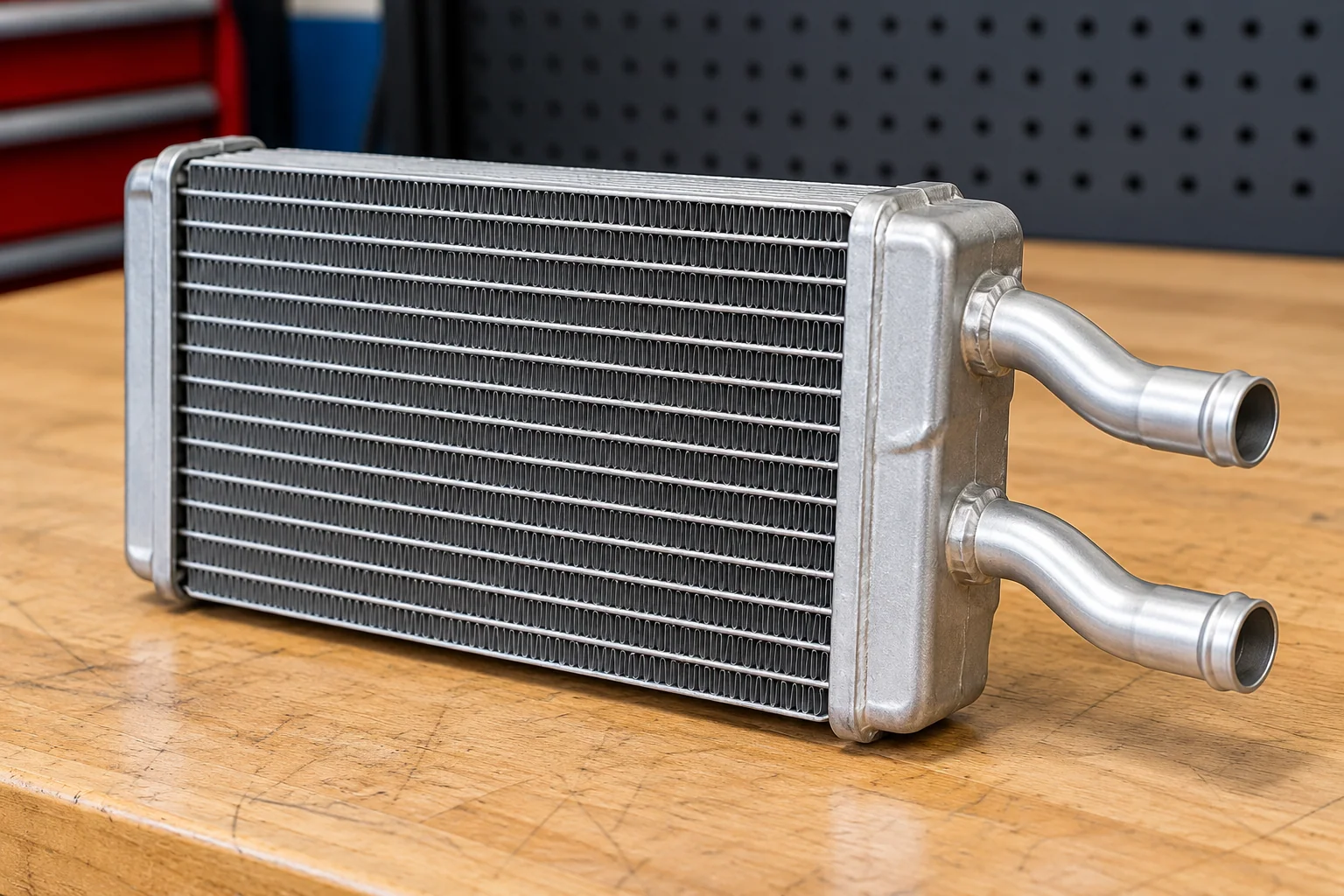
Can a flush fix a heater-core leak or blockage?
Cleaning may restore flow through some restricted cores, but it does not replace damaged metal or establish that a leak has been repaired. Ask what testing supports trying a flush and what result would justify replacement.
A heater-core flush quote covers different work from a replacement quote. There is no verified universal flush price in these references. Get the proposed method, diagnostic labor and follow-up checks in writing, including how contamination elsewhere in the cooling system will be addressed.
What does heater-core replacement involve?
The access procedure depends on the vehicle. It can involve dashboard and HVAC-housing removal, coolant connections, and work near airbags. Some designs also require A/C-system work. Ask the shop to explain the access requirements and any specified seals or single-use hardware.
The replacement must fit correctly, and the cooling system needs the specified fluid, filling and bleeding procedure. Any contamination or cause of repeat damage should be addressed before the new core goes into service.
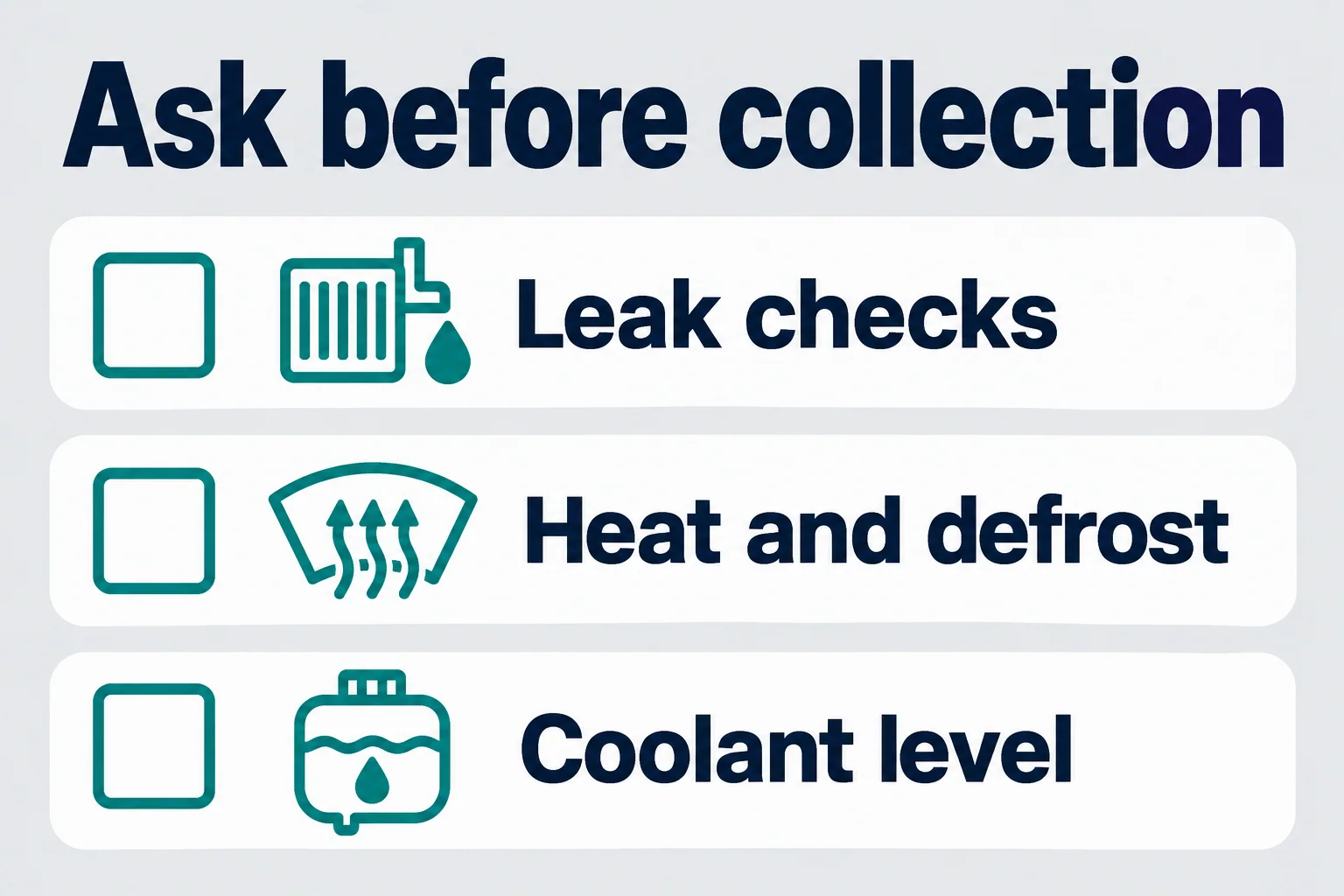
Before collecting the car, ask whether the shop checked for leaks, confirmed heat and defrost operation, and verified the coolant level under the required conditions. Do not drive if coolant loss is causing overheating or if you cannot keep the windshield clear enough to see safely.
Sources & further reading
- OEM document via NHTSA — Heater Core Temperature, Flush Cooling System And Replace The Heater Core (Do Not Use With Any Other Labor Operations Outside Of This Article)
- AA1Car / Larry Carley — Heater Repair
- Underhood Service — VIDEO: Three Steps To Diagnose A Poor Heater Performance Complaint
- RepairPal — Heater Core Replacement Cost Estimate
Vehicle designs and maintenance requirements vary. Consult the owner’s manual for your exact vehicle and seek a qualified inspection for a specific fault.