HVAC
Car AC Recharge: Costs, Leak Checks and the Correct Procedure
Published:
Edited and fact-checked by: Jacob Bowen
General information; vehicle-specific diagnosis requires an inspection. How we prepare our guides · This page reserves space for ads. Advertising policy · Privacy choices

The quick answer
An A/C recharge should follow diagnosis and use the refrigerant type and charge quantity specified for your vehicle. Adding refrigerant does not repair a leak or explain every warm-air complaint. RepairPal estimates an A/C recharge at $285–$369, updated September 3, 2026, before taxes, fees, location differences and related repairs. Ask whether your quote includes leak diagnosis and a measured recharge or only a top-off.
What should the recharge quote include?
RepairPal lists labor at $179–$262 and refrigerant-related parts at about $106. The actual quote depends on the vehicle, refrigerant and proposed service. A leak repair or failed component adds different work.
EPA notes that shops may charge a flat service fee or separate labor and refrigerant charges. Ask what performance checks and leak testing are included so you can compare like-for-like services. A chain's advertised price is not automatically the final price for your car.
Why must the refrigerant and amount match the vehicle?
Different A/C systems use different refrigerants and compressor oils. Confirm the vehicle label and current service information; the term Freon does not identify what your car needs.
The quantity also matters. Undercharging and overcharging can both impair performance. Tesla's Model S service procedure, for example, requires the specified refrigerant and oil, charge information and service routines. Its instructions are an example for that platform, not a universal procedure for another vehicle.
How is a measured recharge different from adding a can?
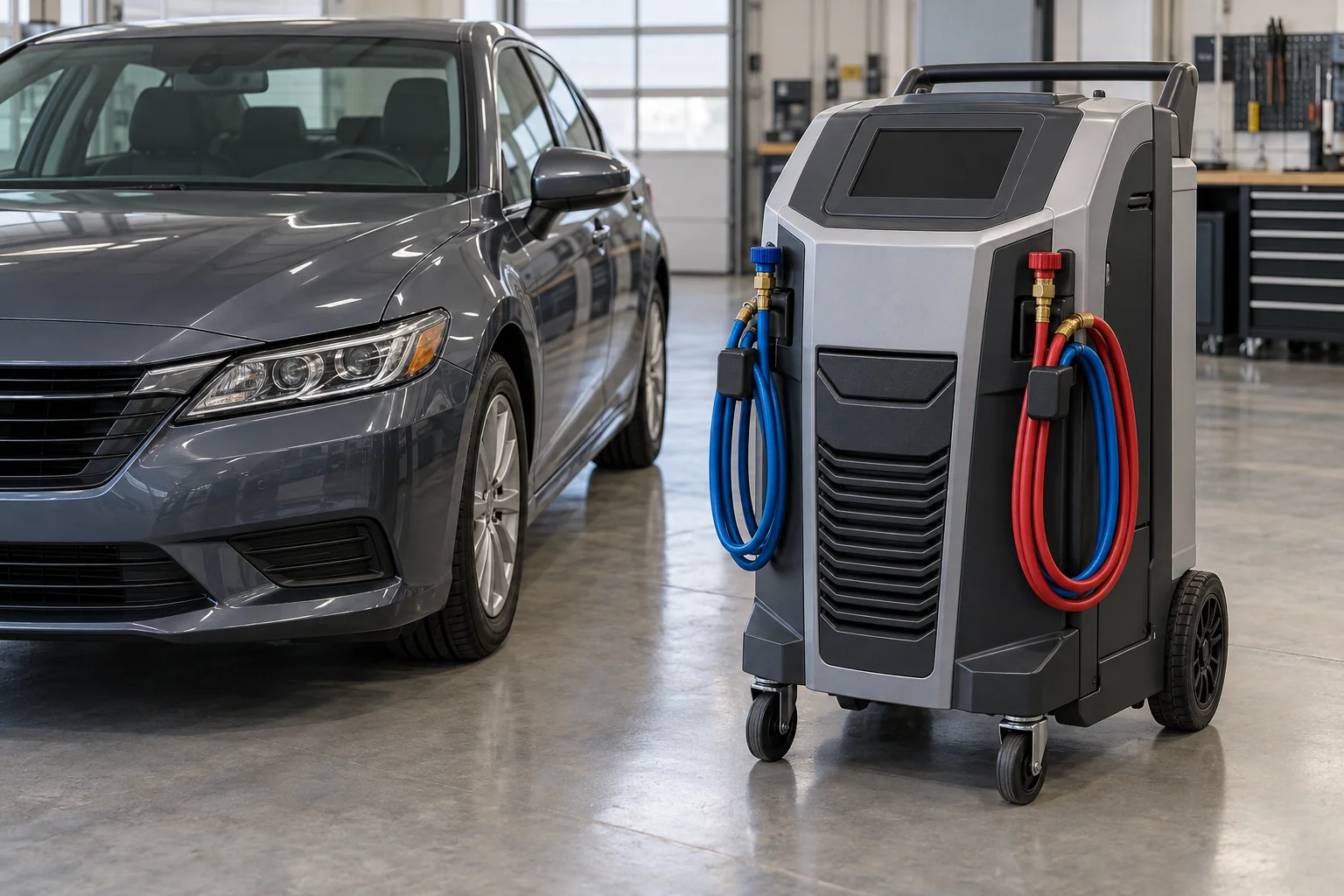
With a top-off, the amount already in the system is uncertain. EPA explains that this makes it possible to add too little or too much. A recovery-and-recharge service allows the prescribed quantity to be installed.
A can's gauge reading is not a measurement of the total refrigerant mass in the system. Do not assume that warm air proves low charge, or that a pressure reading alone establishes the correct amount to add.
Does recharging fix the reason refrigerant was lost?
No. EPA distinguishes restoring the charge from repairing a leaking component. Ask what established the charge problem, where leakage was found and what would prevent repeated loss.
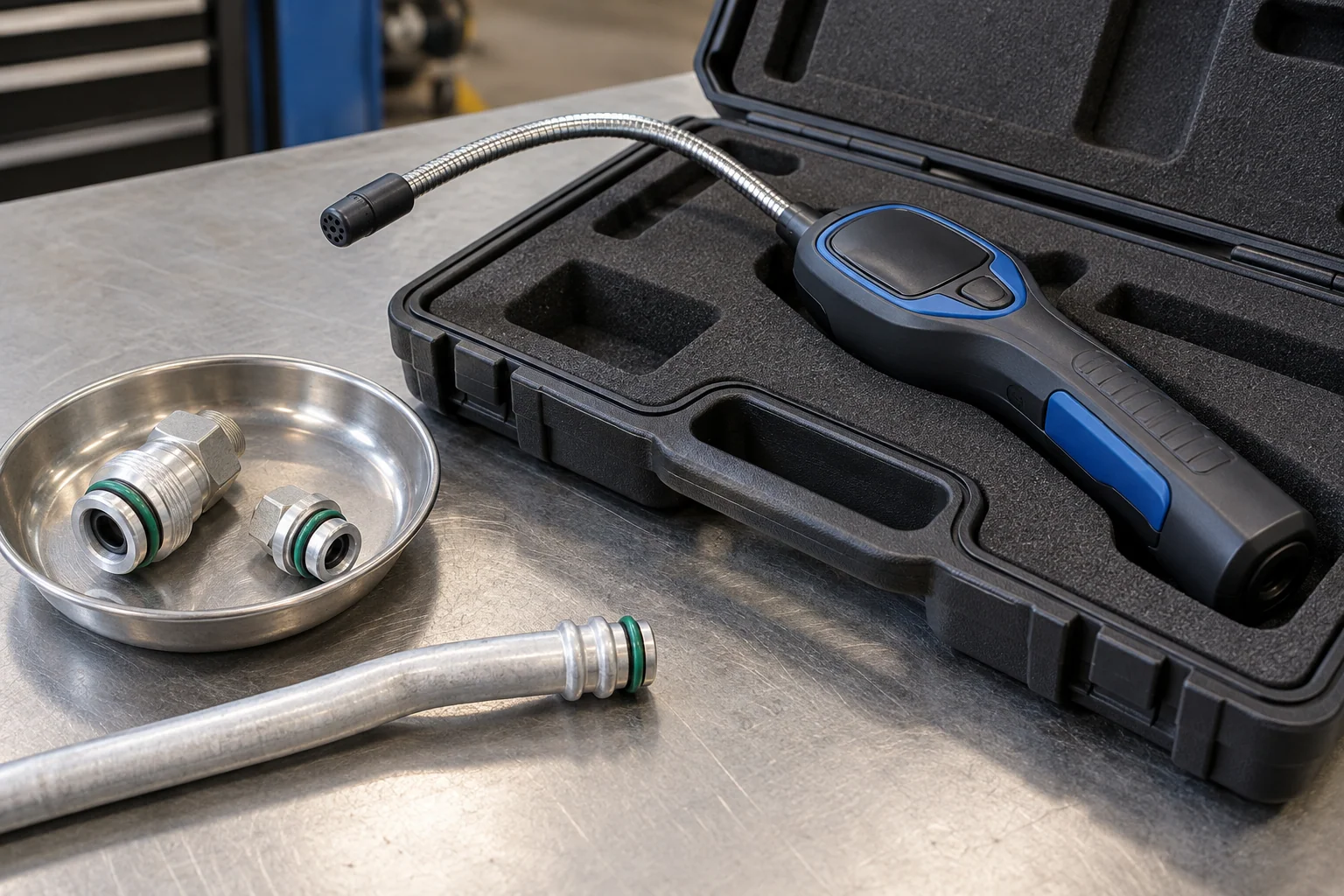
Leak checks and evacuation procedures must follow the system and equipment instructions. Do not vent refrigerant or improvise pressure tests with compressed air. Use a shop equipped for the particular refrigerant and vehicle design.
What should be verified before you collect the car?
Ask for the refrigerant type and specified charge, the leak-test findings, any repair performed and the final operating check. If oil was added, its type and quantity need a service-based reason rather than an automatic extra dose.
The system should be checked for proper cooling and operation after service. If the A/C becomes warm again, bring the earlier findings back to the shop rather than treating another top-off as a complete diagnosis.
Sources & further reading
- Tesla — A/C Refrigerant Recovery and Recharge (Remove and Replace)
- HELLA — Car refrigerant & oil filling quantities
- US EPA — Options for Recharging Your Air Conditioner
- RepairPal — AC Recharge Cost Estimate
Vehicle designs and maintenance requirements vary. Consult the owner’s manual for your exact vehicle and seek a qualified inspection for a specific fault.