HVAC
Car AC Refrigerant Leak: Symptoms, Diagnosis and Repair Options
Published:
Edited and fact-checked by: Jacob Bowen
General information; vehicle-specific diagnosis requires an inspection. How we prepare our guides · This page reserves space for ads. Advertising policy · Privacy choices
The quick answer
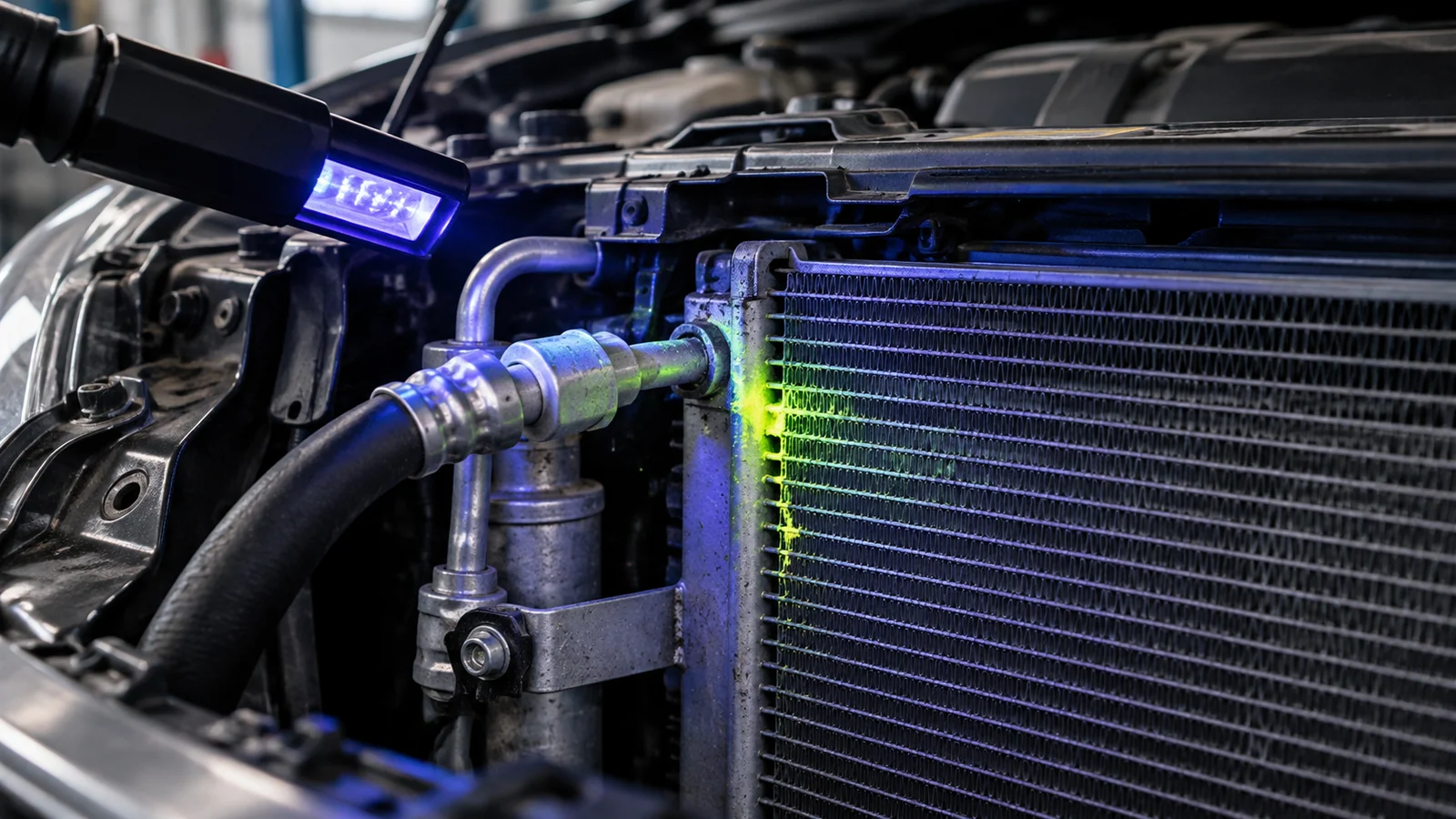
A confirmed car A/C refrigerant leak needs to be located and repaired before the system is correctly recharged. Weak cooling or a low charge does not identify which part is leaking. A technician may combine electronic detection, approved UV dye and other suitable tests to distinguish a service-port, hose, condenser, compressor or evaporator leak.
Does weak cooling or water under the car mean refrigerant is leaking?
Weak cooling can accompany refrigerant loss, but airflow or control problems can also reduce performance. DENSO's service guidance calls for checking the complaint and cooling performance before proceeding, so there is a baseline for comparison after repair.
Clear water beneath the vehicle after A/C use may be normal condensation draining away. A puddle alone is not confirmation of refrigerant loss. Have an unfamiliar leak identified, especially if another fluid level is falling or a warning appears.
Identify the correct refrigerant and compressor oil for the vehicle. Do not select either from the general term Freon or assume all cars use the same product.
How does a shop find an A/C refrigerant leak?
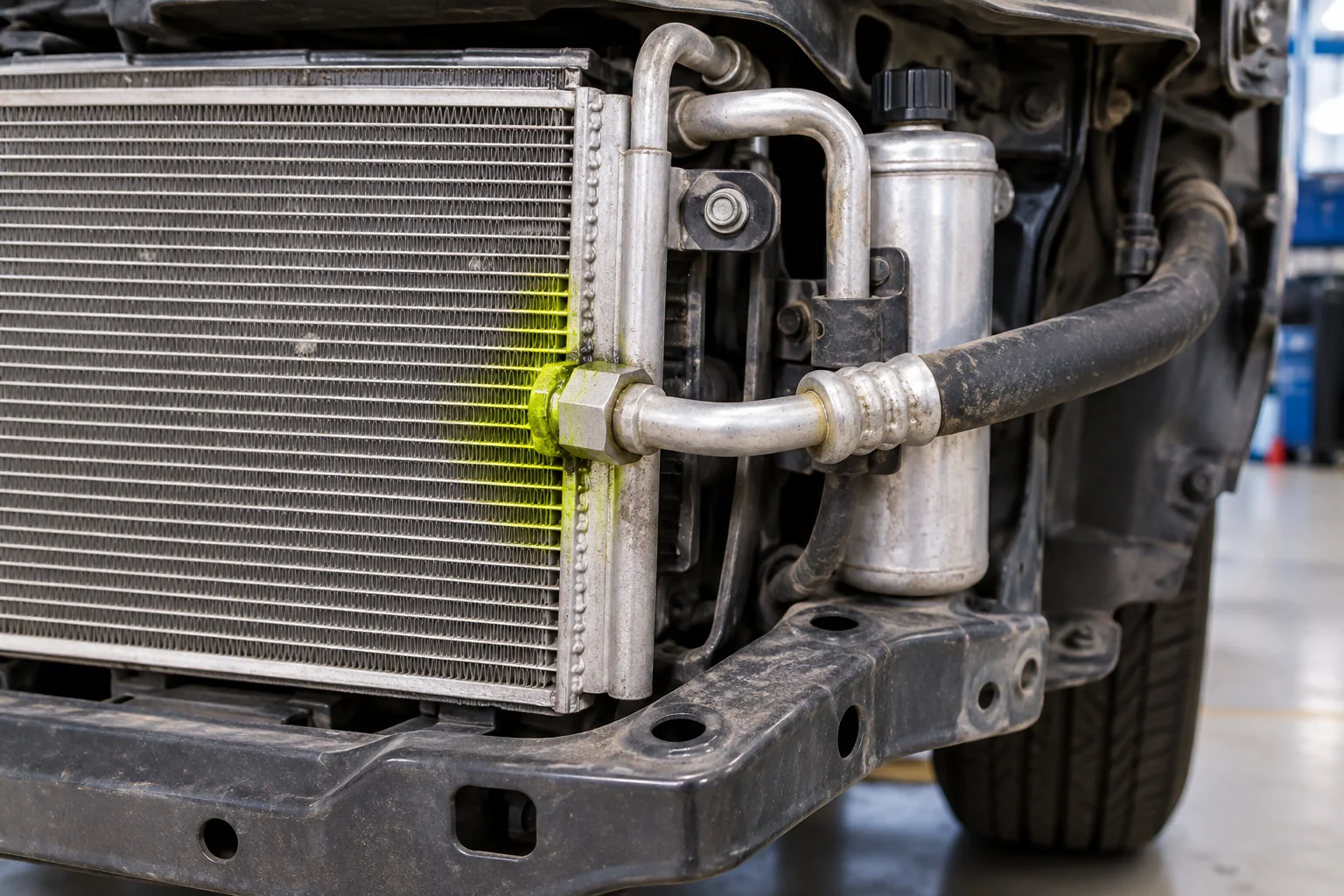
Inspect accessible lines, fittings, service ports and components. Oil and dirt around a connection can provide a clue, but a stain is not a complete diagnosis. HELLA includes the compressor, condenser, evaporator and service connections among the areas to test.
Use a detector appropriate to the refrigerant or test gas and the manufacturer's method. Approved UV dye can make an escape point visible, but DENSO cautions that dye alone cannot find every leak. Different methods can complement one another, particularly for small or hard-to-access leaks.
Do not apply a generic test pressure or add more dye on guesswork. DENSO warns that the wrong oil, unsuitable refrigerant and improper or excessive UV fluid can harm the system. A qualified A/C shop should handle recovery and testing with the appropriate equipment.
Will a recharge or leak sealer fix it?
A recharge restores refrigerant quantity; it does not repair a damaged hose, leaking seal or failed heat exchanger. Ask the shop to show where the leak was confirmed and explain the proposed repair.
Do not treat an unverified leak-sealer treatment as a substitute for locating the fault. Tell the technician about any refrigerant cans, oils, dyes or other additives already introduced, so contamination can be considered before equipment is connected.
After repair, the shop should complete the required recovery, evacuation and recharge process, verify leakage and compare cooling performance. DENSO also calls for checks of fan operation, airflow, noise and air mixing. Replacing a compressor alone is not a complete answer to every loss-of-cooling complaint.
How much does an A/C leak repair cost?
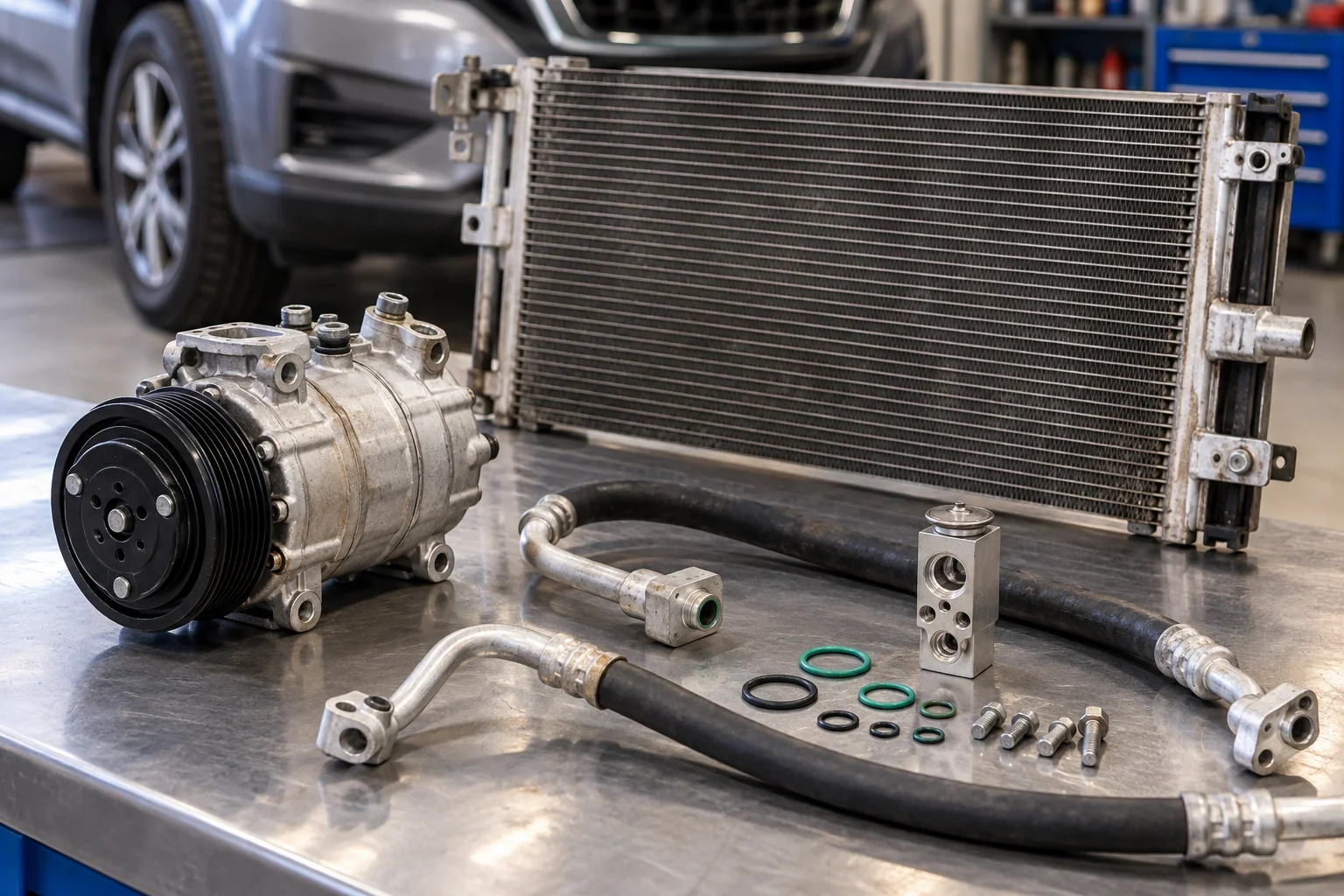
The cost depends on the leaking part and access. A service-connection repair and an evaporator or condenser replacement are different jobs, so a single A/C leak price can be misleading.
As one defined benchmark, RepairPal's September 3, 2026 US condenser-replacement estimate is $841–$988: labor of $302–$442 and parts of $540–$546. It excludes taxes, fees, location and related repairs. It is not an estimate for every refrigerant leak.
Request an itemized quote covering diagnosis, the confirmed component, required seals or related parts, refrigerant service and verification. Confirm whether shared labor and recharge work are already included before comparing or adding prices.
Sources & further reading
- HELLA — Air-conditioning system leak detection - Instructions
- DENSO — AC-Compressor-Service-7-steps-Bulletin-EN
- AA1Car / Larry Carley — How to Check Your Car's Air Conditioning System
- RepairPal: A/C condenser replacement estimate
Vehicle designs and maintenance requirements vary. Consult the owner’s manual for your exact vehicle and seek a qualified inspection for a specific fault.