HVAC
Bad Smell From Car AC: Causes and Diagnostic Steps
Published:
Edited and fact-checked by: Jacob Bowen
General information; vehicle-specific diagnosis requires an inspection. How we prepare our guides · This page reserves space for ads. Advertising policy · Privacy choices
The quick answer
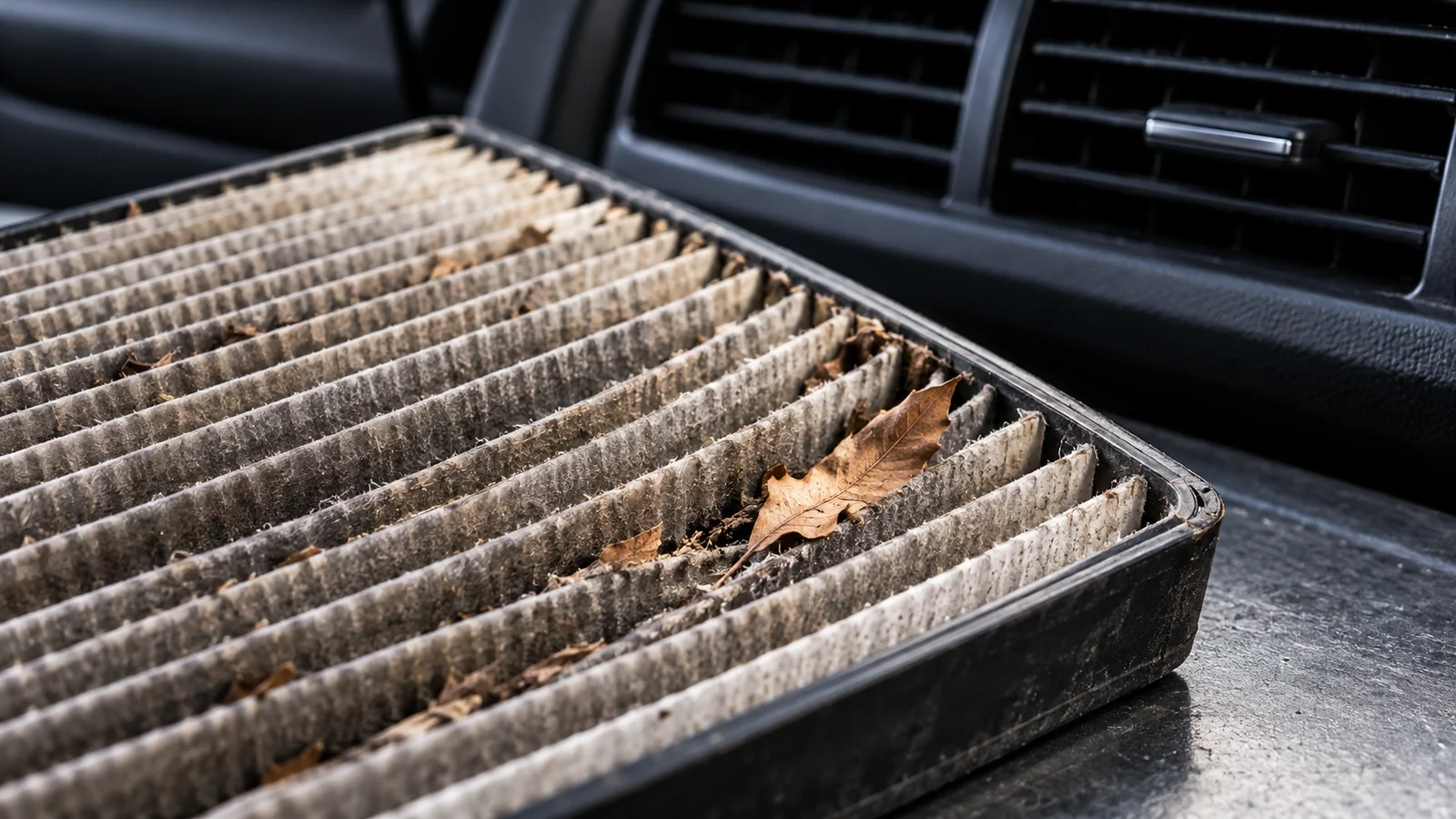
A musty or sour smell from the vents can come from damp HVAC surfaces, a dirty cabin filter or accumulated moisture and debris. Inspect the source before paying for cleaning. Gasoline, exhaust or burning smells need separate investigation; do not treat them as routine A/C mildew or try to cover them with fragrance.
What should you tell the shop about the odor?
Describe when it occurs: immediately after startup, only with cooling, whenever the blower runs or even when the car is parked. Mention damp carpets, recent spills or filter work. Words such as vinegar, feet or rotten eggs describe an impression, not a dependable component diagnosis.
DENSO explains that condensation leaves some HVAC surfaces damp, allowing odor-producing buildup. Other odors already present in the air can also settle on those surfaces. The system blowing the smell toward you does not prove the refrigerant circuit is the source.
Should you start with the cabin filter?
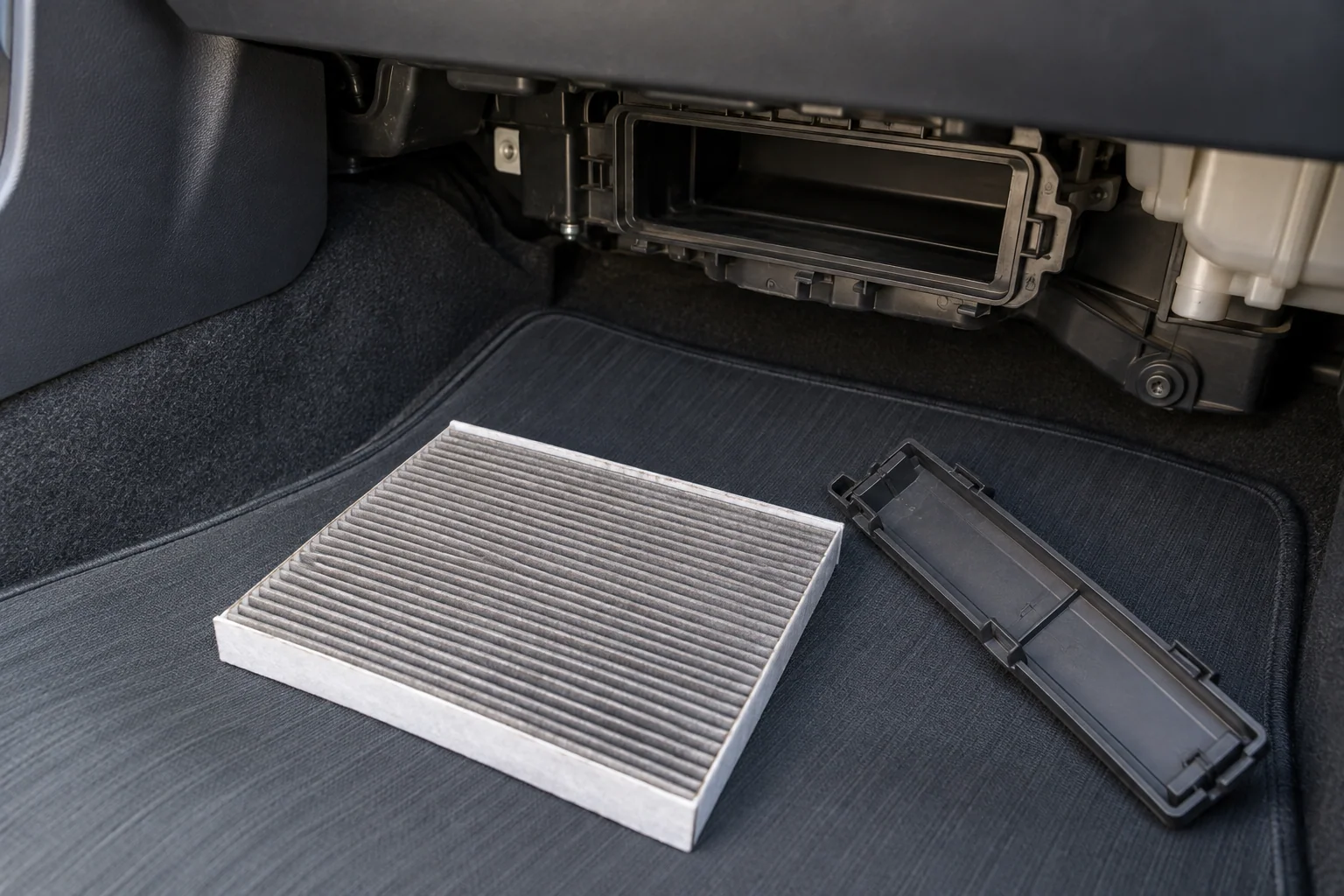
Its condition and correct installation are sensible checks. DENSO emphasizes the cabin filter during odor investigation. AAA also recommends looking for debris and, when a clean filter does not solve the problem, checking for water accumulation or blocked drains.
Follow the vehicle's filter-service instructions and schedule. A wet filter, damp carpet or recurring odor needs its moisture source investigated. Repeatedly installing another filter will not fix water entering or remaining in the wrong place.
When is evaporator cleaning appropriate?
If inspection points to contamination on the evaporator, use the vehicle-specific cleaning process and a compatible product. DENSO cautions that unsuitable chemistry can damage its coating and promote corrosion. Do not pour household cleaners into the vents.
Tesla's 2017–2023 Model 3 service manual illustrates a defined foam-cleaning procedure combined with cabin-filter replacement. It requires chemical precautions, protection of electrical components from overspray and drainage of the cleaner through the HVAC drain. That is an equipment-specific procedure, not permission to spray any cleaner into any car.
HELLA's note for the 2001–2005 Civic VII uses a different access route through the filter housing. Ask how the technician will reach the evaporator safely and protect adjacent components. A refrigerant recharge does not perform this cleaning job.
Which smells need a different response?
A strong raw-fuel smell, smoke or burning odor warrants a safe stop and investigation. AAA advises against starting or driving when a fuel leak is present. If exhaust fumes enter the cabin, stop using the vehicle and arrange assistance rather than relying on recirculation or a new filter.
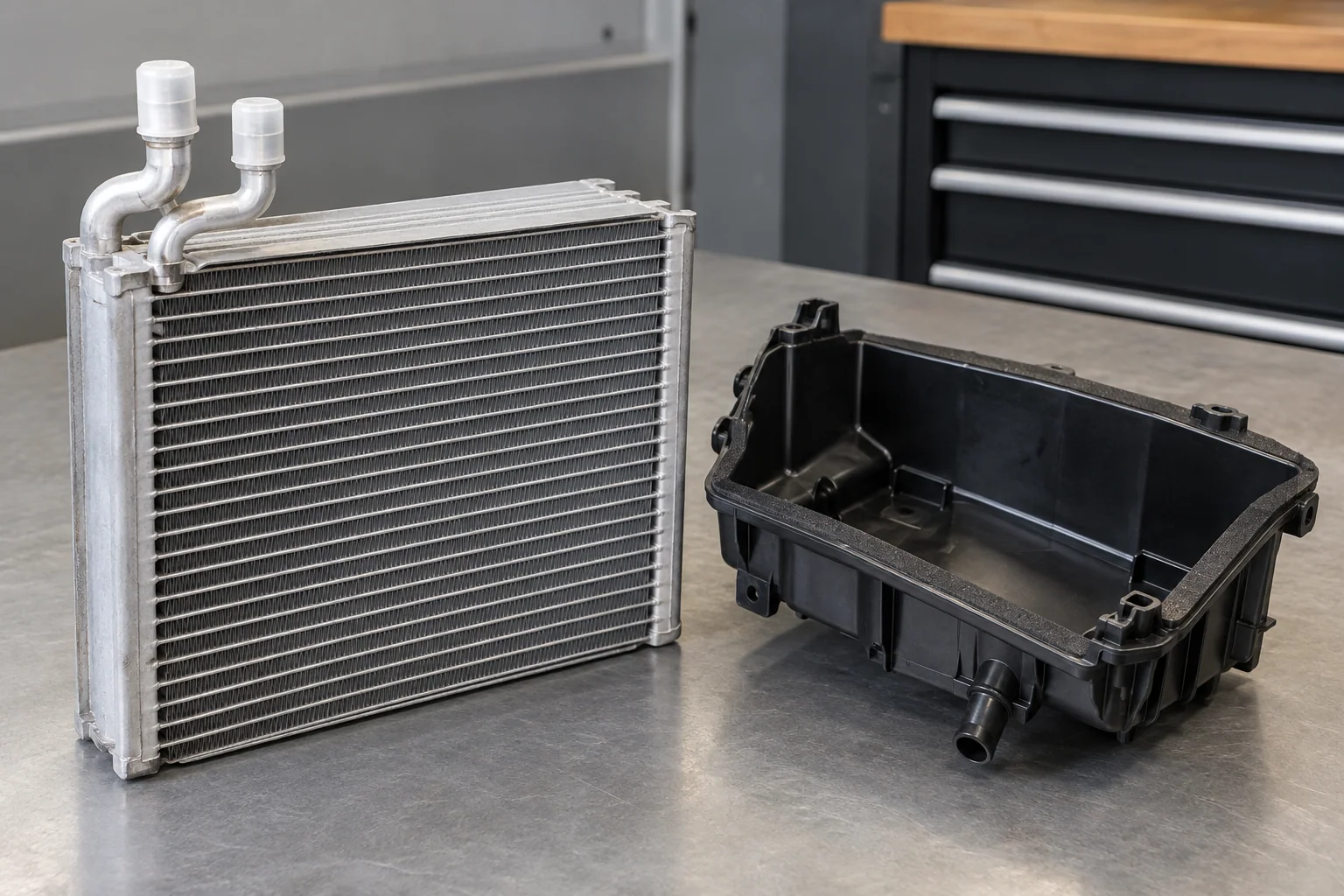
A sweet smell can indicate coolant leakage. Report any coolant loss, steam or temperature warning, and do not open a hot cooling system. Odor alone cannot establish that the heater core, compressor or catalytic converter needs replacement.
How can you reduce the chance of a musty smell returning?
Use and maintain the system according to the vehicle's handbook, keep the filter and air intake area serviced and correct any drainage or water-entry fault. DENSO suggests switching cooling off shortly before parking while allowing the blower to continue, where appropriate for the vehicle's operation.
After treatment, reassess it under the conditions that originally produced the smell. If it returns, request another source inspection instead of progressively stronger fragrances or repeated cleaning without an explanation.
Sources & further reading
- DENSO — DENSO Air Conditioning System Advice – Bad Smells
- Tesla — Use Evaporator Foam Cleaner, Replace Cabin Filters
- HELLA — Honda Civic VII Disinfection of the evaporator
- AAA Club Alliance: investigating vehicle odors
- AAA: fuel and coolant hose warning signs
Vehicle designs and maintenance requirements vary. Consult the owner’s manual for your exact vehicle and seek a qualified inspection for a specific fault.