Fuel delivery
P0087: Causes, Diagnostic Tests and Repair Options
Published:
Edited and fact-checked by: Jacob Bowen
General information; vehicle-specific diagnosis requires an inspection. How we prepare our guides · This page reserves space for ads. Advertising policy · Privacy choices
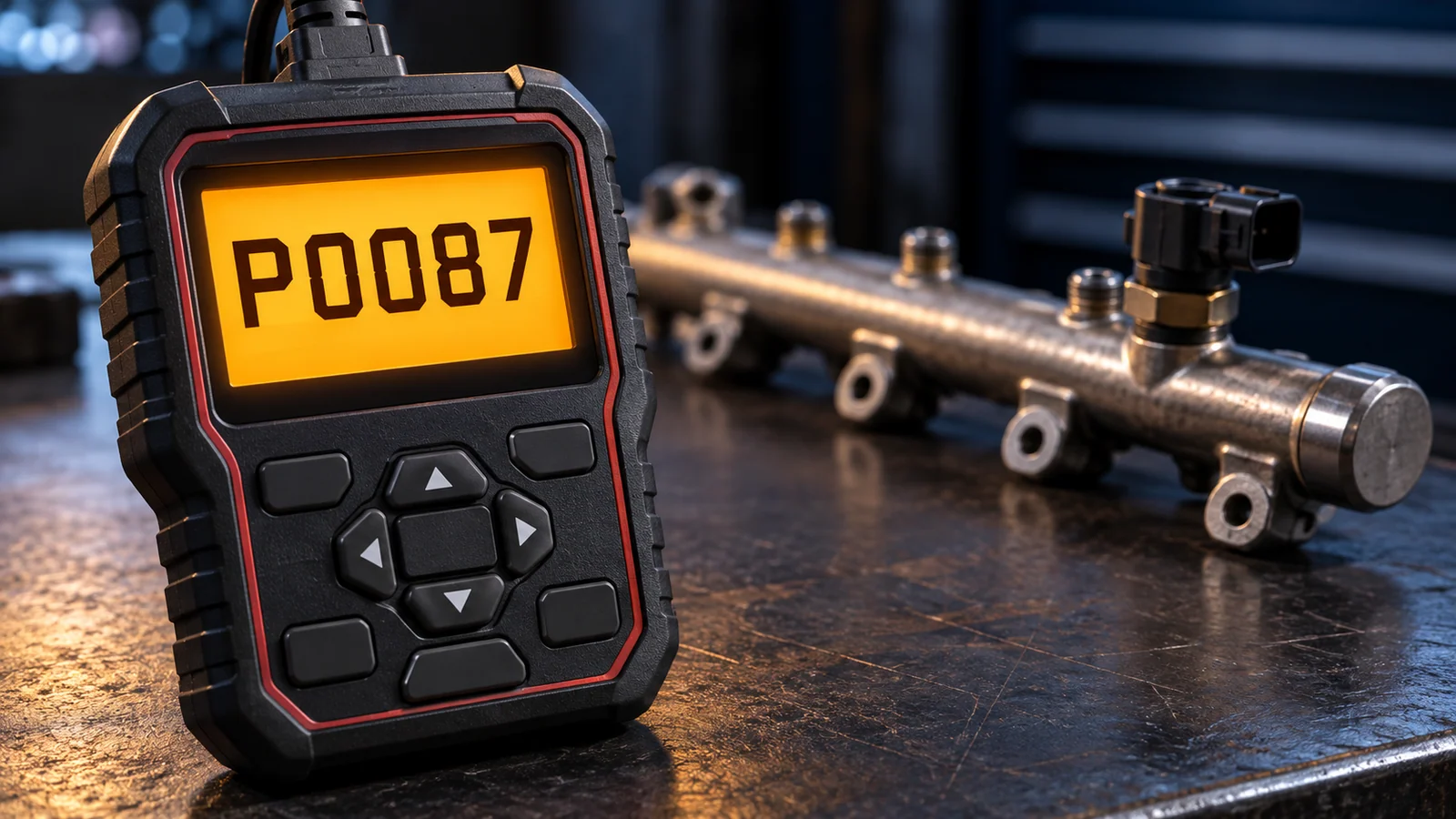
The quick answer
P0087 means the computer detected fuel-rail or system pressure below its expected level. It does not identify a failed high-pressure pump by itself. Check the actual pressure against the target under the conditions that set the code, then investigate fuel supply, restriction, electrical control and the relevant pressure circuit before replacing components.
What should you do if P0087 appears?
Record the complete code list and whether the problem occurred during starting, acceleration or another condition. Poor starting, reduced power or stalling makes prompt assessment important.
If the vehicle cannot maintain power reliably, stop safely and arrange assistance. Treat suspected fuel leakage as urgent and keep ignition sources away. Do not loosen a fuel line to see whether it has pressure; high-pressure fuel work belongs with appropriately trained personnel.
Why do gasoline direct injection and diesel need different procedures?
Both can use a high-pressure fuel system, but their supply, regulation and testing arrangements differ. HELLA's gasoline examples distinguish low-pressure delivery from the high-pressure pump and rail. Their numeric values are not specifications for a Duramax, Cummins or Power Stroke.
Identify the engine and fuel-system design before choosing a gauge, adapter or test. A conventional low-pressure fuel gauge is not a universal tool for connecting to a high-pressure rail.
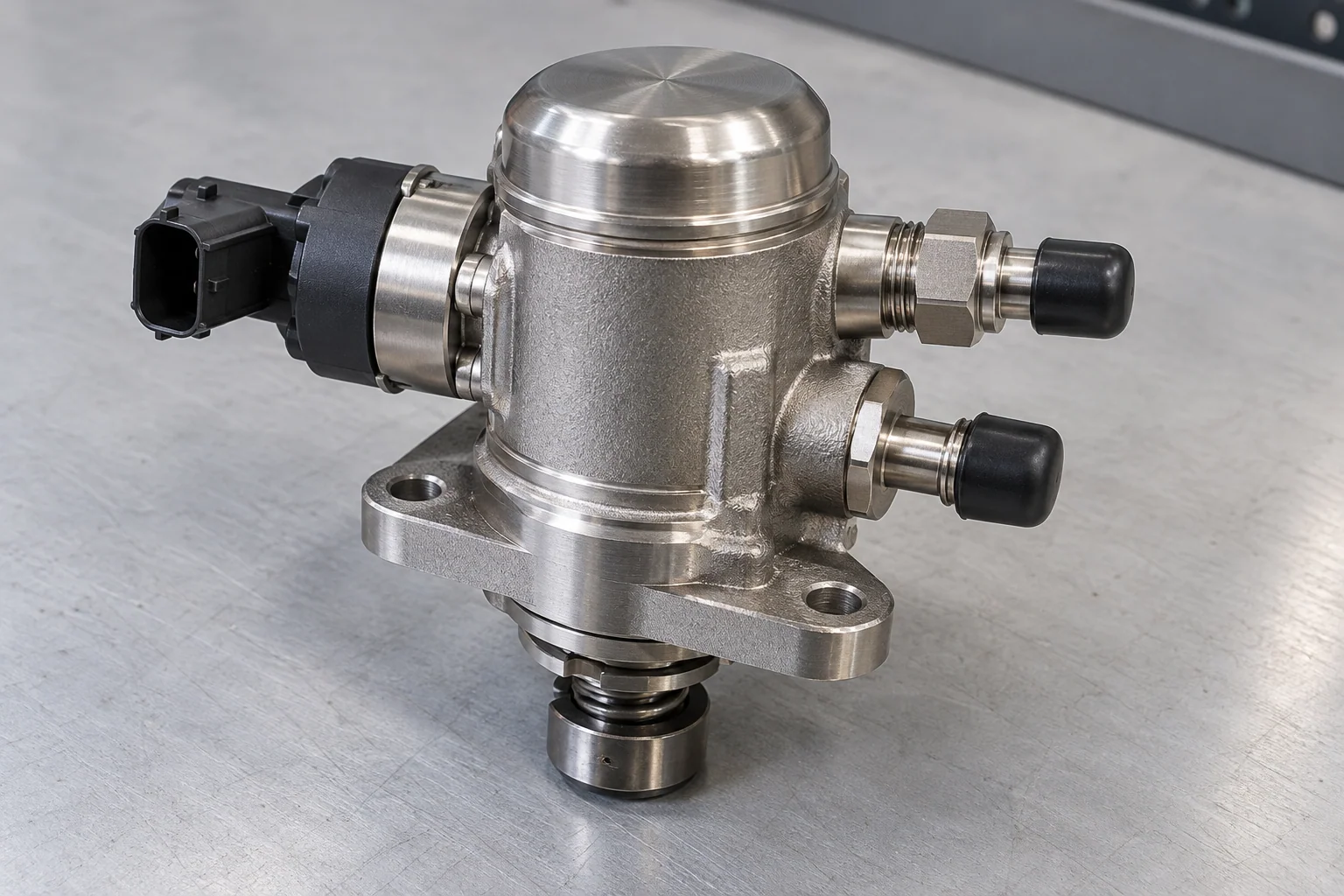
What checks should come before condemning the pump?
Compare requested and reported pressure with the proper service information. If a displayed value is implausible, assess its signal and circuit rather than assuming it represents actual pressure. HELLA checks the low-pressure side before proceeding to the high-pressure circuit in its diagnostic approach.
Underhood Service explains why pressure that looks acceptable at idle can fall when fuel demand increases. Investigate the applicable supply volume, filter or line restriction and electrical delivery. Finding low pressure does not distinguish these conditions by itself.
The technician should connect each finding to the next test. A control fault, inadequate supply and a verified mechanical pump problem require different corrections.
Can repair history or calibration matter?
Yes, on a documented application. Ford TSB 09-16-9 covers specified 2008 F-Super Duty 6.4-liter diesels built before August 2, 2007. It includes revised learning tables for P0087 or P2291 after high-pressure-pump replacement or major fuel-system repairs.
That is a limited example of checking the service history and current applicable instructions. It is not a reset procedure for a 6.7-liter Power Stroke, nor proof that programming will fix every low-pressure condition.
What should the repair and final check establish?
Repair the verified fault and address contamination or damaged related components as the manufacturer's procedure requires. HELLA emphasizes checking cleanliness and the pump drive before installing a replacement. Replacing a pump while leaving the contributing problem unresolved can cause another failure.
Ask for the diagnostic evidence, exact parts-and-labor scope and verification under the conditions that originally exposed the pressure shortfall. There is no single P0087 repair price, and clearing the code does not prove adequate fuel delivery.
Sources & further reading
- HELLA — OBD-II powertrain DTC definitions (English)
- HELLA — Checking a high-pressure fuel pump
- Underhood Service — Diagnostic Solutions: Fuel System Pressure & Volume Checks
- Ford Motor Company — TSB 09-16-9
Vehicle designs and maintenance requirements vary. Consult the owner’s manual for your exact vehicle and seek a qualified inspection for a specific fault.