Transmission
Transmission Fluid Leaks: Causes and Diagnostic Steps
Published:
Edited and fact-checked by: Jacob Bowen
General information; vehicle-specific diagnosis requires an inspection. How we prepare our guides · This page reserves space for ads. Advertising policy · Privacy choices
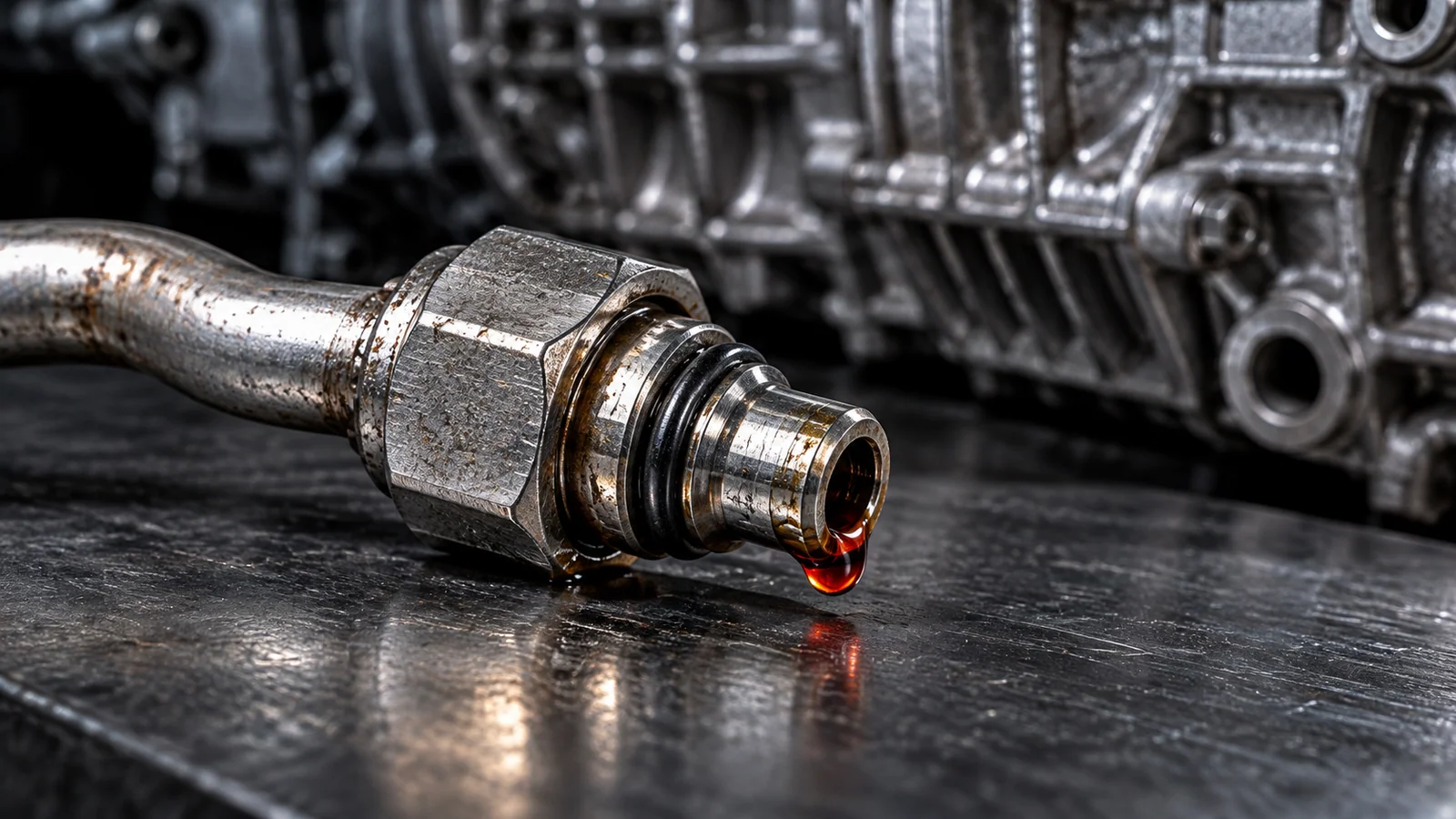
The quick answer
A transmission-fluid leak needs its source traced and the fluid level checked using the procedure for that exact transmission. A puddle does not tell you whether the problem is a pan seal, a line connection or something farther up the case. If fluid loss is rapid or the transmission slips, delays engagement or stops driving normally, stop safely and arrange assistance.
What should you record before the inspection?
Note when the spot appears: after driving, after sitting overnight or only intermittently. Photograph its position relative to the parked car and describe any change in shifting. The shop still needs to establish which fluid is leaking and where fresh fluid starts.
Fluid on the outside of a transmission can spread before it drips. Ask for the identified origin rather than accepting the lowest wet edge as the failed seal.
Why can't you just top it up like engine oil?
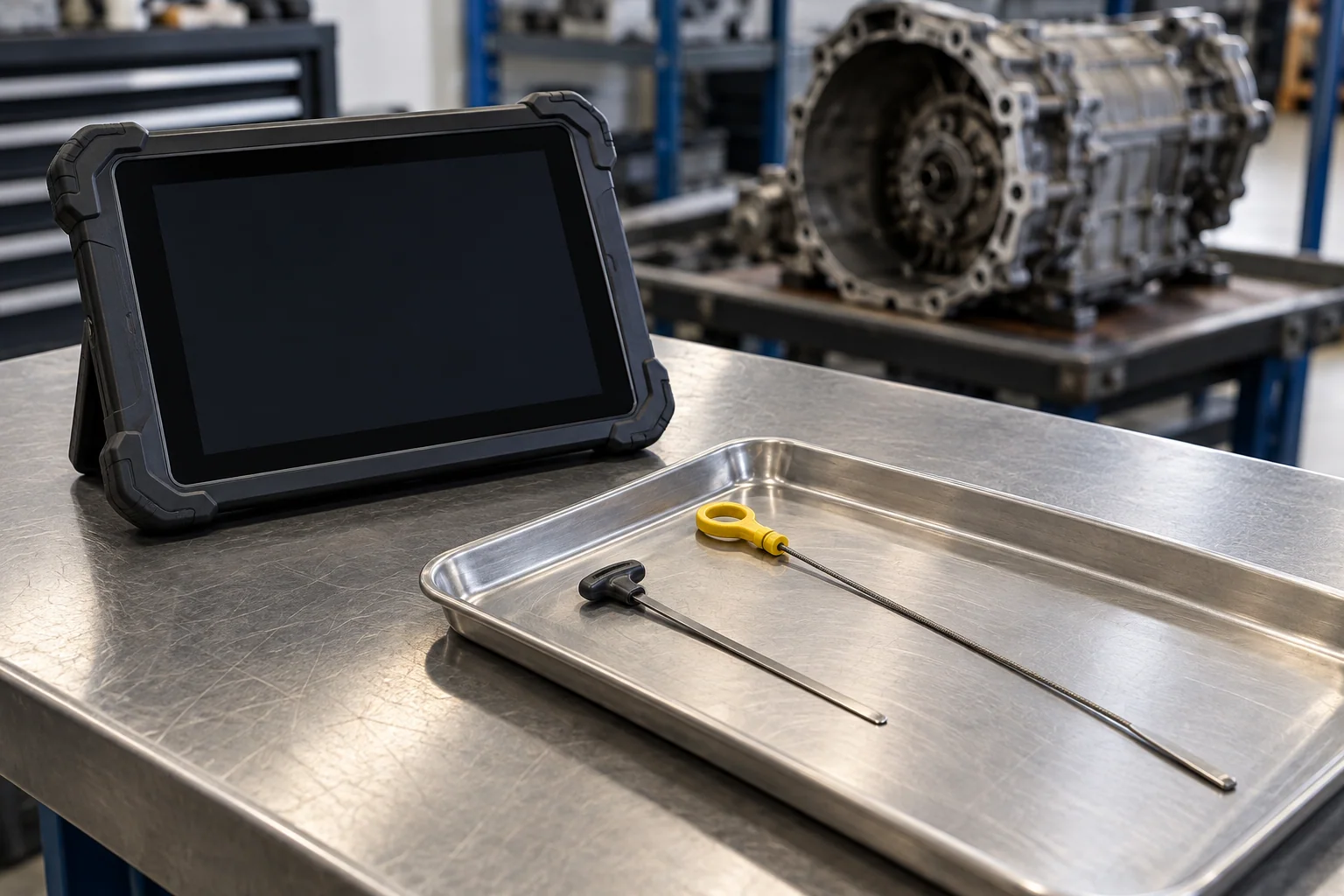
Some transmissions have a conventional dipstick; others require a different level check involving specified temperatures and operating conditions. Sonnax's 6R80 case, for example, describes a short dipstick accessed at the case rather than a conventional underhood dipstick.
Use the exact approved fluid and fill procedure. ZF warns that incorrect temperature, overfilling and underfilling can damage its transmissions, and advises against supplementary additives. Its example temperatures are not instructions for every automatic, CVT or dual-clutch transmission. Do not add a universal stop-leak product instead of diagnosing the fault.
What can a misleading leak location look like?
In a Sonnax case reported by Ed Lee, a 2009 Ford F-150 with the 5.4-liter engine and 6R80 returned after a suspected case-connector leak was repaired. Cleaning and dye checks showed multiple leak sites, and the investigation found a vent holding pressure. The lesson is to investigate why seals are leaking; it is not an instruction to remove your transmission's vent components.
GM document PIP6032A covers specified MRG/MRQ CVT applications, including listed Encore GX, Trailblazer, Malibu and 2025 Equinox models. It distinguishes filter-housing, sensor and cooler-line leaks that can be mistaken for case damage. Match the transmission and current service information before applying that diagnostic path.
Does a leaking pan or cooler mean replacing the whole unit?
Not automatically. GM's CVT guidance says heat-exchanger O-rings can be the source near the exchanger, often without needing a replacement exchanger. A verified damaged line seal likewise calls for its applicable repair, followed by a leak check. Neither finding alone establishes internal transmission damage.
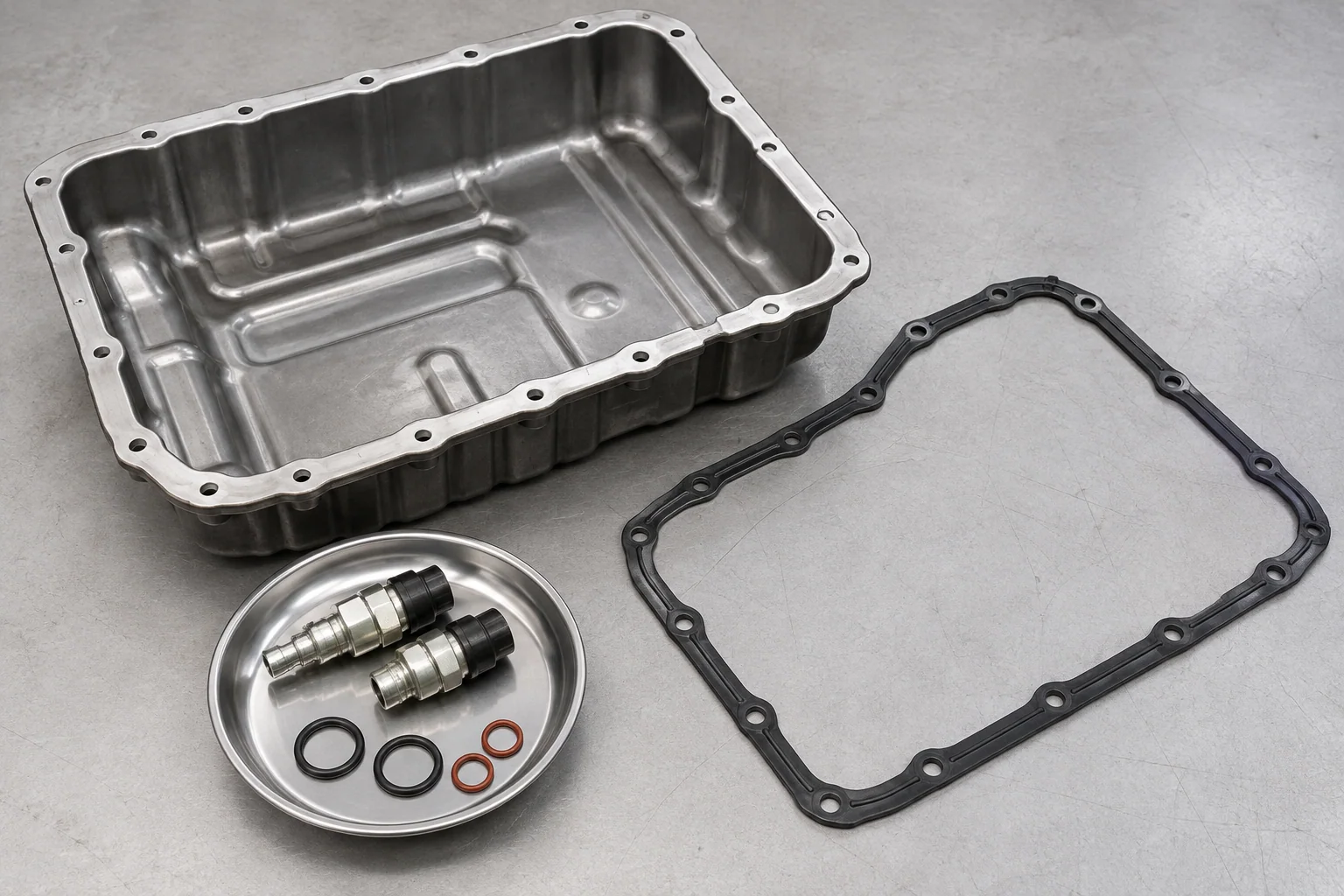
For a confirmed pan leak, gasket design and installation instructions matter. Fel-Pro's 2003 Cadillac CTS example discusses replacing that application's edge-molded gasket. It is not a rule about reusing every other transmission's gasket.
ZF's guidance also distinguishes serviceable metal-pan arrangements from particular plastic pans with integrated filters. Ask what your estimate actually includes rather than comparing gasket-only and complete-pan prices as equivalent jobs.
What should a repair estimate and final check include?
Request the proven leak location, required access, seal or assembly, specified fluid and level-setting labor. There is no single useful transmission-leak repair price without knowing that scope.
The final check should confirm both the correct level and no fresh leakage under the conditions that originally produced it. A leak repaired successfully does not, by itself, establish whether prior low-fluid operation caused internal damage; that needs separate evidence if shifting problems remain.
Sources & further reading
- Sonnax — 6R80 Transmission Leak Diagnosis
- OEM document via NHTSA — Upon Inspection the Technician may find a leak coming from the front or side of the transmission.
- Fel-Pro — 2003 Cadillac CTS Transmission Pan Gasket
- ZF Aftermarket: transmission-fluid service and level checks
Vehicle designs and maintenance requirements vary. Consult the owner’s manual for your exact vehicle and seek a qualified inspection for a specific fault.