Transmission
Transmission Slipping: Causes and Diagnostic Steps
Published:
Edited and fact-checked by: Jacob Bowen
General information; vehicle-specific diagnosis requires an inspection. How we prepare our guides · This page reserves space for ads. Advertising policy · Privacy choices
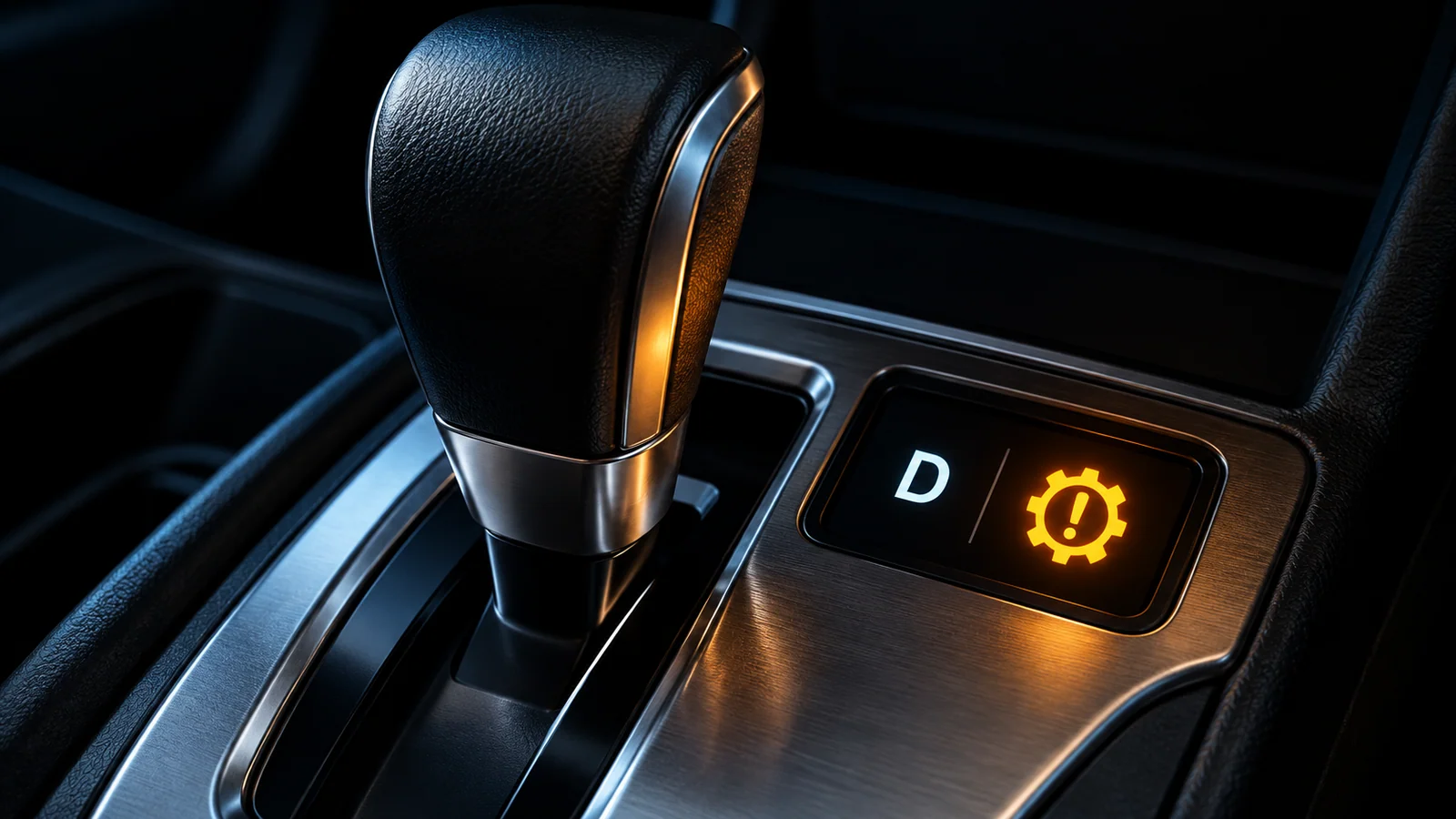
The quick answer
Transmission slipping can feel like the engine speeds up without the expected increase in road speed, or like a flare during a shift. Low fluid, a pressure-control problem or internal wear can produce similar complaints. Have the fault checked promptly; stop driving if the car cannot engage or maintain drive reliably rather than repeatedly revving it to make it move.
What should you tell the technician?
Describe when the problem happens: selecting Drive or Reverse, taking off, changing a particular gear, accelerating or after warming up. Note any warning, leak or change after recent service.
Do not repeatedly reproduce a severe slip for a recording. Give the shop the conditions and let it decide how to test safely. An increase in RPM alone still needs interpreting against what that transmission was being commanded to do.
Why are the correct fluid and level checks first?
A conventional automatic needs sufficient fluid for its hydraulic functions. A low level or aerated fluid can interfere with engagement, but the level must be measured by the exact procedure. Some units use a dipstick; others require temperature-dependent checks at a service opening.
Confirm the approved fluid specification, especially if symptoms began after service. ZF warns that overfilling, underfilling and incorrect fill temperature can damage its transmissions. Do not warm up a severely slipping vehicle by driving it merely to perform a generic dipstick check.
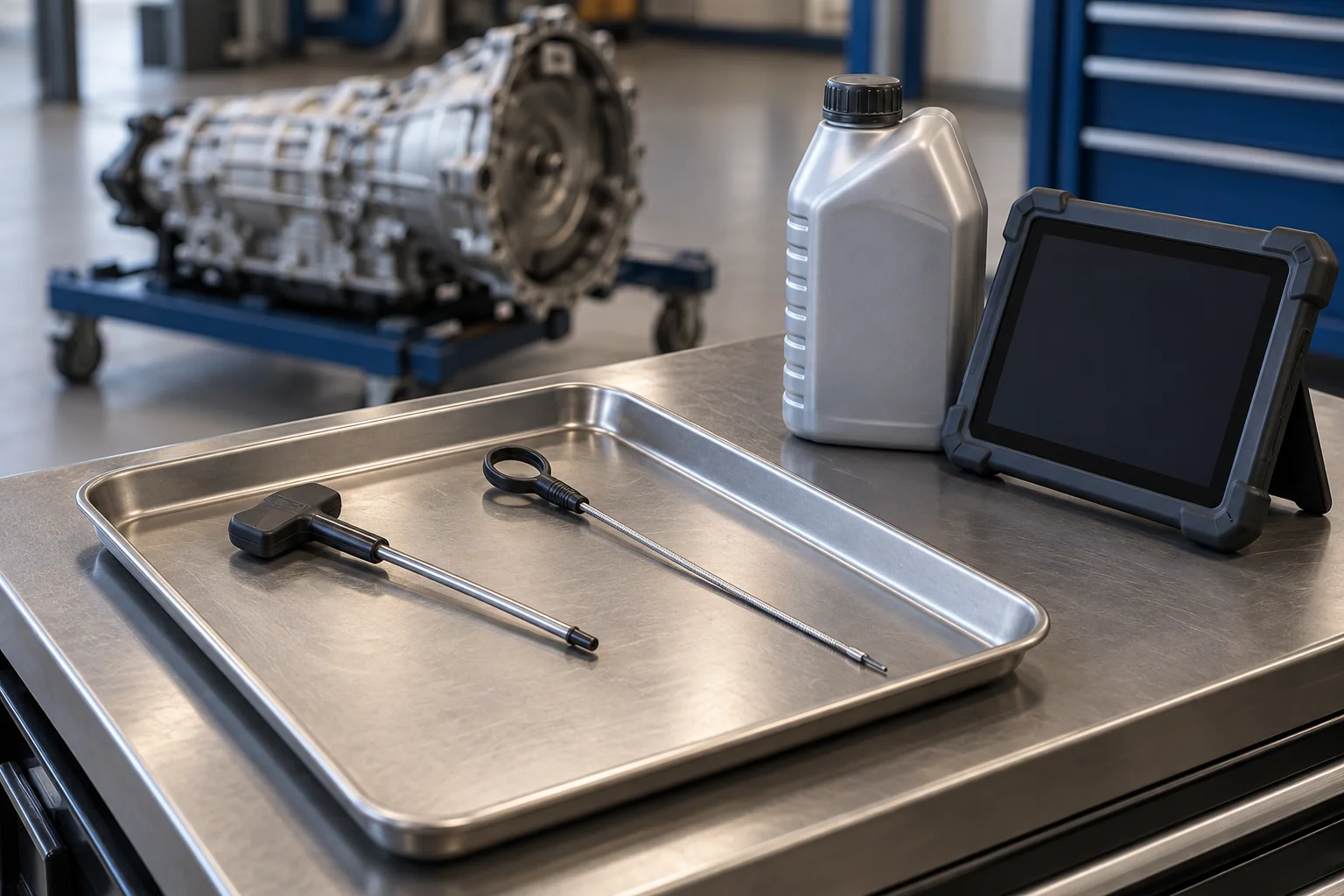
What tests should support the diagnosis?
The shop should read the relevant transmission codes and compare operating data with the complaint. Input and output speeds, interpreted with commanded gear, can help establish where the relationship is incorrect.
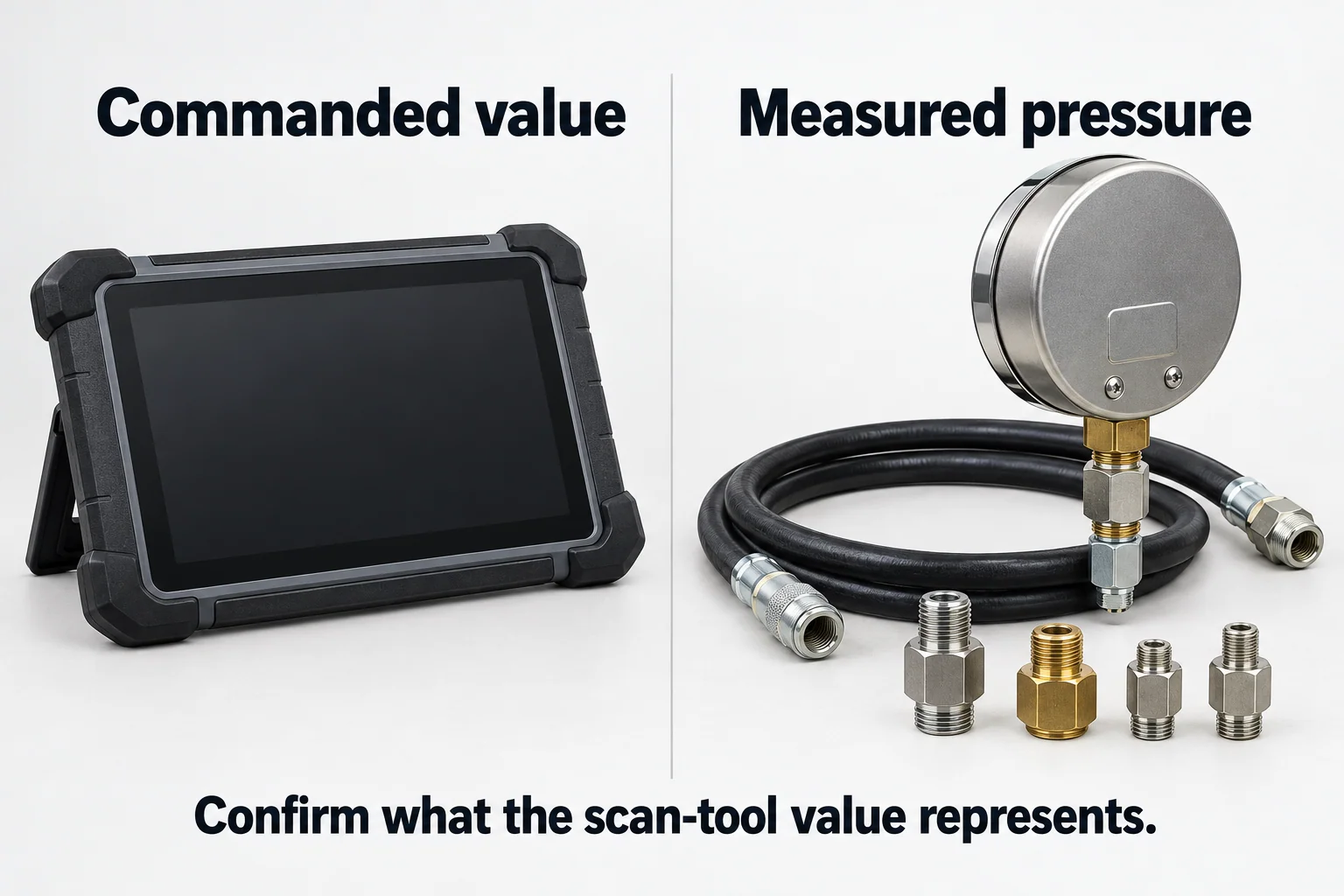
Hydraulic testing may then be appropriate. Sonnax cautions that a scan-tool pressure value can represent a command rather than a direct pressure measurement. Ask whether the displayed pressure was actually measured and which applicable test confirmed a hydraulic problem.
Pressure-test access and interpretation vary by transmission. A low reading needs evaluation within the relevant circuit; it does not automatically identify the pump or prove that the whole unit is beyond repair.
Will a fluid change or stop-slip additive fix it?
Correcting a verified fluid or level problem can be necessary, but changing fluid is not evidence that worn or damaged internal parts have been restored. An identified leak also needs repair rather than repeated topping up.
Do not choose an additive as a substitute for diagnosis. ZF specifically advises against supplementary additives that change its fluid's chemistry. Use the manufacturer's guidance for your transmission instead of assuming a product labeled 'stop slip' is compatible or capable of repairing the fault.
When is a rebuild or replacement justified?
Ask what evidence separates a repairable control or hydraulic fault from internal damage requiring removal. A useful estimate explains that finding, the proposed scope, fluid and setup requirements, and the written warranty.
There is no single slipping-transmission repair price: correcting a connection or fluid issue and rebuilding an internally damaged unit are different jobs. After repair, verify the original condition and relevant data rather than relying only on a cleared warning light.
Sources & further reading
- AA1Car / Larry Carley — Automatic Transmission Slipping
- MOTOR — Using a Scan Tool for Transmission Diagnosis
- Sonnax — Sonnax Transmission Diagnostics Using Pressure Guages
- ZF Aftermarket: transmission-fluid service and precautions
Vehicle designs and maintenance requirements vary. Consult the owner’s manual for your exact vehicle and seek a qualified inspection for a specific fault.