Transmission
CVT Transmission Problems: Causes and Diagnostic Steps
Published:
Edited and fact-checked by: Jacob Bowen
General information; vehicle-specific diagnosis requires an inspection. How we prepare our guides · This page reserves space for ads. Advertising policy · Privacy choices
The quick answer
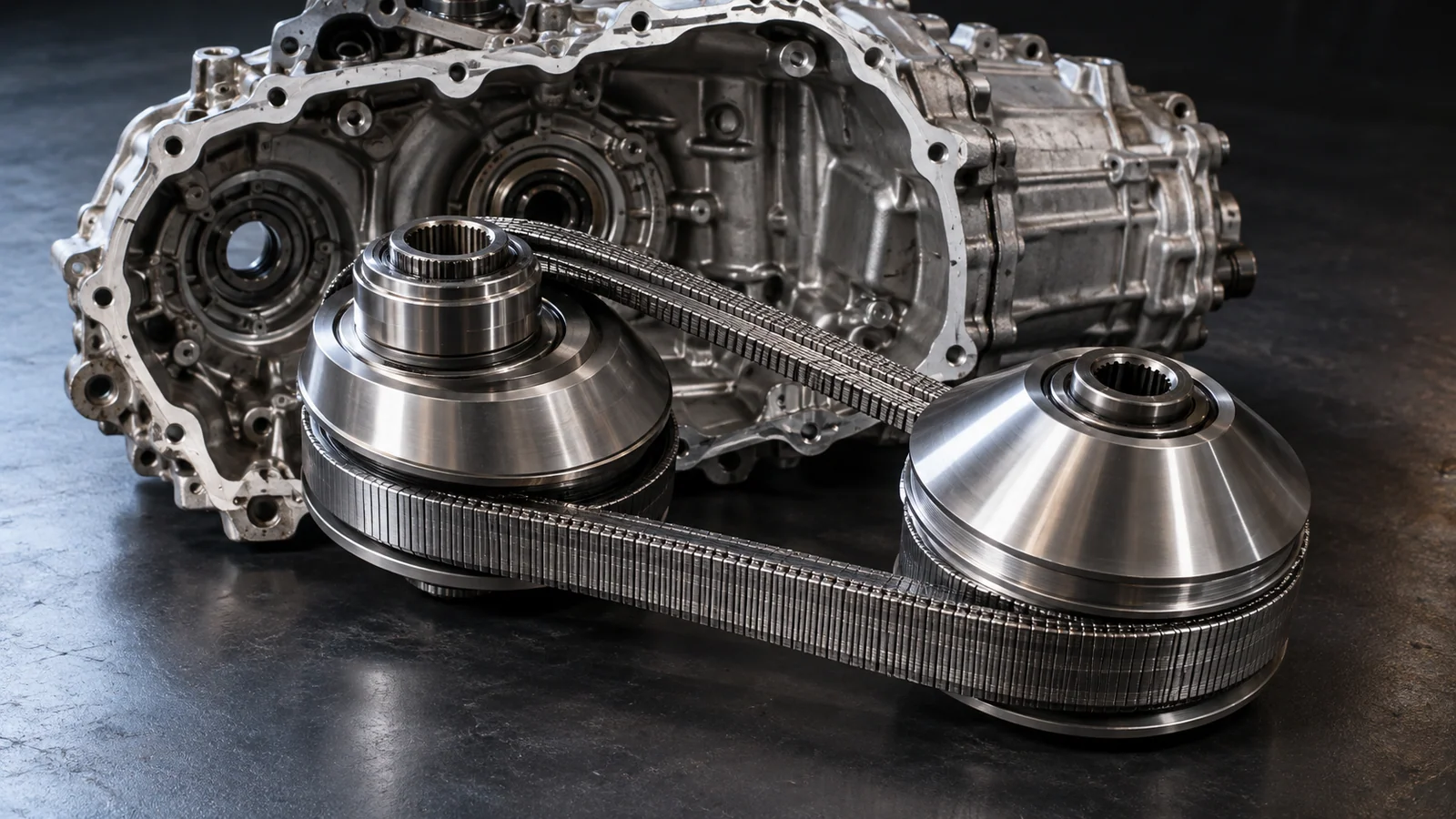
CVT judder, loss of drive, slipping, unusual noise or a transmission warning needs diagnosis using the exact transmission's procedures. Incorrect fluid level, hydraulic-control problems and internal damage can produce overlapping symptoms. Confirm the fluid specification and level, scan data and relevant tests before choosing a fluid service, valve-body repair or transmission replacement.
Are all CVTs built the same way?
No. Identify the vehicle, engine and transmission before applying advice. Nissan, Subaru, Honda and Toyota do not all use the same CVT, and a bulletin for one unit is not a repair instruction for another.
Hybrid eCVT terminology also needs care. Toyota describes the 2027 Corolla Hybrid's ECVT as using planetary gears and electric motors, while its gasoline Corolla uses a pulley-based CVT with a launch gear. Belt-and-pulley repair advice should not be applied to that hybrid transmission just because both names include CVT.
What do judder, slipping and whining tell you?
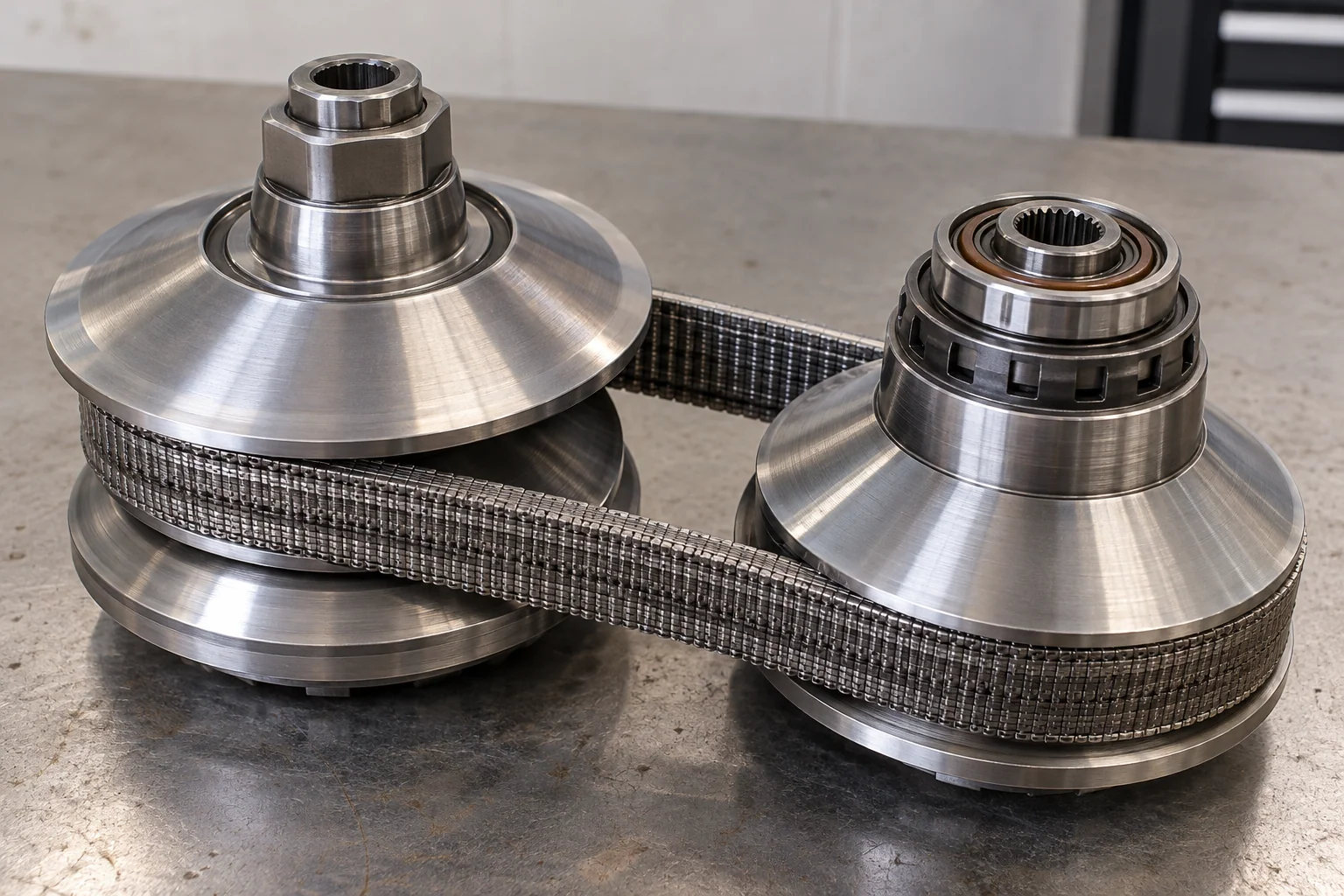
Describe what the car does: vibration when pulling away, engine-speed surges, delayed engagement, loss of acceleration or noise that changes with speed. These observations narrow the investigation but do not prove one internal fault.
Sonnax's Jatco guidance treats judder as a reason to investigate pressures, clutch operation and bearings. Its JF011E bearing article describes rotational whining that can worsen with vehicle speed. The location and cause still need confirmation before disassembly.
Metal in the pan also needs interpretation. Sonnax cautions that some magnetic fuzz can be expected in the units it discusses; its bearing article describes metal flaking from damaged bearing races. Those are not interchangeable findings. Ask what material was found and what other evidence supports damage.
What should the shop check before removing the transmission?
Start with the correct fluid, leak inspection and the specified level-check procedure. Fluid temperature and operating conditions matter. Refilling only the amount that drained out may reproduce an existing incorrect level.
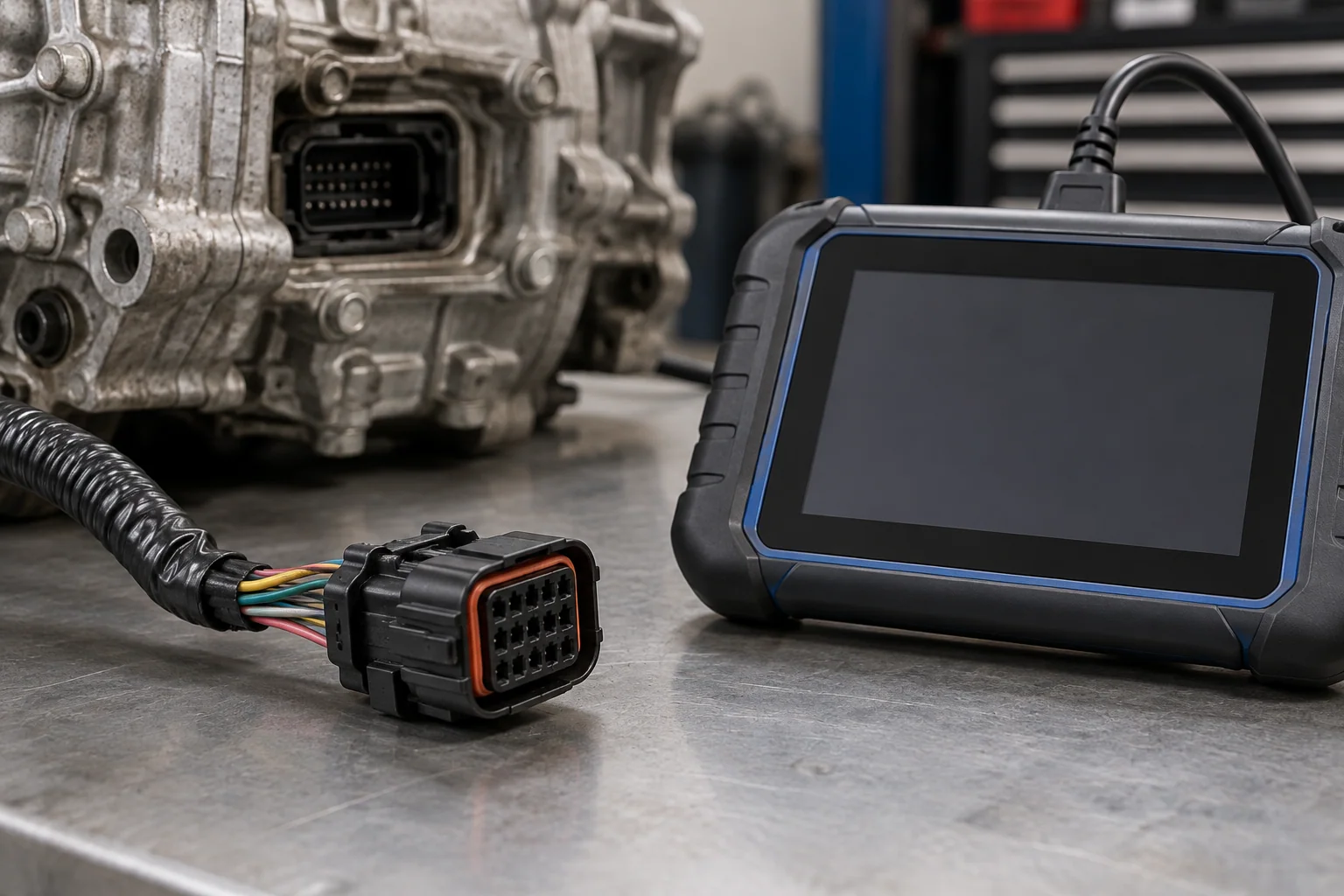
Save codes and operating data, then follow the transmission's diagnostic chart. Depending on the unit and complaint, tests can compare pulley speeds and calculated ratio, hydraulic pressure, temperature and control operation. These are professional tests with application-specific limits.
Mitsubishi's TSB-22-23-002 illustrates that specificity: it revises service information for 2014–2022 Mirage and 2017–2022 Mirage G4 CVTs. It includes model-scoped fluid and diagnostic procedures. Its capacities, code criteria and temperatures should not be copied to a Rogue, Altima or another CVT.
Will changing CVT fluid fix the problem?
A fluid service may correct a demonstrated fluid-related issue, but it does not repair damaged bearings, pulleys or other internal parts. Ask what fault was confirmed and how the proposed service or repair addresses it.
A CVT fluid-change quote should identify the exact fluid, service method, quantity, filters or seals where applicable, and the required level verification. Major repair and routine service are different scopes. Compare prices for your vehicle and location rather than using one number for every CVT.
After work, the technician should verify operation under the relevant conditions and complete any required manufacturer checks or learning procedures. Severe shudder, loss of drive or an overheating warning calls for stopping safely and arranging help rather than continuing to test the car in traffic.
How do you check recalls or other coverage?
Use the vehicle's VIN in NHTSA's recall lookup and ask the manufacturer or dealer about current applicable coverage. Search results for a model year do not establish that your vehicle has an open recall or qualifies for a particular repair.
A technical service bulletin describes service information; do not treat the Mitsubishi example above as a recall or a promise of free repairs. Confirm applicability and current instructions before authorizing work.
Sources & further reading
- Sonnax — Sonnax CVT Success: In-Vehicle Isolation of Common Problems
- Sonnax — Sonnax Chasing Bearing Noise in Jatco CVT Units
- OEM document via NHTSA — Mitsubishi TSB-22-23-002 — CVT maintenance and diagnostic revisions
- Toyota: Corolla gasoline CVT and hybrid ECVT designs
- NHTSA: check recalls by VIN
Vehicle designs and maintenance requirements vary. Consult the owner’s manual for your exact vehicle and seek a qualified inspection for a specific fault.