Drivetrain
CV Boot Replacement vs. Axle Replacement: How to Decide
Published:
Edited and fact-checked by: Jacob Bowen
General information; vehicle-specific diagnosis requires an inspection. How we prepare our guides · This page reserves space for ads. Advertising policy · Privacy choices
The quick answer
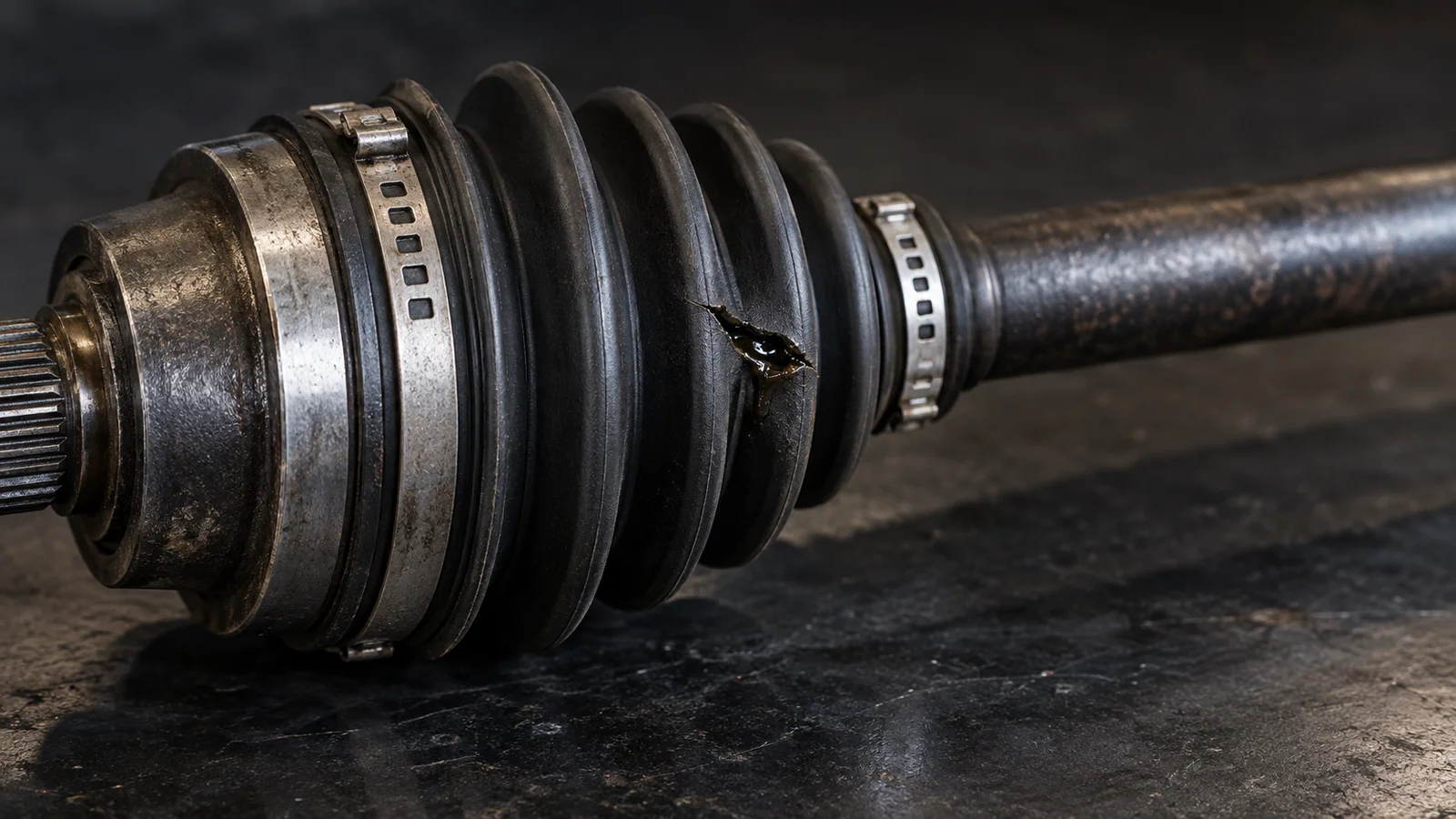
A torn CV boot can sometimes be replaced while keeping the original joint if inspection finds it serviceable. If the joint is worn, damaged or has run without adequate lubrication, a new boot will not repair it. Compare a boot repair with the appropriate joint or complete-axle repair based on condition and the full installed price.
What are the signs of a damaged CV boot?
A split boot, loose clamp or grease thrown onto the inside of a wheel calls for inspection. MOOG explains that the boot retains grease and helps keep water and debris out. A tear can therefore damage the joint even before it becomes noisy.
Clicking when turning, clunking or vibration can justify checking the joints, but these symptoms have other possible causes. Ask whether the shop found boot damage, joint damage or both. Grease visible near the axle is not a substitute for inspecting its source.
When is replacing just the boot a reasonable choice?
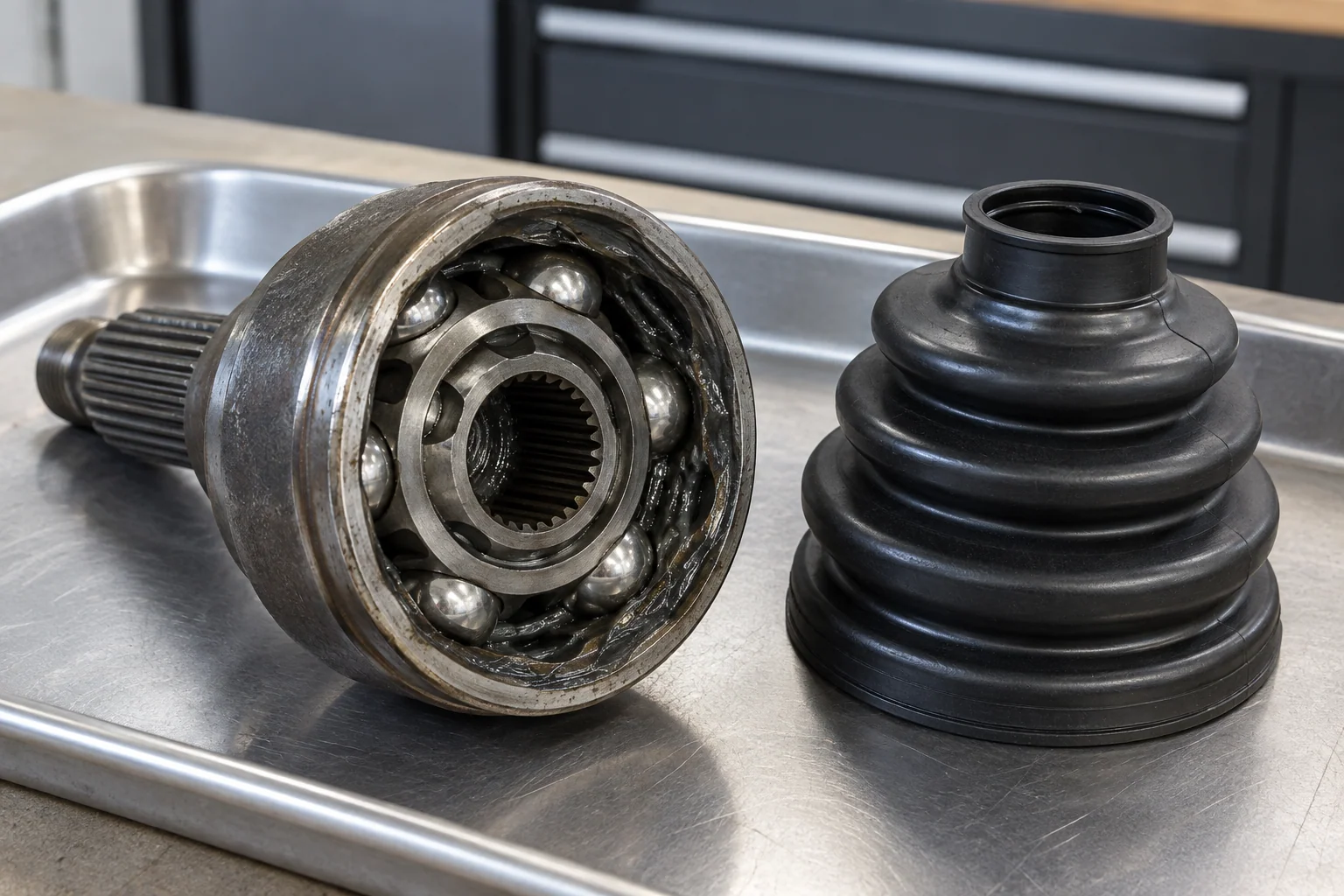
It is an option when the joint can be properly cleaned, inspected and confirmed suitable for reuse. AA1Car describes checking the old grease for contamination and examining the joint's working surfaces for damage. The condition inside matters more than how small the tear looks outside.
A joint that is damaged or noisy because it lost lubrication needs more than a fresh grease supply and cover. If the boot has been open for an unknown period, ask what inspection supports keeping the joint rather than assuming either that it is ruined or that it is fine.
What makes a boot repair last?
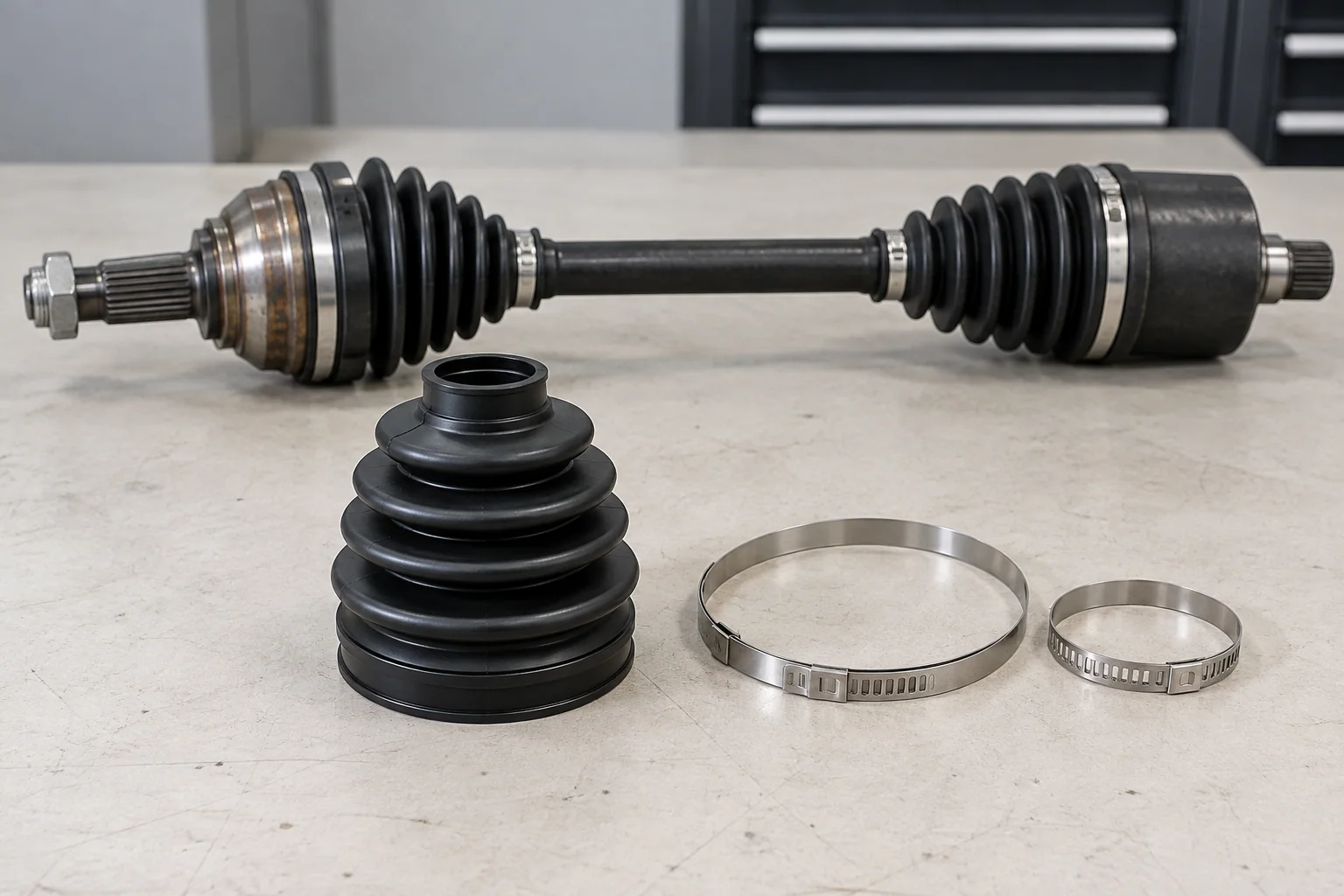
The boot must suit the particular joint and shaft. GKN emphasizes application-specific fit and material, and supplies kits with the relevant retaining parts. A similar-looking generic cover is not enough to establish correct fitment.
A proper repair includes the required joint inspection, correct grease and quantity, clean sealing areas and correctly installed clamps. The boot must not be twisted or collapsed. Follow the kit and vehicle instructions rather than a generic grease split or clamp setting.
Access and joint design affect how much disassembly is needed. If an axle is removed, the associated fasteners, seals and tightening requirements also need attention. This is more involved than wrapping a new cover around a dirty joint.
How do boot and complete-axle costs compare?
RepairPal's US boot-replacement estimate, updated September 3, 2026, is $411–$528: labor $251–$369 and parts $159–$160. Its separate CV-axle replacement estimate is $1,283–$1,381, with labor $208–$306 and parts $1,075–$1,076. Both exclude taxes, fees, location and related repairs.
These broad benchmarks do not determine which option is cheaper for your car. Actual axle prices and boot-service labor vary. Request comparable quotes for the same side and scope, including parts type, hardware, fluid and warranty. Do not add a complete boot-service total to a complete axle-service total when one repair replaces the other.
How soon should you deal with a torn boot?
Arrange inspection promptly so continued grease loss and contamination do not remove the option of saving the joint. There is no dependable remaining-mileage allowance for a torn boot.
If severe vibration, binding or loss of drive develops, stop safely and arrange transport. After repair, ask the shop to check that the boot seals, clears nearby parts and stays correctly positioned through normal movement, and that any original noise is resolved.
Sources & further reading
- MOOG — Why CV Axles Fail
- gknautomotive.com — Driveshaft boots | GKN Automotive
- AA1Car / Larry Carley — CV Joint and Boot Repair
- RepairPal — CV Boot Replacement Cost Estimate
- RepairPal: CV-axle replacement cost estimate
Vehicle designs and maintenance requirements vary. Consult the owner’s manual for your exact vehicle and seek a qualified inspection for a specific fault.