Brakes
Sticking Brake Caliper Symptoms: How to Test and Confirm the Fault
Published:
Edited and fact-checked by: Jacob Bowen
General information; vehicle-specific diagnosis requires an inspection. How we prepare our guides · This page reserves space for ads. Advertising policy · Privacy choices
The quick answer
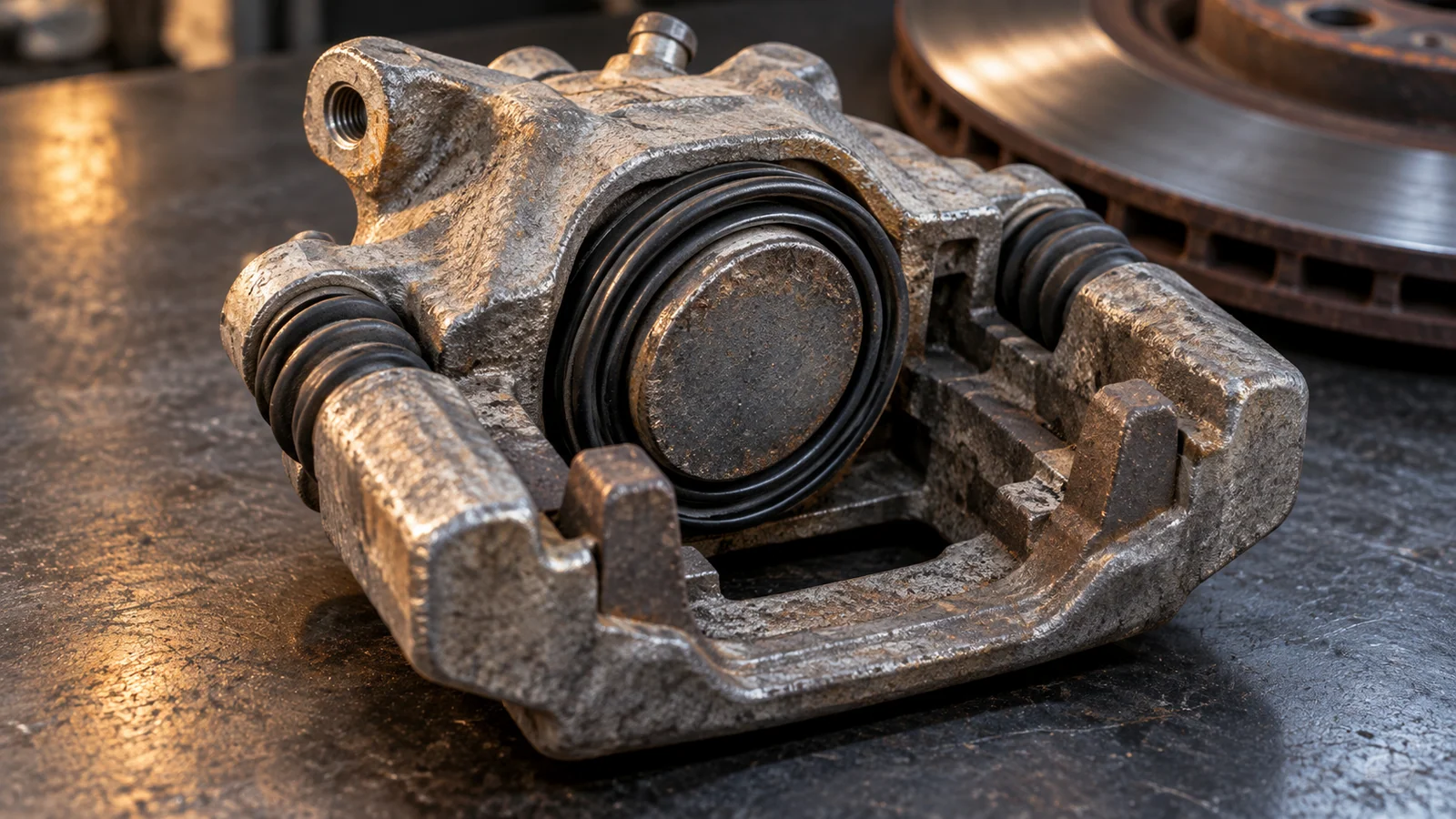
A sticking brake caliper can cause excessive heat at one wheel, uneven pad wear, pulling or a brake that does not release properly. Those signs call for a brake inspection; they do not prove the complete caliper is bad. The shop should distinguish a seized piston from sticking guides, binding pads or trapped hydraulic pressure.
What does a sticking brake feel or sound like?
You may notice the car pulling, a dragging sensation, noise when you are not pressing the pedal or an unusually hot wheel area. HELLA identifies uneven wear and excessive heat as possible consequences of seized floating-caliper guides.
Do not touch a hot wheel or rotor to compare temperatures. If braking changes, the car pulls strongly, a wheel smokes or brake fluid leaks, stop safely and arrange recovery. Do not drive farther just to see whether the brake frees itself.
How can a technician identify which part is sticking?
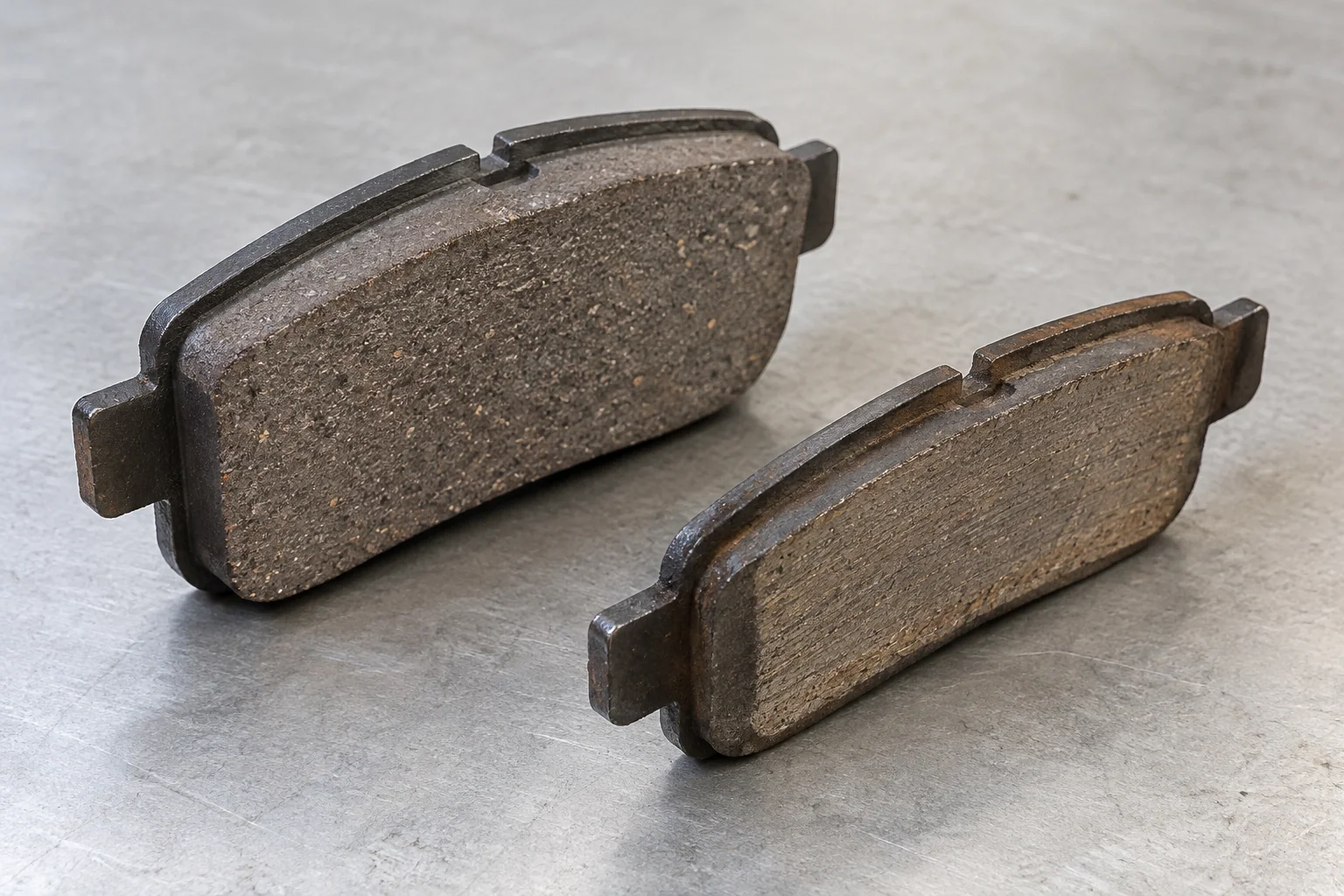
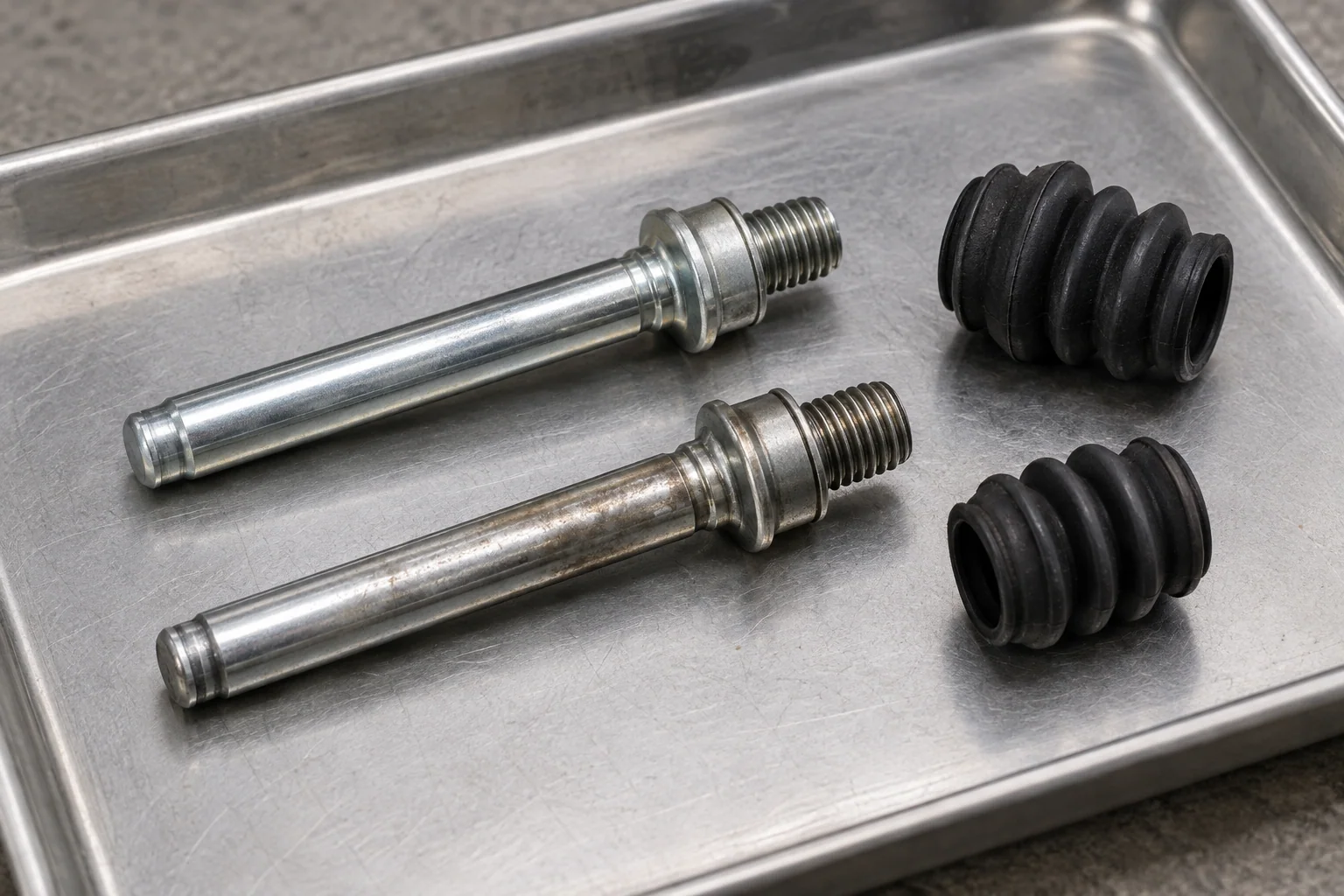
The inspection should compare pad wear and check the piston, dust boot, guides and pad movement. On a floating caliper, the body must move freely on its guides for the two pads to work correctly. Corroded guides or damaged protective sleeves can interfere with that movement.
The technician can compare wheel drag and temperatures when safe, then investigate the cause. Uneven wear is evidence to follow, rather than proof of one particular failed component. The condition of the rotor, hose and nearby suspension also matters.
Could a brake hose cause the same problem?
A hydraulic restriction can hold a brake applied even when the caliper itself is not mechanically seized. Ask whether the technician found a mechanical bind or pressure that was not releasing. That distinction helps avoid replacing a caliper while leaving the original fault in place.
Opening hydraulic fittings is a workshop diagnostic step, not a roadside way to release the brake and continue driving. The system must be repaired and checked for safe operation afterward.
Does a stuck caliper always need replacement?
Not always. A guide problem may be repairable with the correct service parts if the caliper is otherwise sound. A damaged, leaking or internally seized unit may need rebuilding or replacement. Lubricant must suit the caliper’s rubber components; an unsuitable product can make the problem worse.
Rear calipers require particular care. Some parking-brake designs need a piston turned during retraction, and electronic parking brakes require their prescribed service procedure. Resistance to an incorrect tool or method does not establish that the piston has seized. See the caliper-replacement guide once the diagnosis is confirmed.
What should a repair estimate include?
Ask which component failed, whether heat damaged the pads or rotors and what the quote covers on each side of the axle. New pads alone will not correct a brake that continues to bind.
RepairPal’s September 2026 national caliper-replacement estimate is $898–$968, before taxes, fees and location adjustments. Confirm the number of calipers and any pad, rotor, hose or bleeding work in your vehicle-specific estimate.
Sources & further reading
- HELLA — Repair instructions for brake calipers - removing and installing disc brakes on the Teves floating brake calipers FN series
- HELLA — Maintenance information for brake caliper Pushing the brake pistons back
- HELLA — Floating caliper guide pins - practical repair tips
- RepairPal — Brake Caliper Replacement Cost Estimate
- AA1Car: brake caliper diagnosis
Vehicle designs and maintenance requirements vary. Consult the owner’s manual for your exact vehicle and seek a qualified inspection for a specific fault.