Emissions
P0135: Causes, Diagnostic Tests and Repair Options
Published:
Edited and fact-checked by: Jacob Bowen
General information; vehicle-specific diagnosis requires an inspection. How we prepare our guides · This page reserves space for ads. Advertising policy · Privacy choices
The quick answer
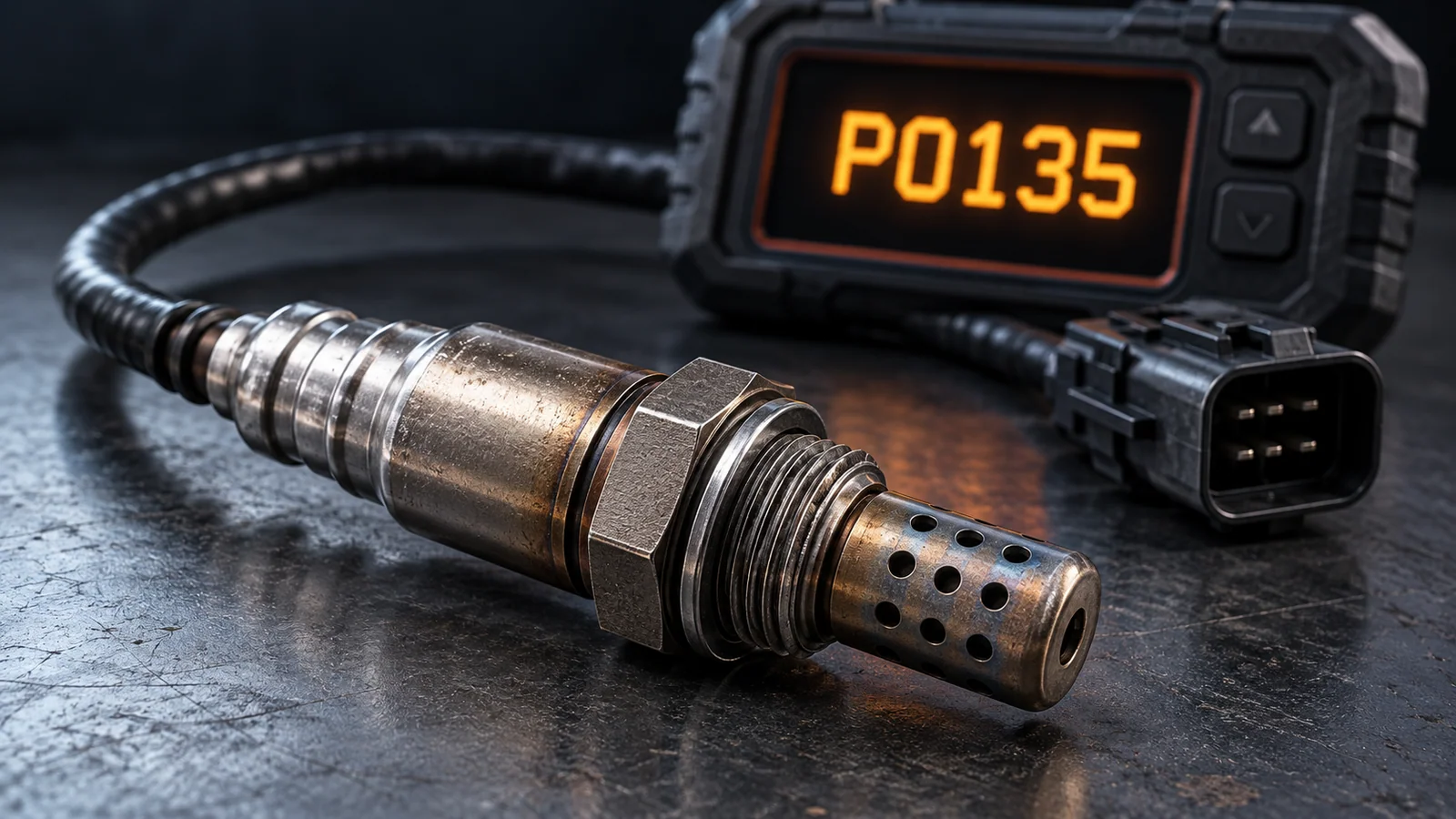
P0135 means the computer detected a problem with the oxygen-sensor heater circuit for bank 1, sensor 1. The heater helps the sensor reach operating temperature. Diagnose that circuit before replacing the sensor: a damaged connector, wiring fault or supply problem can require a different repair from a failed heater inside the sensor.
What is different about a heater-circuit code?
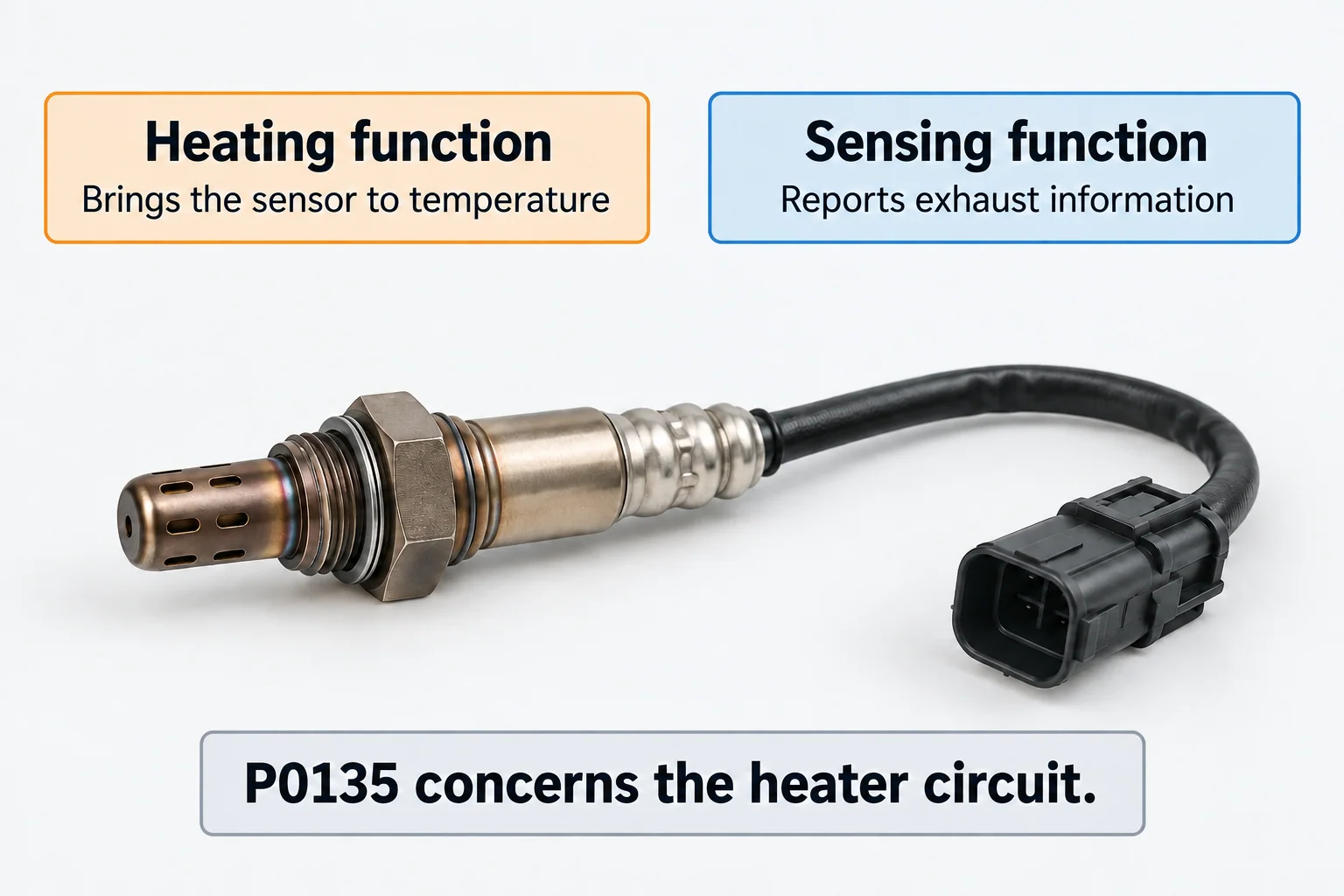
The sensing element reports exhaust information; the heater helps bring it to the temperature needed for operation. P0135 concerns the heating function, so watching the mixture signal alone does not answer the main diagnostic question.
A sensor may eventually become hot from the exhaust despite a heater fault. Seeing a response after the engine warms up therefore does not establish that its heater circuit is sound.
Which sensor is bank 1, sensor 1?
P0135 identifies bank 1, sensor 1, generally the upstream position on that bank. Confirm the physical location in the service information for your exact engine. Do not choose a replacement simply because it is the easiest sensor to see.
Delphi and HELLA describe different oxygen-sensor designs. Match the connector, heater characteristics and application rather than relying on the number or color of wires. A generic narrowband signal-voltage rule is not a test for every sensor design.
What should be checked before buying a sensor?
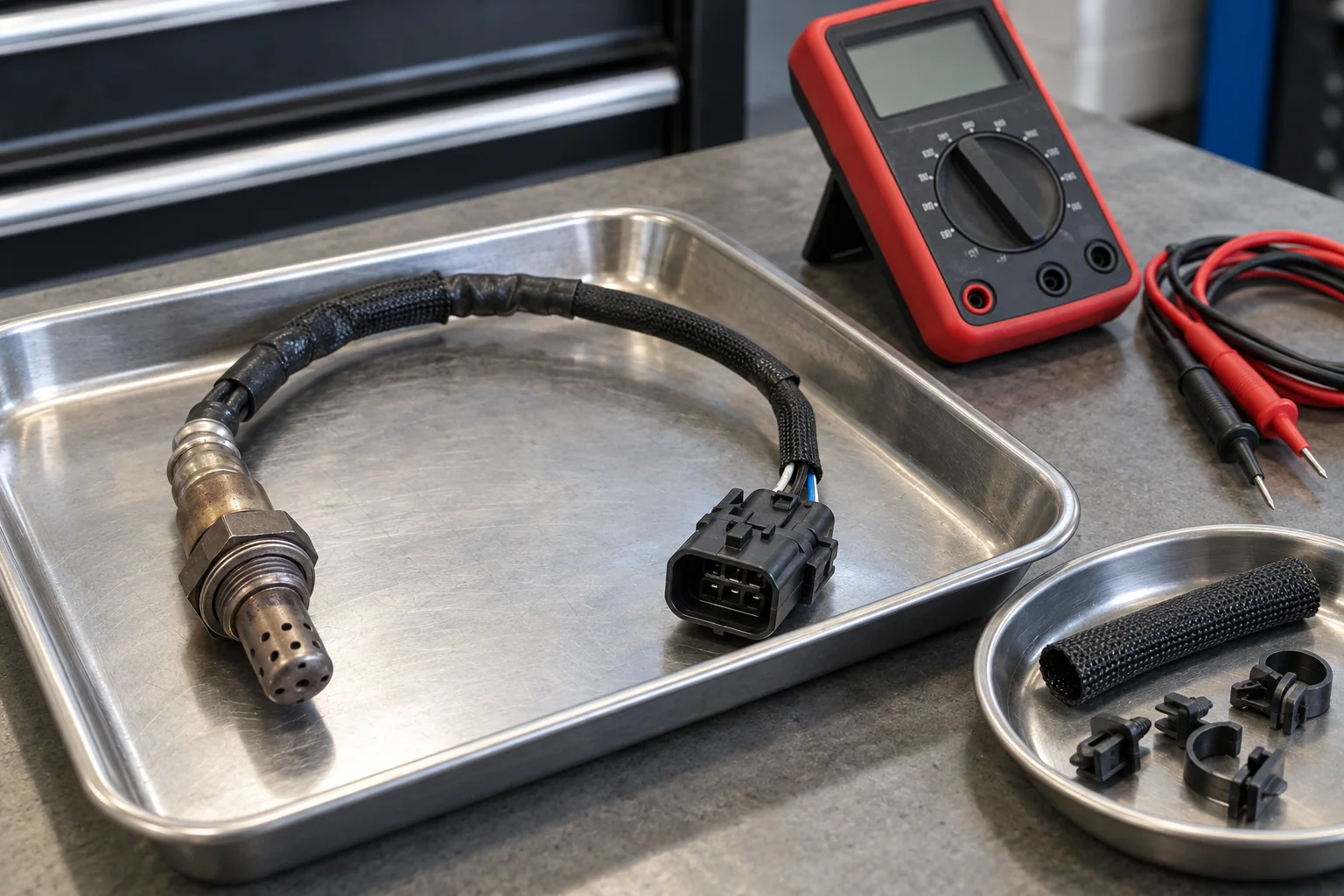
Save the complete code list and inspect the relevant harness and connector for damage, poor contact or contamination. Use the correct wiring diagram to identify the heater connections instead of guessing from wire colors.
HELLA's heater checks distinguish resistance on the disconnected sensor side from voltage supply on the vehicle side. Apply the manufacturer's specified test conditions and limits; resistance testing is performed on a de-energized, isolated circuit. The technician should also verify the applicable control path before deciding that the sensor itself failed.
If the indicated supply is missing, investigate that supply circuit. If the heater fails its specified test while the rest of the circuit is correct, sensor replacement may be justified. Ask which result supports the conclusion.
What should the repair include?
Correct the verified electrical fault or fit the exact replacement sensor as appropriate. For replacement, HELLA calls for the specified tool and torque, protection of the sensing element, and cable routing clear of hot, moving or sharp surfaces.
Contamination or mixture faults can affect sensor operation, but they need separate evidence. Do not turn a heater-circuit finding into an automatic catalyst, injector or full oxygen-sensor-set replacement.
Can you keep driving, and how is the fix confirmed?
Arrange diagnosis rather than repeatedly clearing the warning. P0135 alone does not assess every reason the car might run poorly; report rough running, stalling or other warnings as additional symptoms.
Ask how the heater operation and relevant fault monitor will be checked after repair. A warm sensor signal or a freshly cleared light is not enough by itself. The repair cost depends on whether testing identifies wiring, supply/control or the sensor as the cause.
Sources & further reading
- HELLA — OBD-II powertrain DTC definitions (English)
- Delphi — Making sense of your sensors: Oxygen sensor
- HELLA — Lambda sensor testing and troubleshooting
Vehicle designs and maintenance requirements vary. Consult the owner’s manual for your exact vehicle and seek a qualified inspection for a specific fault.