Ignition and engine control
P0303: Causes, Diagnostic Tests and Repair Options
Published:
Edited and fact-checked by: Jacob Bowen
General information; vehicle-specific diagnosis requires an inspection. How we prepare our guides · This page reserves space for ads. Advertising policy · Privacy choices
The quick answer
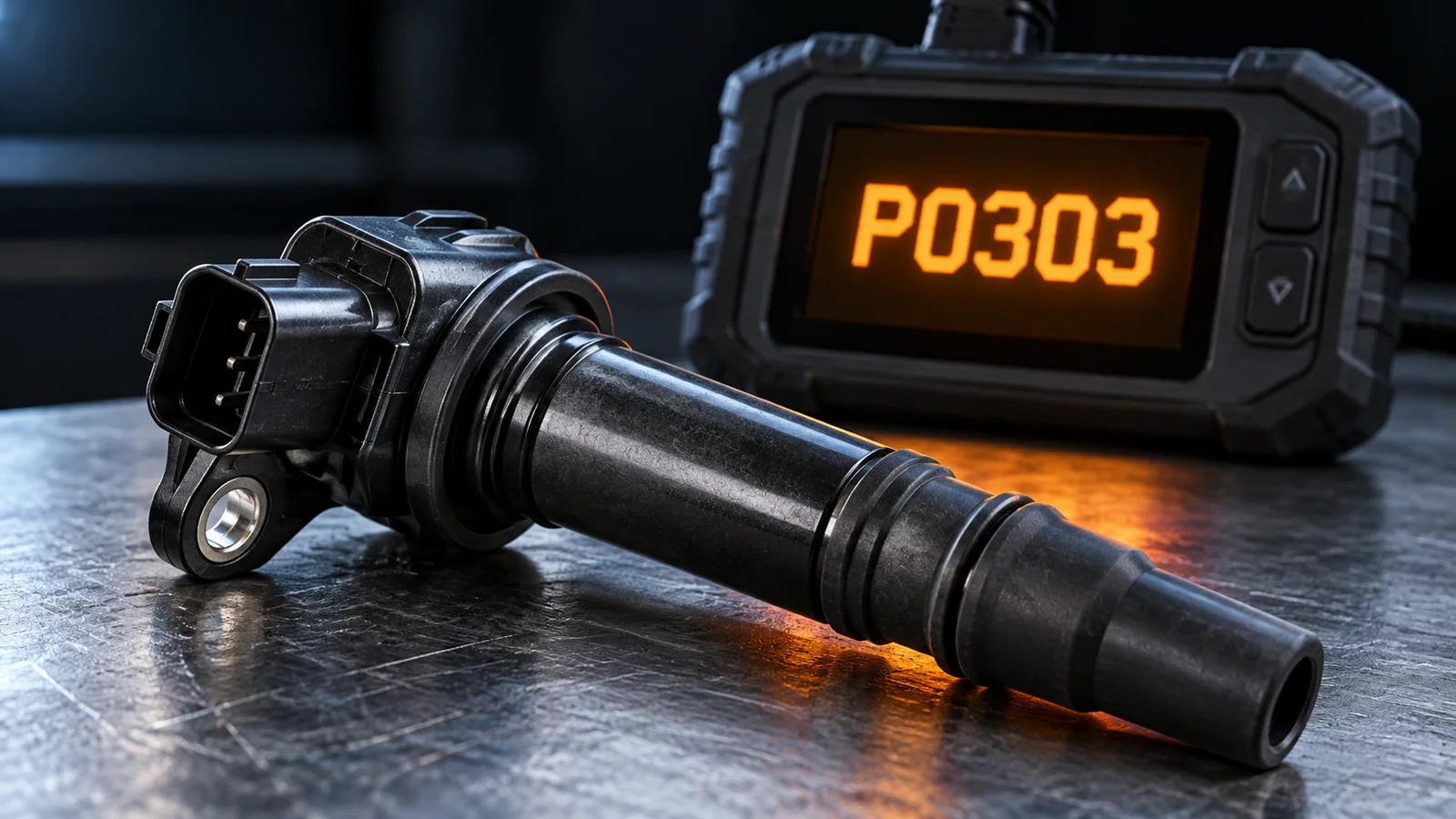
P0303 means a misfire was detected in cylinder 3. It tells you where to begin checking, not which part to buy. Confirm the cylinder and fault conditions, then test ignition, fuel and mechanical operation as the engine requires. If the check-engine light flashes or the engine runs severely rough or loses substantial power, stop safely and arrange assistance.
Where is cylinder 3, and when does it misfire?
Use the exact engine's cylinder-numbering information; the location is not universal across Ford, Honda, Toyota, Nissan or Hyundai models. Record the full code list before it is cleared.
Tell the technician whether the complaint occurs at startup, idle or under load. Available freeze-frame data and current cylinder-operation information help distinguish an active fault from a stored event and select useful tests.
What does a proper ignition check look like?
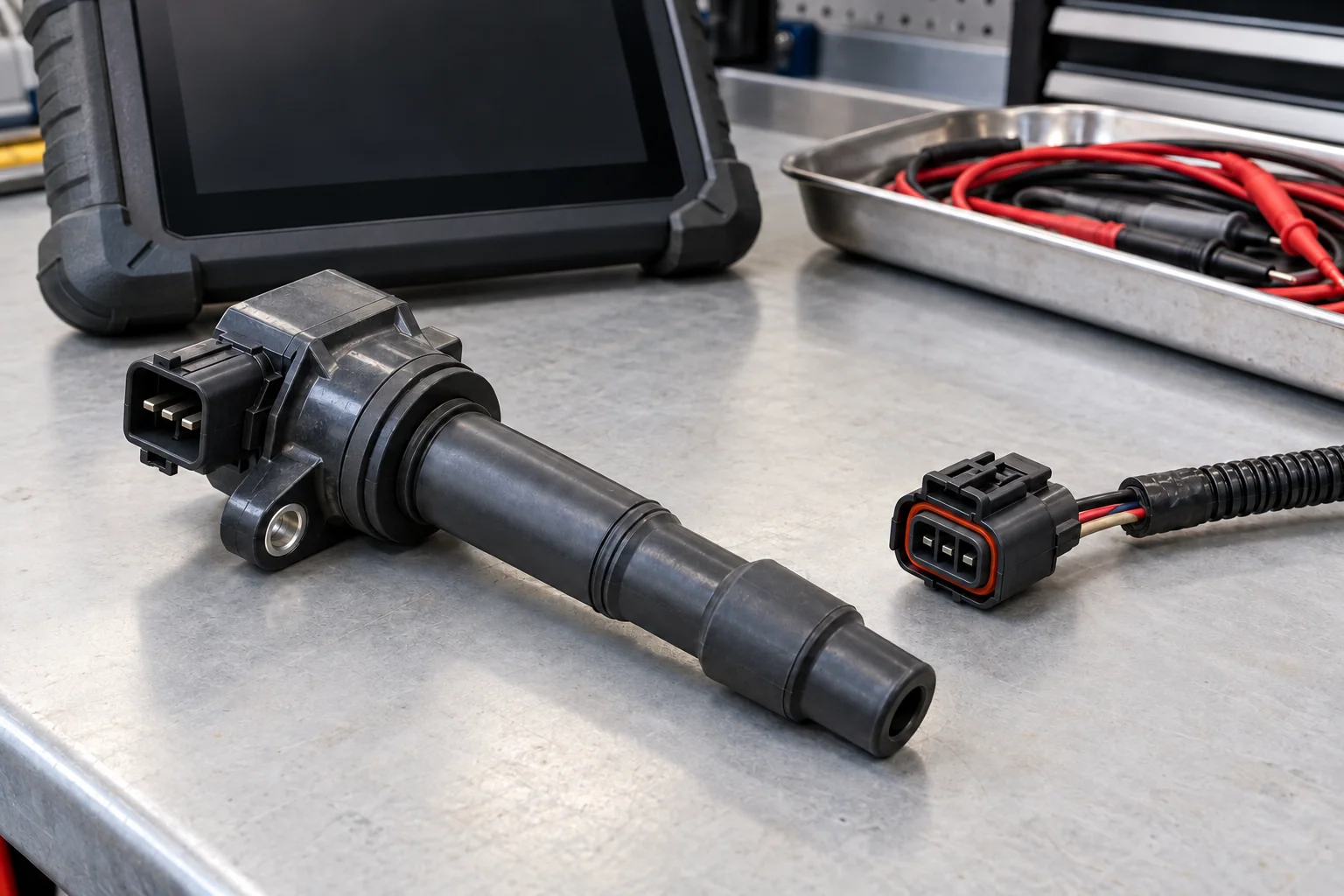
HELLA's worked example involves an Alfa Romeo 147 1.6 TS with a cylinder 3 misfire. The diagnostic path checks wiring, coil supply and primary control before further coil testing identifies an interruption in its secondary circuit.
The useful lesson is the evidence chain, not the example's pin numbers or resistance values. That engine uses a dual-spark design; its procedure and readings are not universal specifications for your car. A code that mentions cylinder 3 did not, by itself, establish the failed coil.
What if the ignition checks do not explain the fault?
The investigation should continue into the relevant fuel-delivery and mechanical checks rather than automatically replacing every coil or injector. Ask which test confirms the suspected failure and whether other affected cylinders point toward a shared problem.
Keep recent repair history available. An incorrectly connected or disturbed component needs a different correction from an unrelated internal engine fault.
Why check vehicle-specific service information?
Some stored misfire complaints have a distinct diagnostic path. Ford bulletin 13-1-11, for certain 2013 Mustang 5.0L/manual vehicles built on or before November 30, 2012, applies only with specific stored-code and no-drivability prerequisites.
That historical example does not justify dismissing a current misfire or applying a calibration procedure to another vehicle. The technician needs to match the conditions and check current information before using a bulletin.
How should a P0303 repair be verified?
Ask whether normal cylinder operation was confirmed under the conditions that produced the complaint. A smooth warm idle does not settle a problem that happened only during a cold start.
The repair record should identify the confirmed fault and verification result. Clearing the light alone is not a diagnosis, and the code cannot establish a repair price before the cause is known.
Sources & further reading
- HELLA — OBD-II powertrain DTC definitions (English)
- MOTOR — Shots in the Dark: Engine Misfire Diagnosis
- HELLA — Ignition coil – checking, measuring, faults
- Ford Motor Company — TSB 13-1-11
Vehicle designs and maintenance requirements vary. Consult the owner’s manual for your exact vehicle and seek a qualified inspection for a specific fault.