Ignition and engine control
P0300: Causes, Diagnostic Tests and Repair Options
Published:
Edited and fact-checked by: Jacob Bowen
General information; vehicle-specific diagnosis requires an inspection. How we prepare our guides · This page reserves space for ads. Advertising policy · Privacy choices
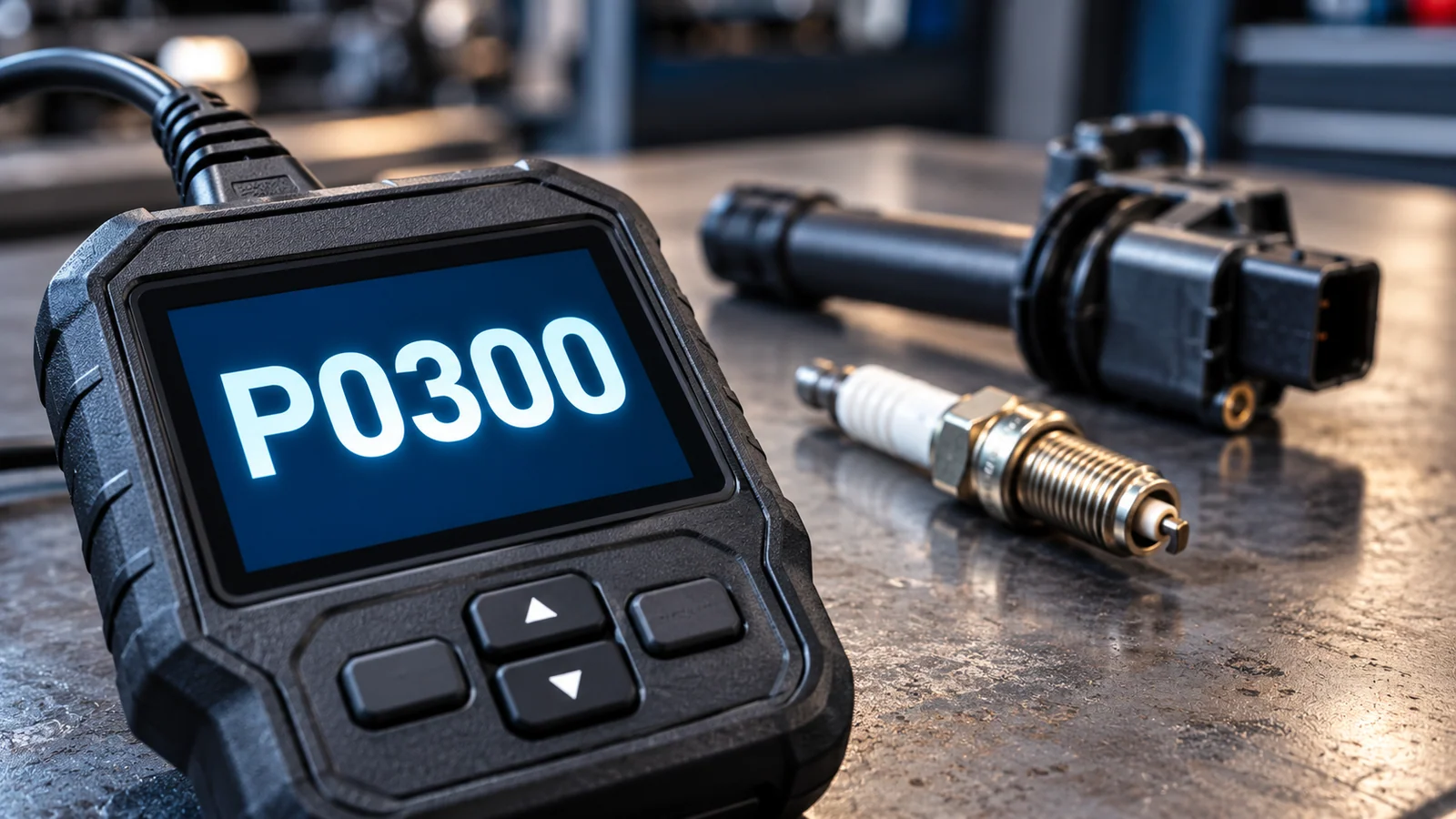
The quick answer
P0300 means the engine computer detected random misfires. It identifies a combustion problem, not the part to replace. Have the shop establish which cylinders and operating conditions are involved, then test the suspected ignition, fuel or mechanical cause. Replacing every coil or injector from this code alone can miss the fault.
How urgent is P0300?
A flashing check engine light, severe shaking or loss of power makes this an urgent problem. Ease off, pull over safely and seek assistance rather than trying to drive through it. A steady light with apparently normal operation still needs diagnosis.
How is P0300 different from P0301 or P0302?
P0300 is the general random-misfire code. Codes such as P0301 and P0302 identify detected misfires associated with a particular cylinder. Save the complete code report, including any manufacturer-specific suffixes, for the technician.
A cylinder-specific code helps direct testing. It does not establish that its coil, injector or spark plug has failed, and it does not justify replacing all of them.
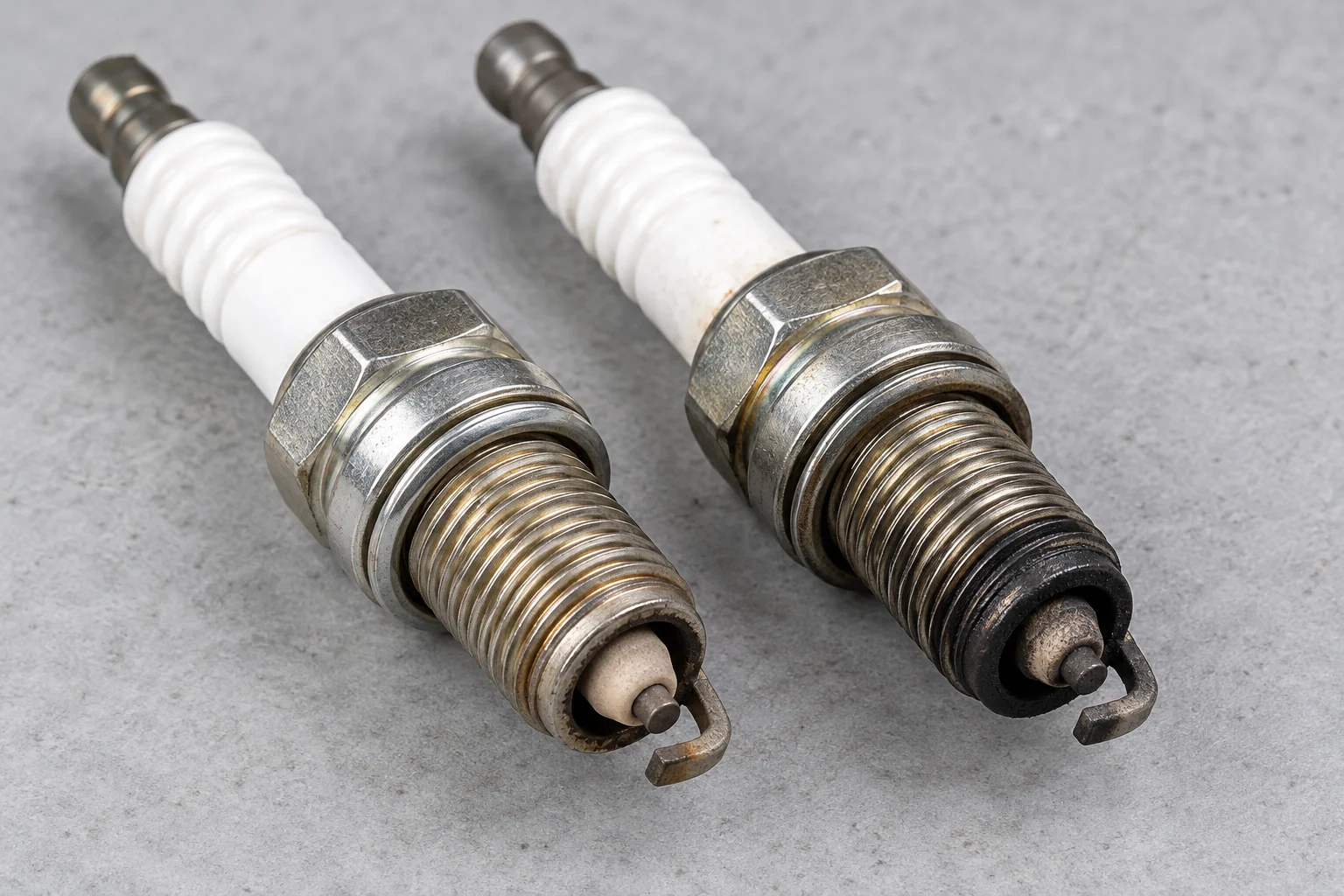
What does testing look like beyond reading the code?
A useful diagnosis checks the suspected component and the conditions it needs to work. For an ignition complaint, that can mean checking the connector, wiring, power supply and control signal before judging the coil itself. Engine mechanical problems can also affect ignition measurements.
Ask which test failed and how it connects to the reported symptom. Testing that never reproduced or explained an intermittent problem may need a different approach.
What does a documented ignition diagnosis show?
HELLA gives an Alfa Romeo 147 1.6 TS example with a cylinder 3 misfire code. Supply and control checks passed before a secondary-winding fault was found in the coil. The lesson is the sequence: verify the surrounding circuit, then identify the defective component.
That published supplier example is not a case from our shop, and its measurements and pin assignments are not specifications for your vehicle.
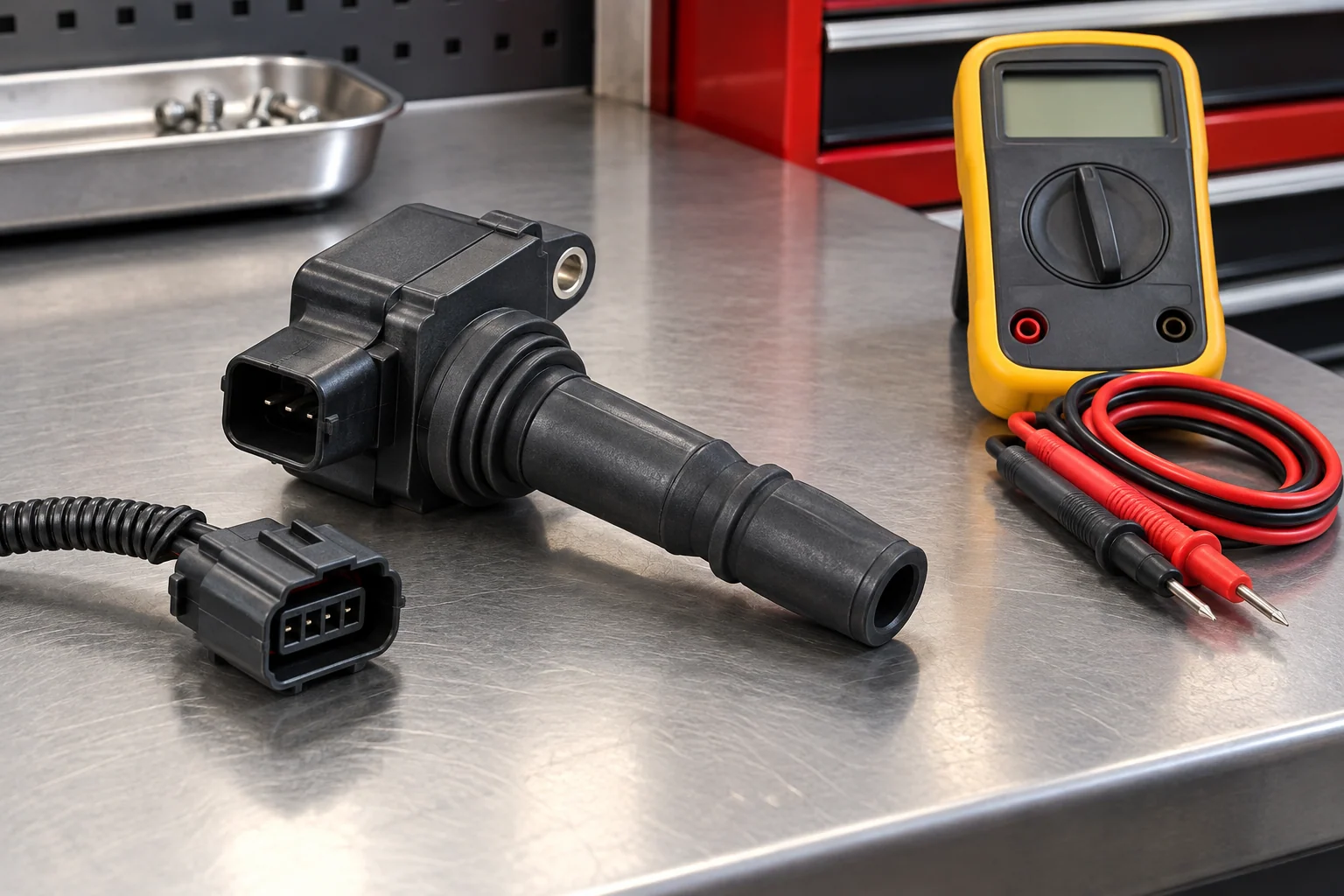
Does P0300 mean a bad lifter on a Chevrolet or GMC?
Not by itself. The GM technical example includes camshaft, lifter, valve and spring problems in its diagnostic branches after initial checks fail to isolate the cause. Its engine and model-year limits matter.
Tell the shop about any tick or chirp and when it occurs. Ask whether an applicable manufacturer bulletin exists for your exact engine; do not transfer a repair from another GM engine, a Cruze or an unrelated vehicle simply because P0300 matches.
What will fixing a random misfire cost?
The code cannot supply a repair price. An electrical connection repair and internal engine work have very different scopes. Start with an agreed diagnostic charge, then request an estimate tied to the demonstrated fault.
How should the shop confirm the misfire is fixed?
Ask how the failed check will be repeated and how the original operating conditions will be assessed safely. A smooth idle or an erased code alone may not resolve a problem that appeared only when warm or under load.
Sources & further reading
- HELLA — OBD-II powertrain DTC definitions (English)
- MOTOR — Shots in the Dark: Engine Misfire Diagnosis
- HELLA — Ignition coil – checking, measuring, faults
- Underhood Service — GM Misfire, Chirp, Squeak, Squeal or Tick Noise with DTCs P0300, P0301-P0308
Vehicle designs and maintenance requirements vary. Consult the owner’s manual for your exact vehicle and seek a qualified inspection for a specific fault.