Electrical
P0562: Causes, Diagnostic Tests and Repair Options
Published:
Edited and fact-checked by: Jacob Bowen
General information; vehicle-specific diagnosis requires an inspection. How we prepare our guides · This page reserves space for ads. Advertising policy · Privacy choices
The quick answer
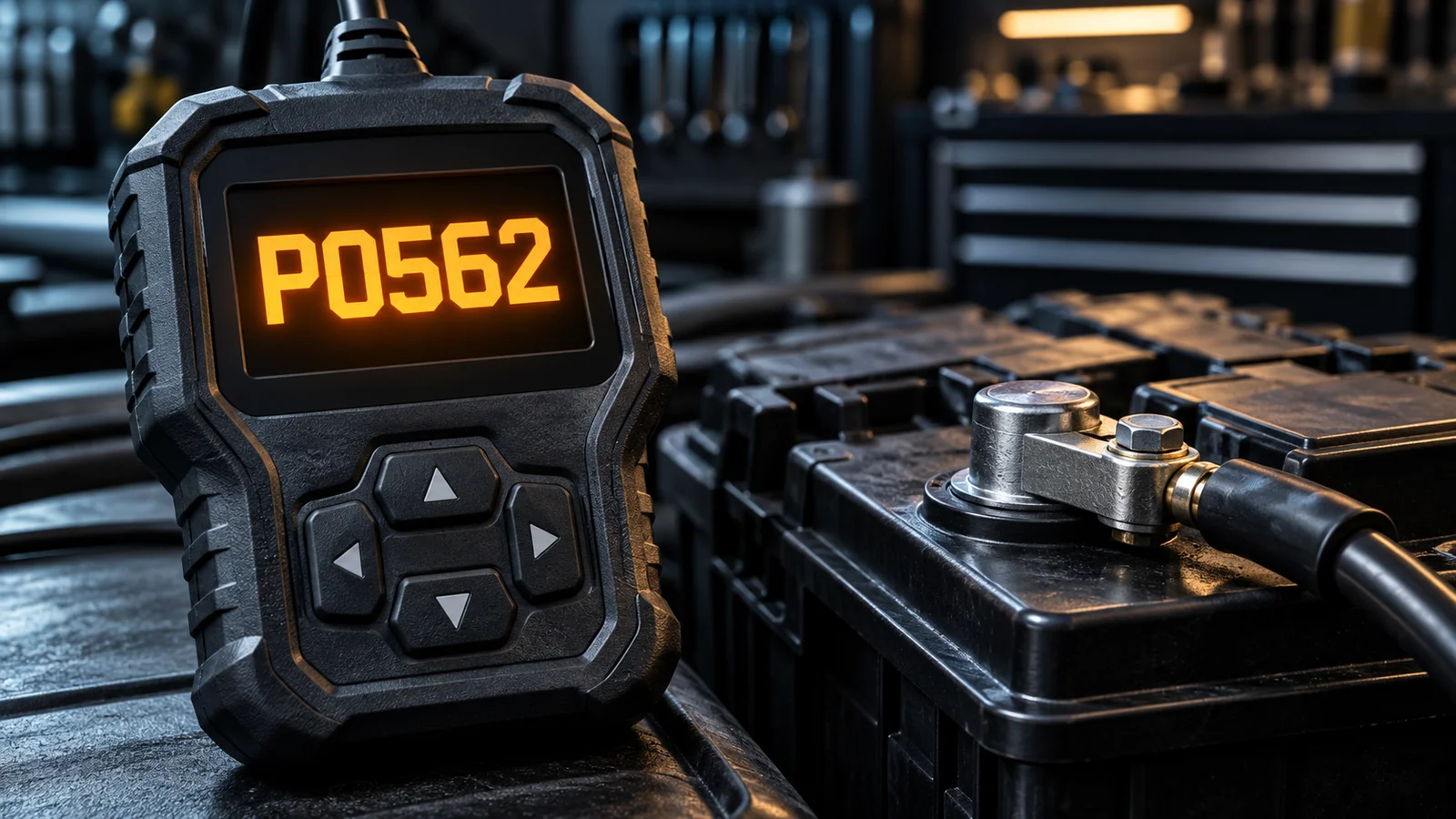
P0562 means a controller detected system voltage below its expected range. It does not prove the battery or alternator has failed. Check when the voltage dropped and test the battery, charging system and relevant connections under the specified conditions. If the car is stalling, losing electrical functions or cannot operate safely, stop and arrange assistance rather than continuing to drive until the battery is exhausted.
When did the low-voltage event happen?
Tell the shop whether the code followed slow cranking, a discharged battery, a jump-start, recent electrical work or problems with heavy electrical loads. A stored event and a fault happening now need to be distinguished.
Save the full code report and available fault-time information. Several warnings at once can be relevant to a shared supply problem; they should not automatically become several separate module replacements.
Does P0562 mean you need an alternator?
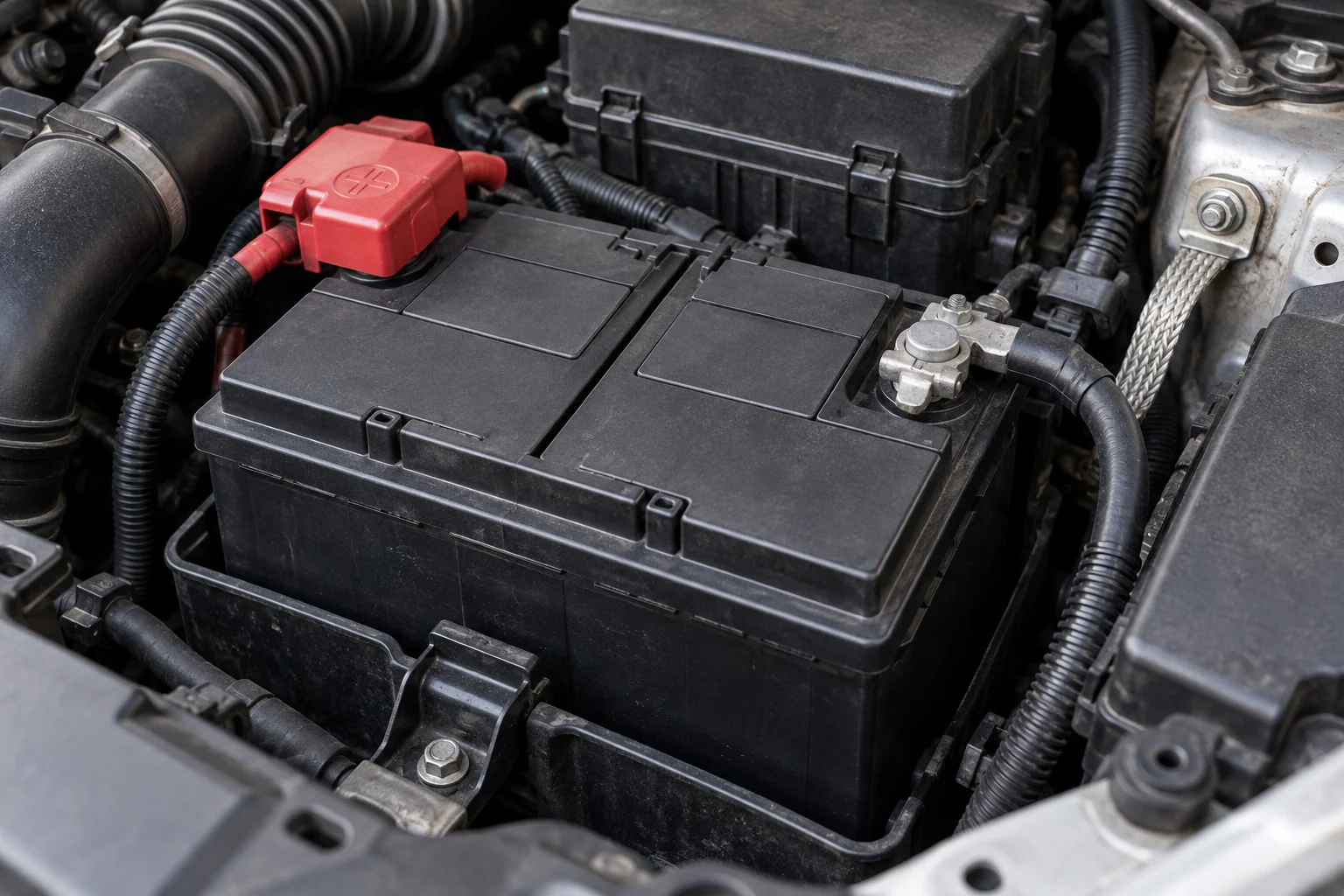
No. HELLA's charging-system guidance identifies battery condition, connections and the belt drive as checks before an alternator is condemned. A battery that is low on charge also needs assessment of why it became discharged.
The technician should use the correct procedure for the battery and charging design fitted to your car. A single voltage reading without operating conditions does not establish which component failed.
Why can a cable problem look like a component failure?
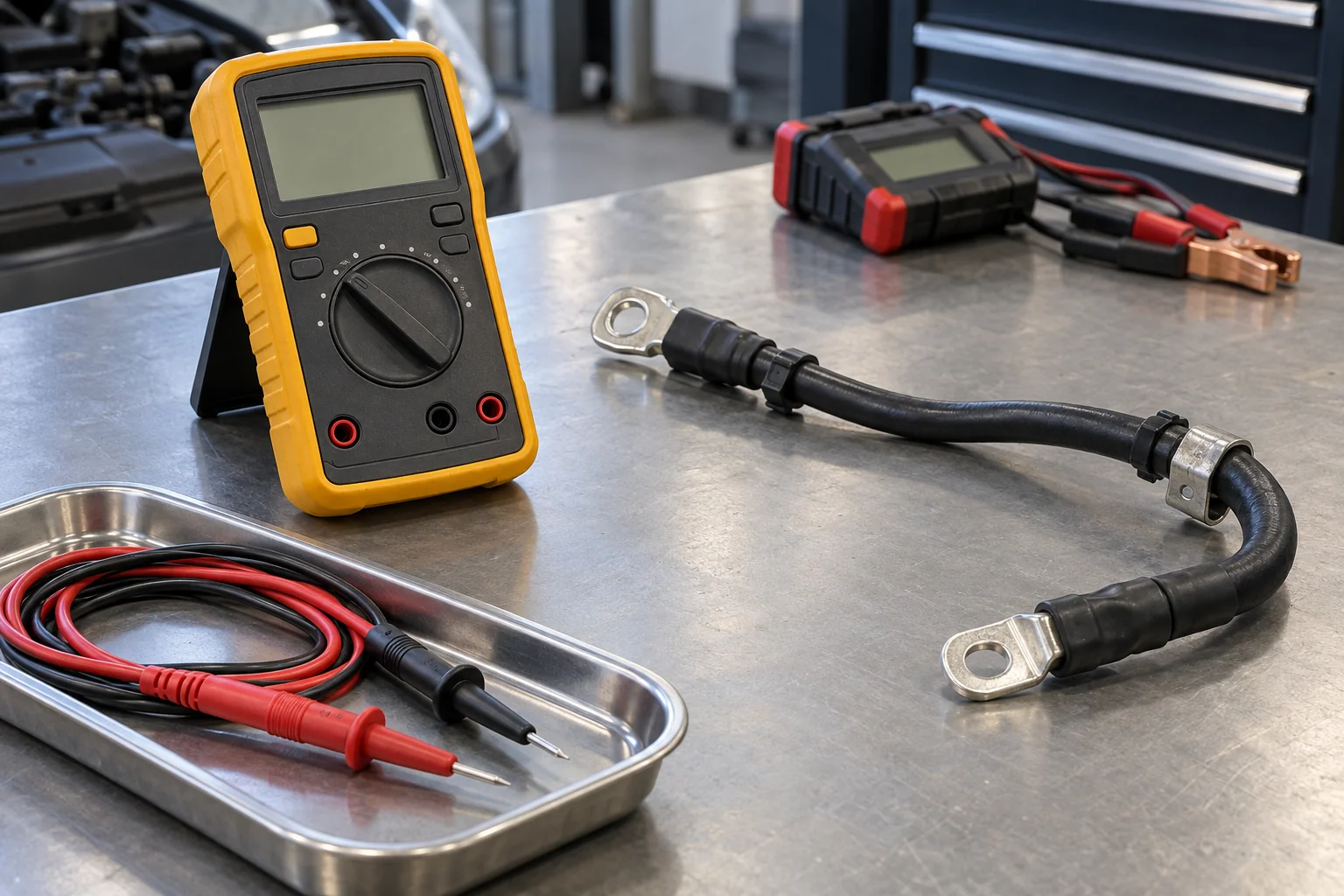
Resistance in a connection can reduce the voltage reaching a device when current flows. A cable can look connected while still failing to carry the required load effectively.
Fluke's automotive guidance explains testing voltage drop across the relevant part of a circuit. The shop should check the positive and ground paths as appropriate and compare the results with the vehicle's requirements. Measuring only at the battery can miss a loss elsewhere.
What should the shop test before replacing parts?
Ask for battery condition and charge assessment, charging operation under the required conditions, and checks of the supply path to the controller that stored the fault. Recent service and other codes help determine where to focus.
A Dodge, Jeep, Chevrolet or other vehicle may have different charging controls and fault thresholds. The diagnostic procedure must match the exact year, engine and equipment rather than a universal running-voltage target.
How do you confirm that the voltage problem is fixed?
The shop should verify supply and charging behavior under the conditions that exposed the fault, then reassess remaining codes. Stabilizing the electrical supply provides a better basis for investigating any warning that persists.
Never disconnect a battery cable with the engine running as an alternator test. HELLA warns that this can cause damaging voltage spikes. Keep the measured findings and repair details so an intermittent return can be investigated with a useful starting point.
Sources & further reading
- HELLA — OBD-II powertrain DTC definitions (English)
- HELLA — Checking the alternator
- MOTOR — Electrical System Diagnosis — From Wide Focus to Detailed Dive
- Fluke — Diagnosing voltage drops in automotive circuits
Vehicle designs and maintenance requirements vary. Consult the owner’s manual for your exact vehicle and seek a qualified inspection for a specific fault.