Steering
Power Steering Hose Leaks: How to Find and Confirm the Source
Published:
Edited and fact-checked by: Jacob Bowen
General information; vehicle-specific diagnosis requires an inspection. How we prepare our guides · This page reserves space for ads. Advertising policy · Privacy choices
The quick answer
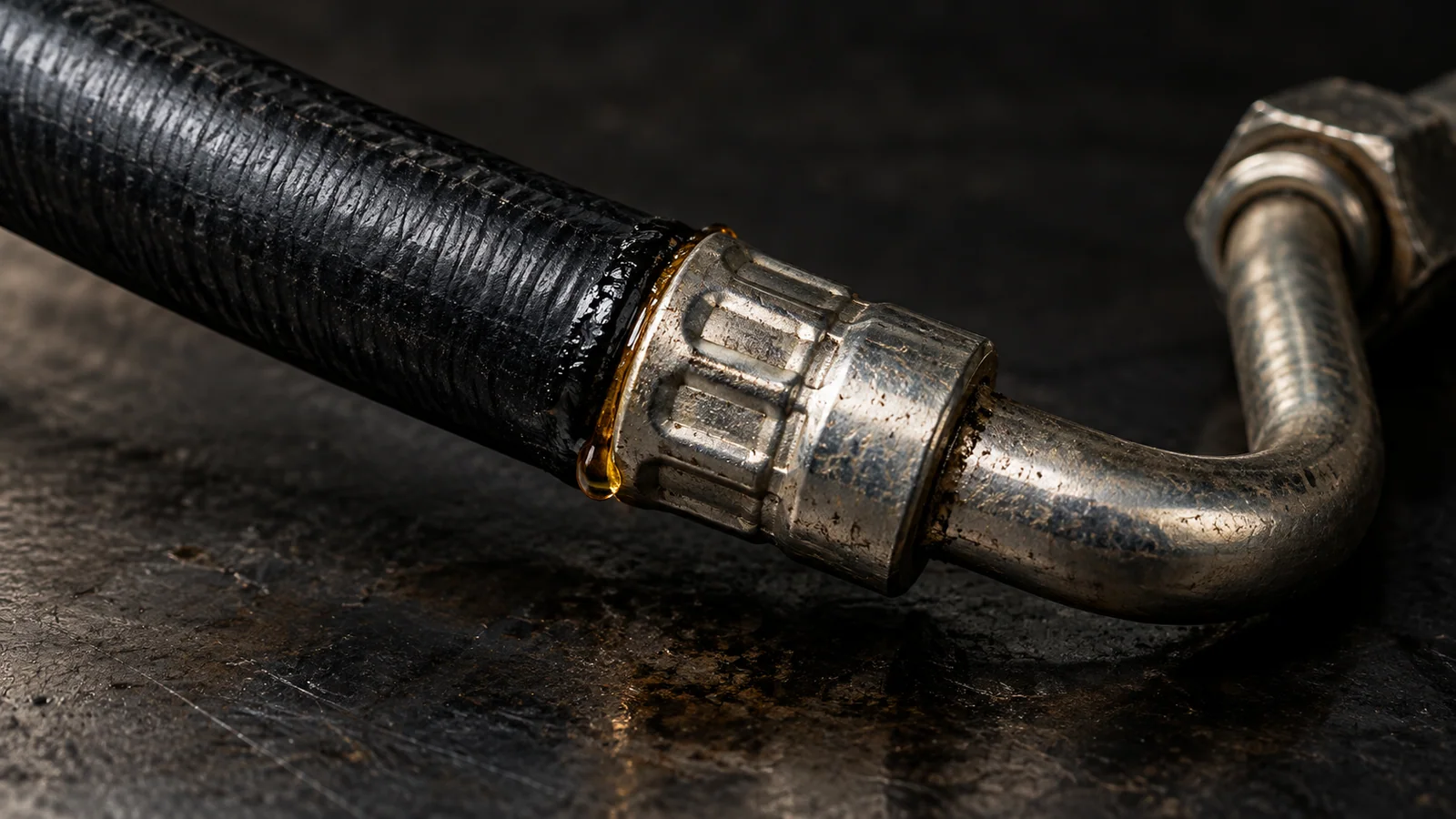
Confirm a power-steering hose leak by tracing fresh fluid to the hose, crimp or connection rather than assuming the lowest wet area is the source. Pressure and return lines need the correct parts and sealing method. If fluid loss is rapid or steering assistance becomes unreliable, stop safely and arrange repair and transport.
Does your vehicle have hydraulic power-steering hoses?
First identify the steering system. This guide concerns hydraulic fluid circuits; a vehicle with purely electric steering does not have an equivalent hydraulic hose leak. Use the owner's or service information rather than a model-name assumption.
HELLA explains that hydraulic fluid circulates through the steering system and reservoir. Low fluid, noise or foaming can accompany a system fault, but none identifies a hose by itself. Pump, reservoir, gear and connection areas also need inspection.
Where should the technician look for the leak?
Have the oily area cleaned as needed, then ask where fresh fluid first appears. The inspection should distinguish the flexible hose body, the crimp joining hose to tubing, and the sealing connection at a component. Fluid running down from elsewhere can make a sound part look faulty.
Ask whether rubbing, heat exposure, corrosion or a strained connection contributed. Show the technician any recent steering work or fluid additions. Do not search for a pressure leak with your fingers or work beside running belts and fans.
Why does the pressure line need a different repair from the return line?
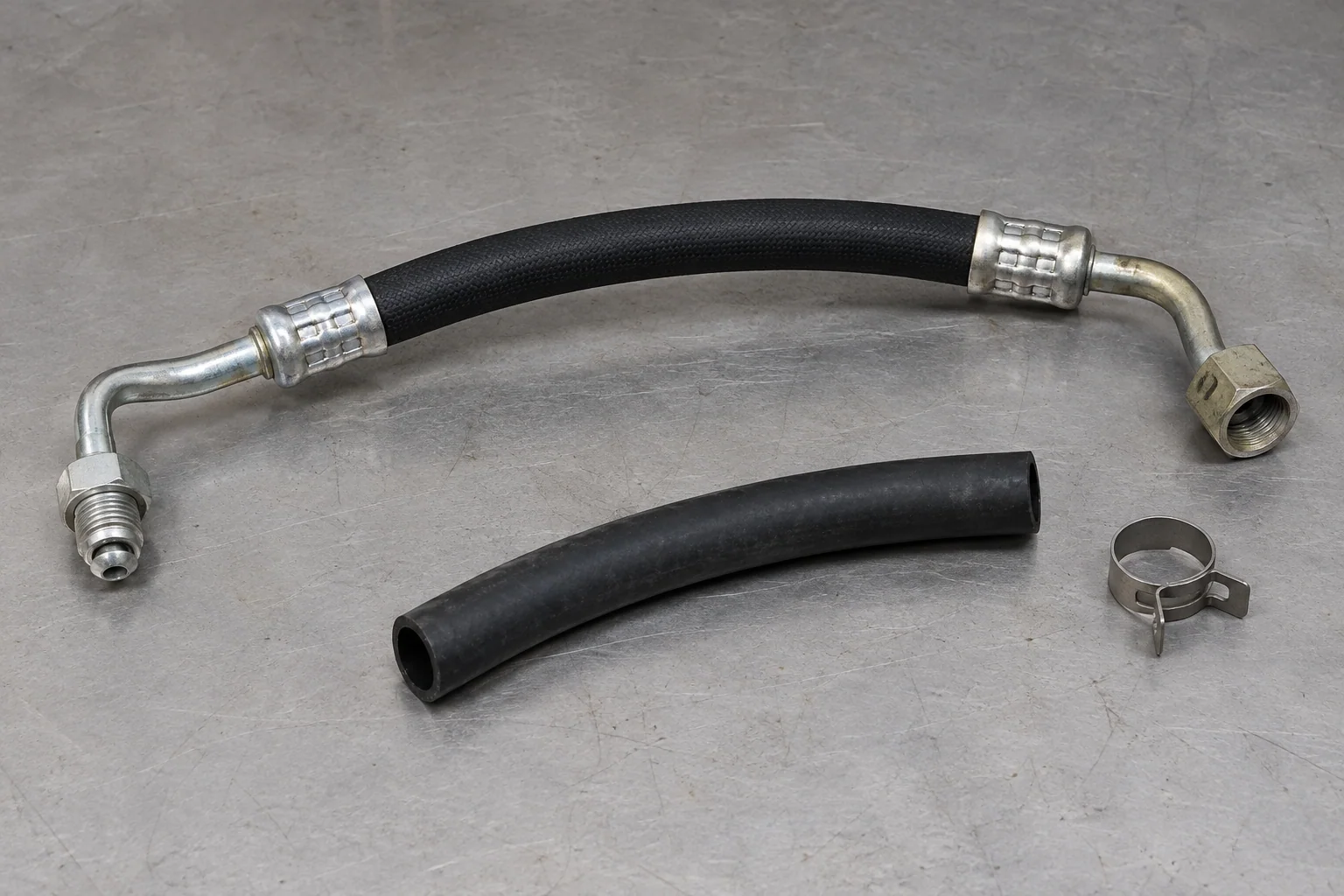
The replacement hose and connection must match their actual application. Gates specifies dedicated pressure hose with compatible power-steering crimp couplings and publishes coupling crimp specifications. This is an engineered assembly, not just rubber tubing of the right diameter.
A clamp repair suitable for a particular return connection does not make it appropriate for a pressure-line crimp. Do not substitute heater hose, tape over a split or add a clamp to a failing high-pressure assembly.
A leak at a threaded fitting also needs its sealing design checked. The answer may involve a required seal, damaged mating surface or replacement line; simply tightening harder can create another problem.
What should a proper hose repair include?
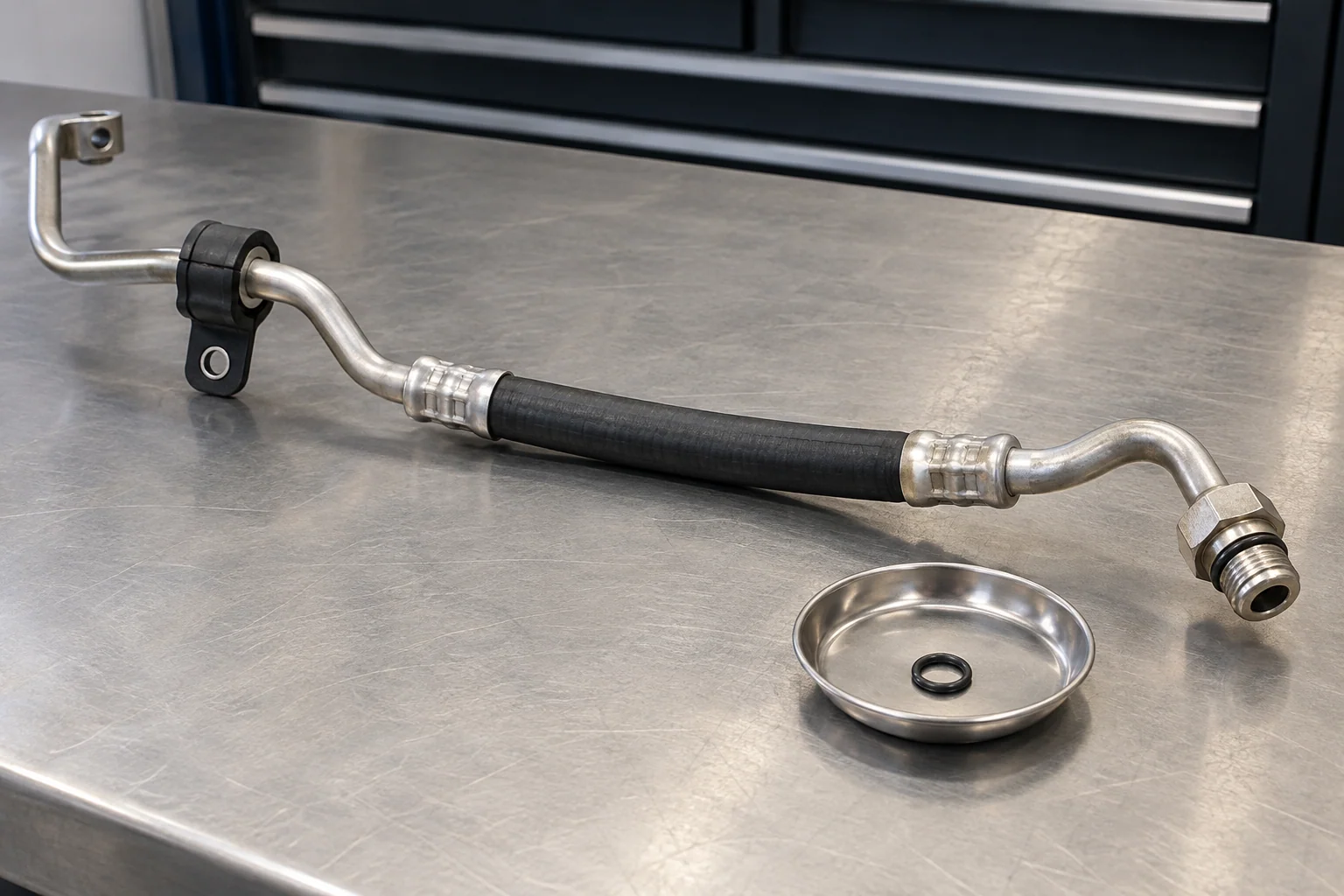
Use the correct line or approved assembly, specified seals and tightening procedure. Routing and retaining brackets should keep the hose clear of hot or moving components without twisting or tension.
Follow the vehicle's fluid specification and filling and bleeding instructions. HELLA emphasizes checking the hydraulic system for contamination and leakage and using the manufacturer's specified fluid. Do not assume all systems use a generic power-steering fluid or the same bleeding routine.
Ask whether the pump also needs testing after significant fluid loss. HELLA notes that inadequate lubrication from a leak can damage it, but a hose leak alone is not proof that the pump requires replacement.
How do you know the repair is complete?
The shop should check the repaired area for leaks, confirm the correct fluid level after the specified procedure and verify steering assistance and the original noise or foaming complaint.
A reservoir top-up is not a leak repair. Before approving work, ask for the identified leak location, affected line, required parts and installed estimate. There is no dependable generic driving-distance allowance for a leaking steering system.
Sources & further reading
- HELLA — Hydraulic steering pump - repair instructions
- MOTOR — How Well Do You Know Hoses?
- Gates: dedicated power-steering pressure hose
- Gates: power-steering couplings and crimp specifications
Vehicle designs and maintenance requirements vary. Consult the owner’s manual for your exact vehicle and seek a qualified inspection for a specific fault.