Steering
Steering Wheel Hard to Turn: Causes and Diagnostic Steps
Published:
Edited and fact-checked by: Jacob Bowen
General information; vehicle-specific diagnosis requires an inspection. How we prepare our guides · This page reserves space for ads. Advertising policy · Privacy choices

The quick answer
A steering wheel that becomes hard to turn can mean power assistance has been lost or something in the steering mechanism is binding. A full fluid reservoir does not rule out a problem, and electric power steering may have no fluid reservoir at all. If the change is sudden or you cannot steer predictably, pull over safely and arrange assistance rather than continuing to test it on the road.
When does the steering become stiff?
Tell the shop whether the problem happens when cold, after warming up, at parking speeds, or in only one direction. Mention warning messages, noises and recent steering repairs. These details help choose the tests; none identifies a failed part by itself.
For example, steering that catches at a particular point needs an inspection for binding as well as an assist check. Steering that is uniformly heavy while parking presents a different complaint. Do not force the wheel repeatedly to reproduce a fault.
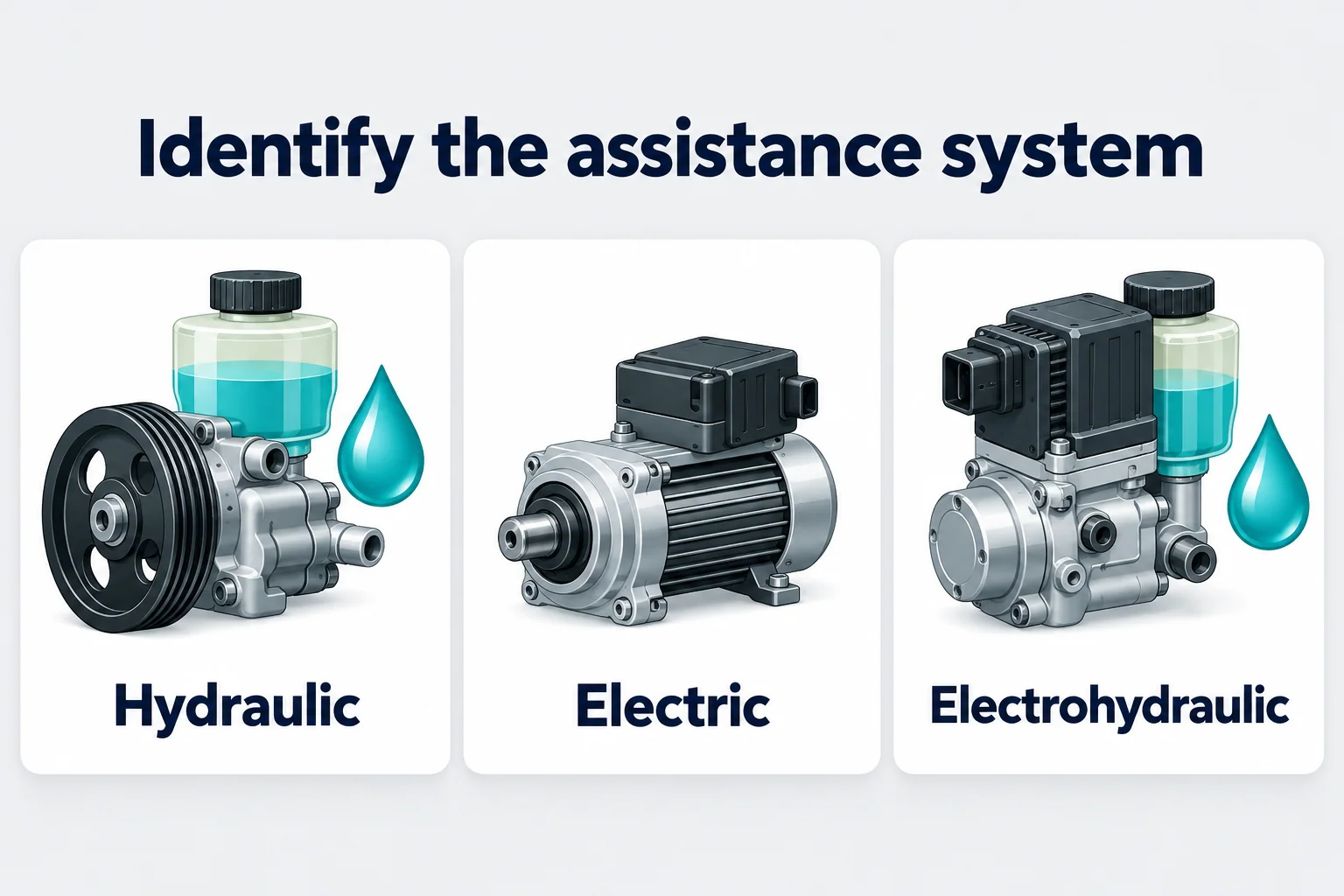
Does your car use hydraulic or electric assistance?
With a belt-driven hydraulic system, the technician checks the belt drive, fluid level, leaks and fluid condition before assessing pump output and the steering gear. Low fluid calls for a leak investigation. Correct fluid level alone does not establish that the pump delivers the required assistance.
An electric system uses a motor and electronic controls instead of a conventional hydraulic pump. Diagnosis can involve steering-module codes, power supply, wiring and sensor information. Electrohydraulic designs combine an electric pump with fluid, so the exact equipment matters before anyone recommends a fluid service.
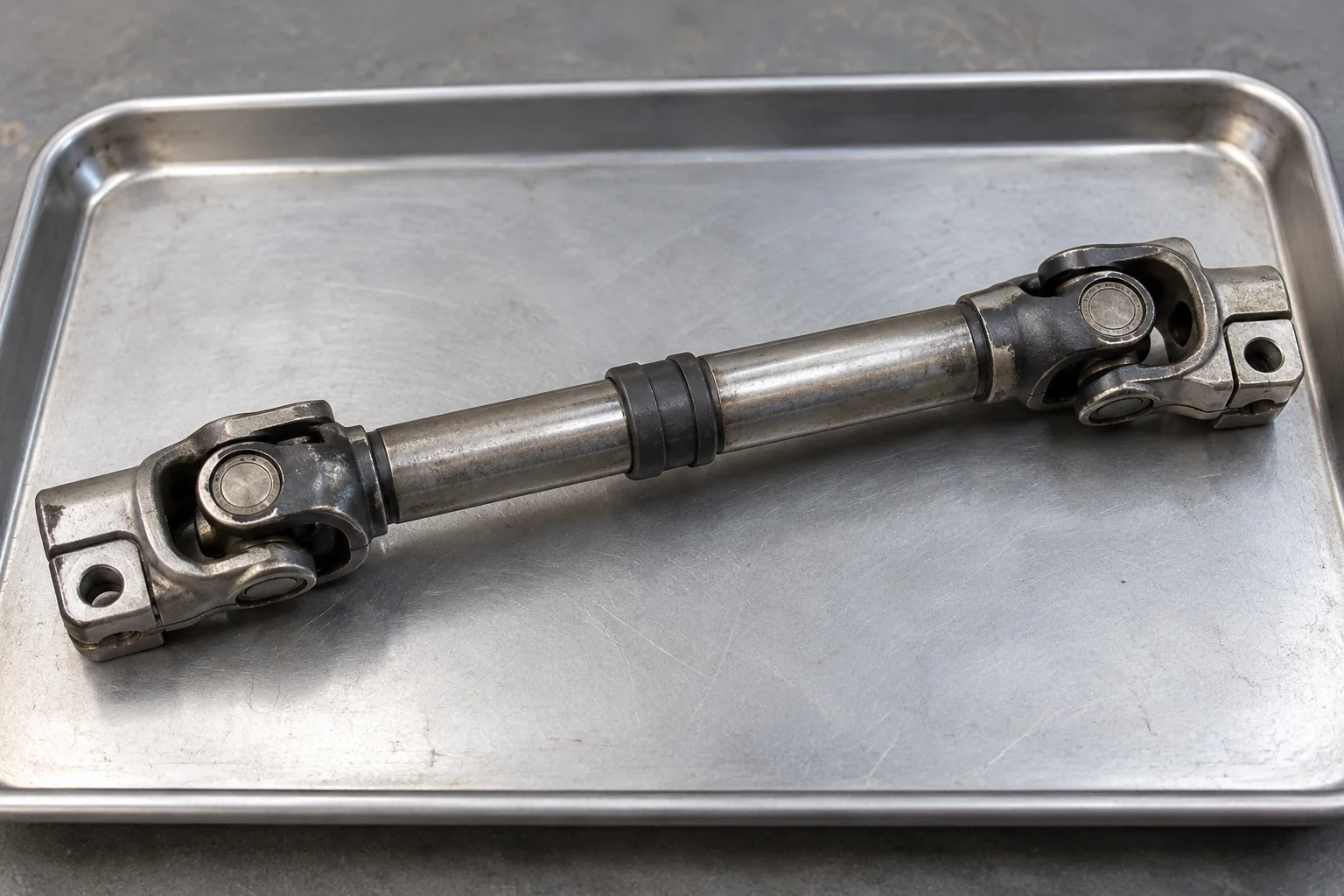
Could the rack or steering linkage be binding?
Yes. A steering-shaft coupling, steering gear or suspension component involved in turning can resist movement. The shop needs to locate the resistance instead of assuming every heavy-steering complaint is a pump failure.
Cold stiffness also needs a diagnosis. Larry Carley's rack-and-pinion reference describes internal valve-housing wear on certain older GM racks as one historical example. That example does not establish the cause on a different vehicle or justify replacing a rack without testing.
What should you ask before approving the repair?
Ask which check distinguished an assistance problem from mechanical binding, and what evidence identifies the proposed part. Pressure tests, electrical tests and inspection procedures must match the vehicle; there is no single pressure or voltage threshold for every system.
For a hydraulic repair, confirm the specified fluid and the required cleaning and bleeding procedure. CARDONE warns that unsuitable cleaning chemicals can damage steering seals. A flush cannot repair a physically binding component.
After the work, the shop should confirm normal, consistent steering in both directions under the conditions that caused the complaint. Any required alignment or electronic setup should be included in the repair plan.
Sources & further reading
- AA1Car / Larry Carley — How To Diagnose Rack & Pinion Steering
- HELLA — Hydraulic steering pump - repair instructions
- CARDONE — 3F: Fluid/Flush/Filter - CARDONE Industries
- AA1Car — Electric Power Steering
Vehicle designs and maintenance requirements vary. Consult the owner’s manual for your exact vehicle and seek a qualified inspection for a specific fault.