Steering
Steering Rack and Pinion Symptoms: How to Test and Confirm the Fault
Published:
Edited and fact-checked by: Jacob Bowen
General information; vehicle-specific diagnosis requires an inspection. How we prepare our guides · This page reserves space for ads. Advertising policy · Privacy choices
The quick answer
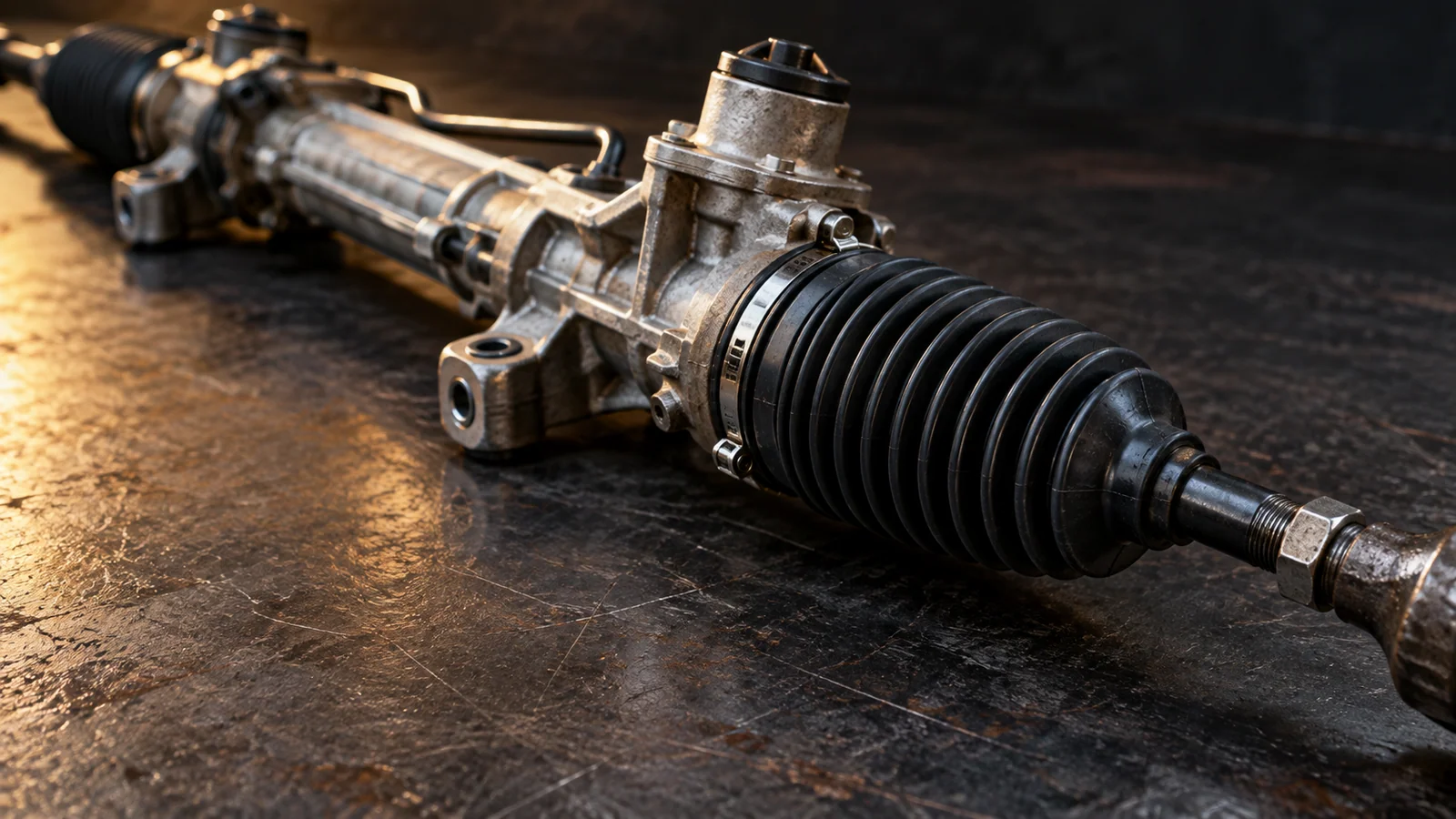
A failing steering rack can cause looseness, binding, inconsistent assistance or, on a hydraulic system, fluid leakage. These symptoms can also come from tie rods, rack mounts, hoses, the pump or steering-shaft joints. A proper inspection should locate the movement, restriction or leak before the complete rack is condemned.
Does your rack use hydraulic or electric assistance?
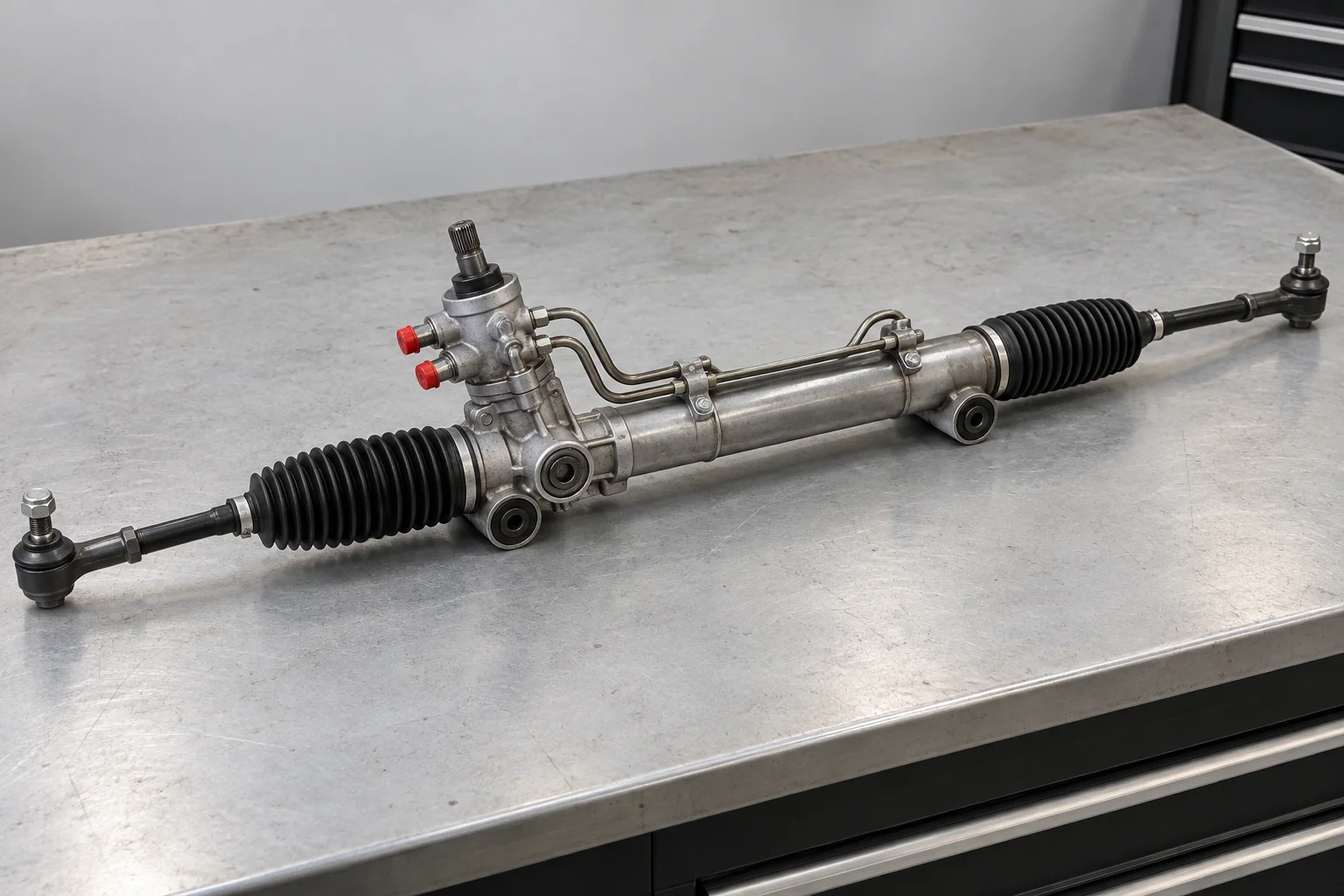
Identify the system first. A hydraulic rack has fluid connections and seals that can leak. A fully electric steering system uses motor assistance, so hydraulic-fluid diagnosis does not apply. Some electrohydraulic systems still have a pump and fluid circuit.
A steering gearbox is also a different assembly from a rack-and-pinion unit. Give the shop the vehicle details rather than treating every search for a ‘steering gear leak’ as the same repair.
How can a shop tell rack wear from worn tie rods or bushings?
The technician should observe the steering linkage and rack mounts under suitable loading while checking where movement occurs. Play in an inner or outer tie-rod joint is different from movement of the rack housing on its mounts or looseness inside the gear.
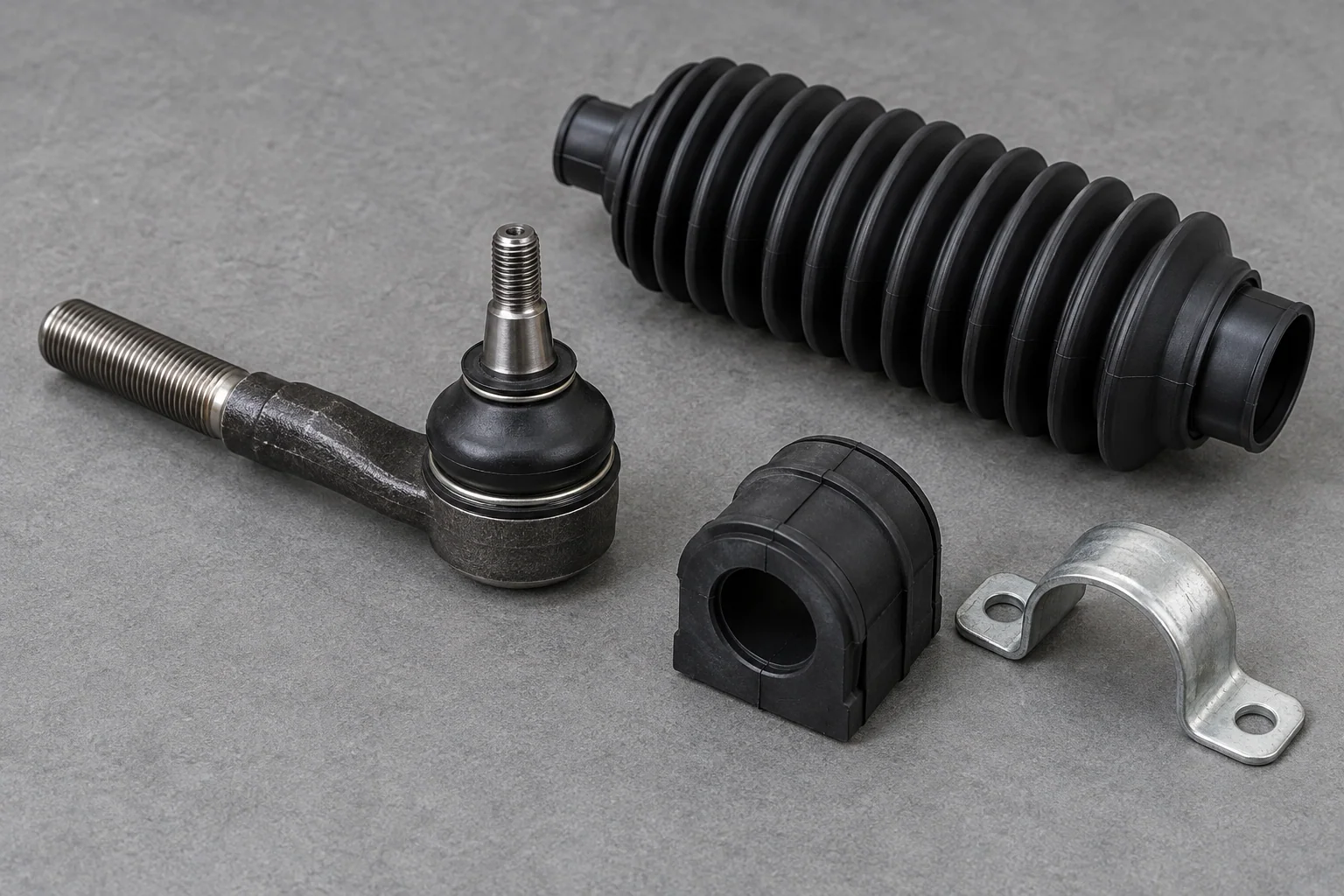
AA1Car explains that worn inner sockets, outer joints and mounting components can produce steering wander or noise. Some can be serviced separately. Ask the shop to identify the moving joint or damaged mount rather than describe all looseness as a bad rack.
What does fluid inside a steering-rack boot mean?
The protective bellows boot keeps dirt away from the rack and inner joint; it is not intended to contain hydraulic fluid. Confirmed power-steering fluid inside it points toward an internal rack-seal leak. Replacing only the boot does not repair that seal.
Fluid on the outside still needs tracing. A hose or connection can leak onto the rack, making the assembly look responsible. MOOG describes these separate leak locations. Fluid color alone is not enough to identify the source or choose replacement fluid.
Does heavy or noisy steering prove the rack is faulty?
No. On a hydraulic system, the shop should check fluid level, hoses and pump operation. Binding steering-shaft joints or other mechanical components can also affect steering return and effort.
Electric-assist faults require the relevant control-system checks. Depending on the repair, setup or sensor calibration may be needed afterward. Ask which system failed and what measurements support that conclusion, particularly if an entire electric rack is proposed.
When is replacement appropriate, and what might it cost?
A confirmed internal leak, damaged housing or internal wear may justify rack replacement. A serviceable joint or mounting problem may call for a narrower repair. See the rack-replacement guide for planning once the cause is established; alignment and any required electronic setup belong in the quote.
RepairPal’s September 2026 national rack-and-pinion replacement estimate is $2,307–$2,572 before taxes, fees and location adjustments. Confirm the exact assembly, included components and additional work. It is not a tie-rod or bushing-only price.
If steering binds, becomes suddenly heavy or develops substantial looseness, stop safely and arrange inspection or recovery. Do not continue driving to test how much worse it becomes.
Sources & further reading
- AA1Car / Larry Carley — How To Diagnose & Replace Rack & Pinion Steering Inner Tie Rod Sockets
- AA1Car / Larry Carley — How To Diagnose Rack & Pinion Steering
- MOOG — What can cause a rack and pinion system to leak? | MOOG
- RepairPal — Rack and Pinion Replacement Cost Estimate
- AA1Car: electric power-steering operation and diagnosis
Vehicle designs and maintenance requirements vary. Consult the owner’s manual for your exact vehicle and seek a qualified inspection for a specific fault.