Steering
Power Steering Fluid Leak: Symptoms, Diagnosis and Repair Options
Published:
Edited and fact-checked by: Jacob Bowen
General information; vehicle-specific diagnosis requires an inspection. How we prepare our guides · This page reserves space for ads. Advertising policy · Privacy choices
The quick answer
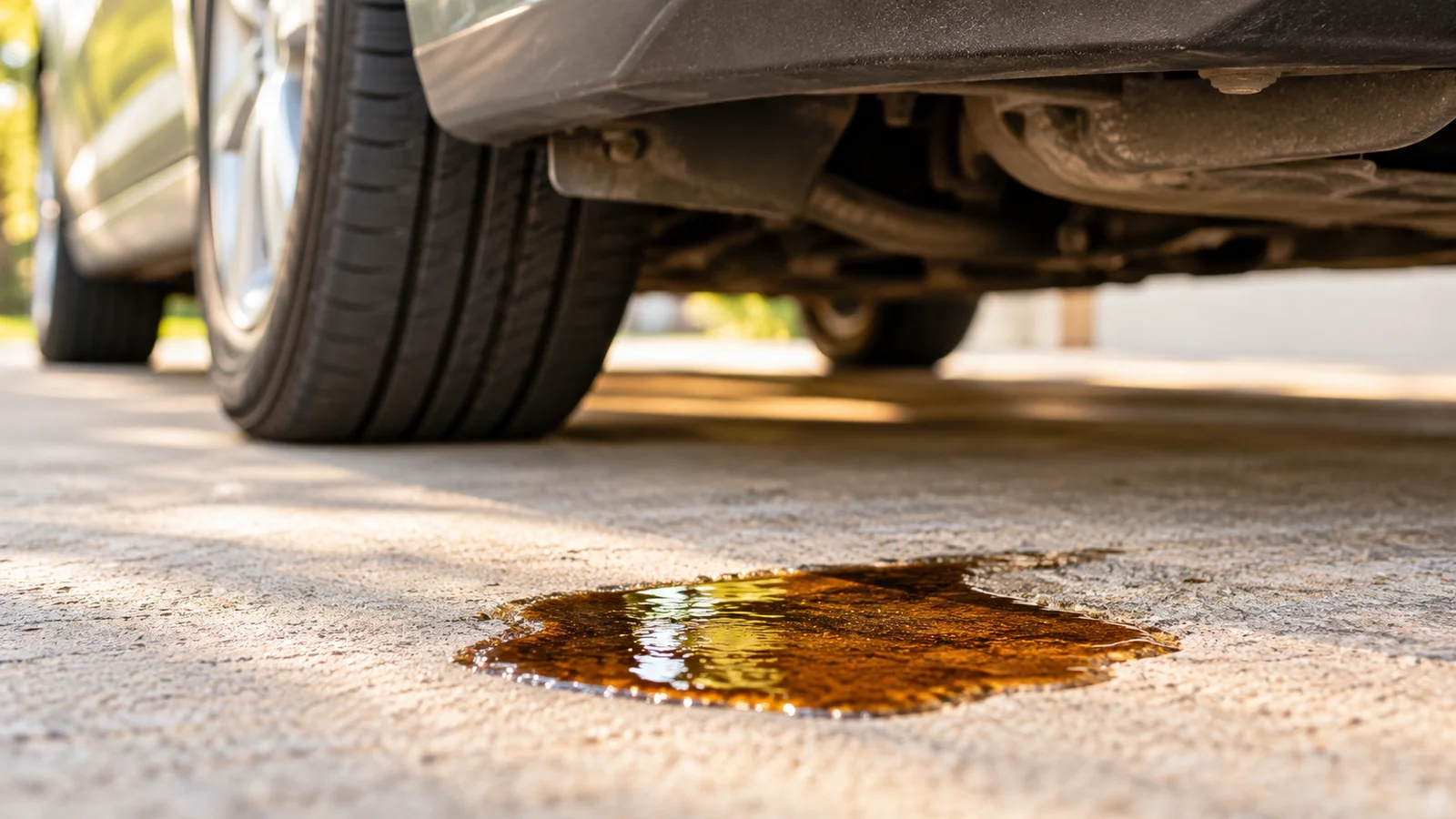
Fix a power steering fluid leak by identifying the leaking hose, connection, reservoir, pump or steering gear and repairing that specific fault. Repeatedly topping up the reservoir does not fix the leak. If assistance becomes heavy or inconsistent, stop safely and arrange an inspection or recovery rather than continuing to drive.
Can you drive with a power steering leak?
A falling fluid level can admit air, cause noise and reduce hydraulic steering assistance. Running the pump without adequate fluid can damage it. Do not assume a small puddle means the system can safely complete a particular distance.
If steering effort changes or fluid is disappearing rapidly, arrange assistance. Record when the leak occurs and whether steering feels different; those observations are more useful than guessing the failed part from the parking spot.
Does your car have power steering fluid?
Confirm the steering design in the owner's manual. Hydraulic systems use fluid; a fully electric power steering system does not have a hydraulic steering-fluid reservoir. Do not add fluid to an unidentified reservoir.
For a hydraulic system, use the exact fluid specified for that year and model. Color alone does not establish compatibility. Different applications use different fluids, including some specified transmission fluids and dedicated hydraulic products.
How does a shop find the leak?
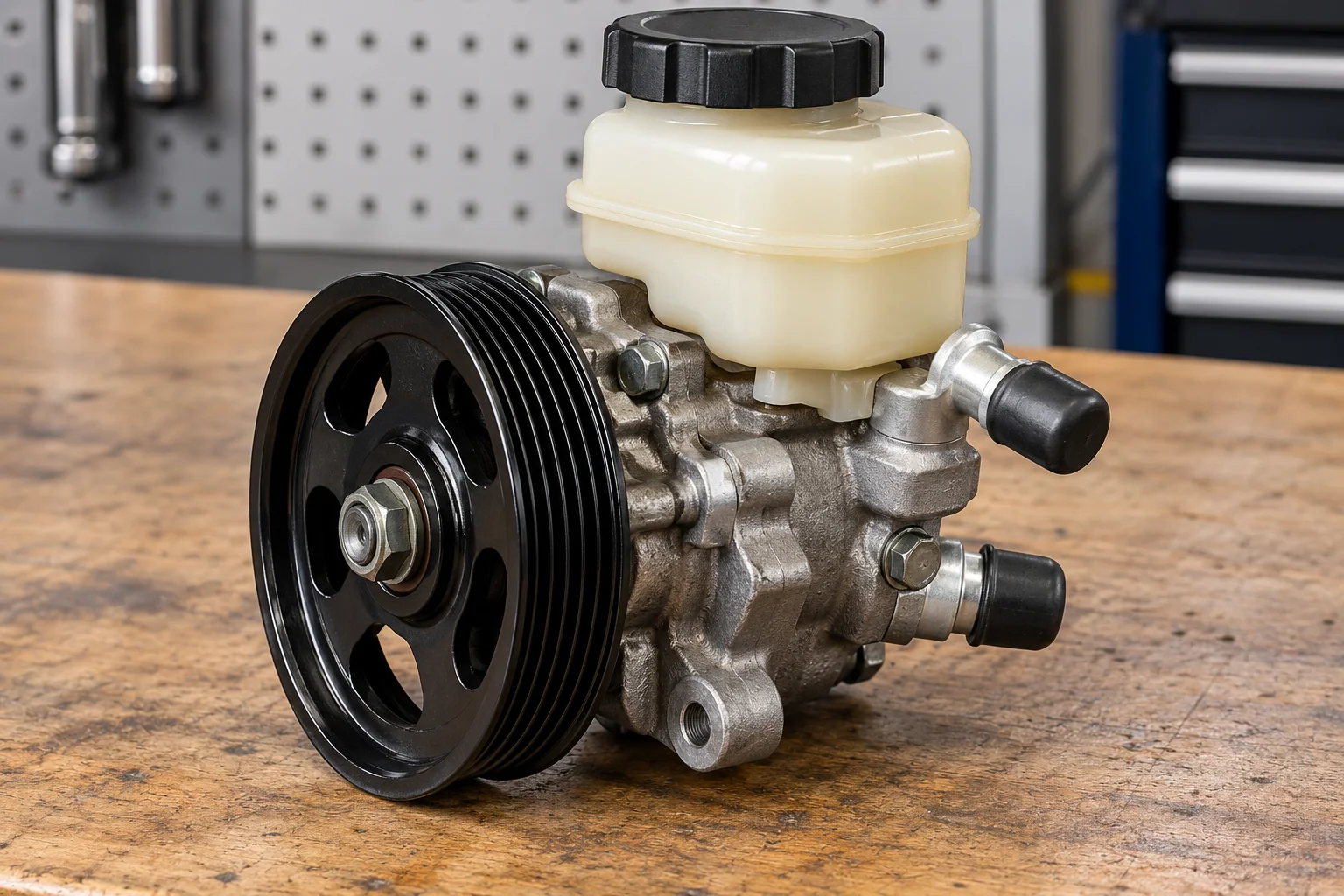
The inspection should distinguish hoses and their connections from the reservoir, pump and steering gear. Ask the technician to show the actual leak point. A wet area underneath the vehicle does not by itself establish that the rack needs replacement.
Fluid level, aeration and contamination also matter. On a mechanically driven pump, the belt and drive condition deserve a check when assistance or noise is part of the complaint. Pump noise alone is not proof of an internally failed pump.
What does a proper leak repair include?
The repair depends on the confirmed source. An external line or connection problem differs from a leaking steering-gear seal or pump housing. Internal gear leaks may require specialist repair or an appropriate replacement assembly.
Follow the manufacturer's fluid, sealing and tightening requirements. After opening the system, the shop must refill and remove trapped air using the applicable procedure, check for contamination and verify that the leak is gone.
How much does fixing a power steering leak cost?
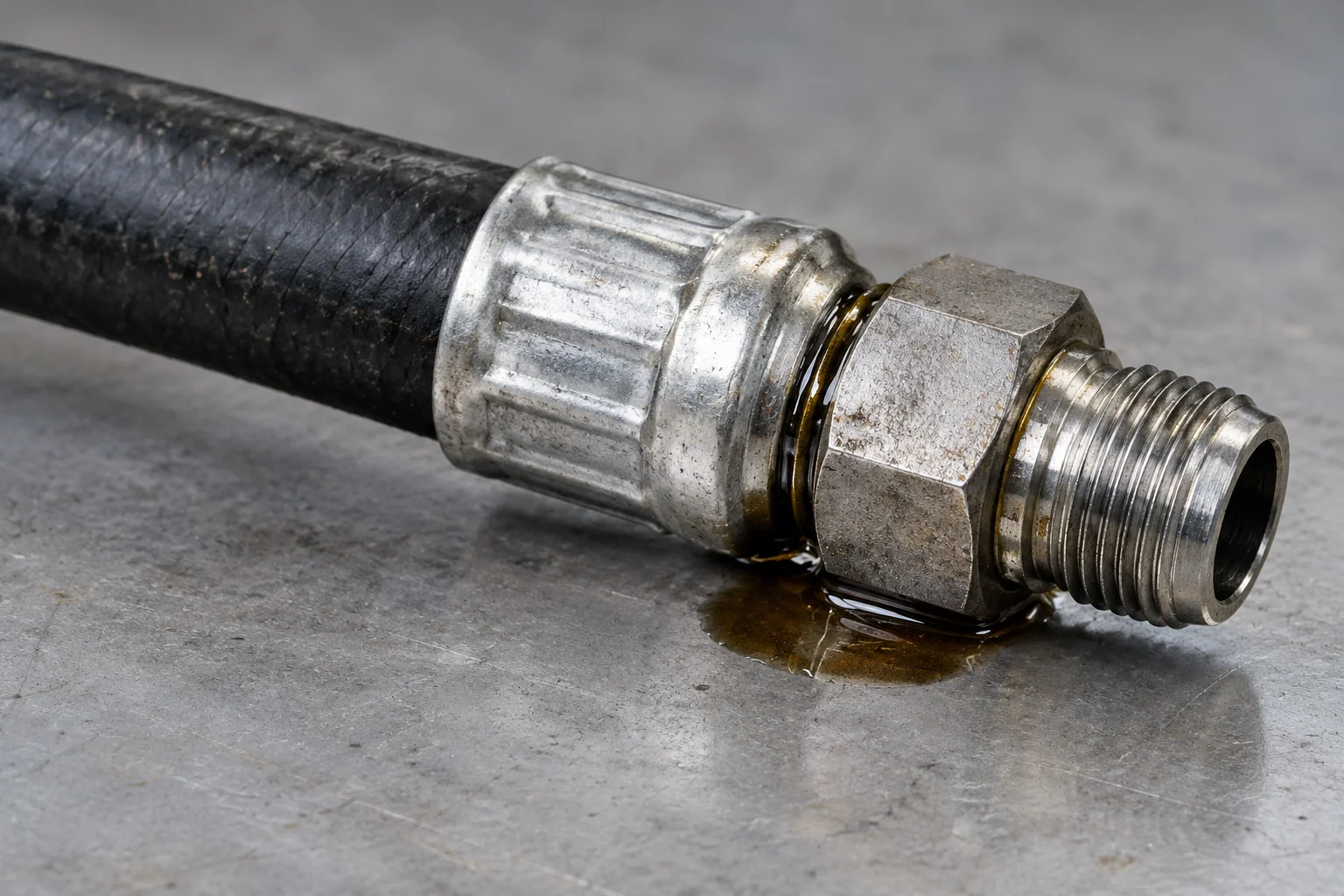
A connection repair and a steering-rack replacement have very different parts and access costs. Get a quote after the leak is located.
Ask whether diagnosis, the leaking component, required seals, fluid and any necessary follow-up work are included. A model name such as Civic, Accord or Titan is not enough for an accurate estimate without the year and configuration.
Will power steering stop-leak fix it?
Do not treat an additive as a confirmed repair. MOOG describes stop-leak products as temporary, and they do not establish where the system is leaking. Check manufacturer compatibility before adding anything; the practical next step is finding and correcting the leak.
Sources & further reading
- AA1Car / Larry Carley — What You Should Know About Power Steering Fluid
- HELLA — Hydraulic steering pump - repair instructions
- MOOG — What can cause a rack and pinion system to leak? | MOOG
Vehicle designs and maintenance requirements vary. Consult the owner’s manual for your exact vehicle and seek a qualified inspection for a specific fault.