Steering
Power Steering Pump Symptoms: How to Test and Confirm the Fault
Published:
Edited and fact-checked by: Jacob Bowen
General information; vehicle-specific diagnosis requires an inspection. How we prepare our guides · This page reserves space for ads. Advertising policy · Privacy choices
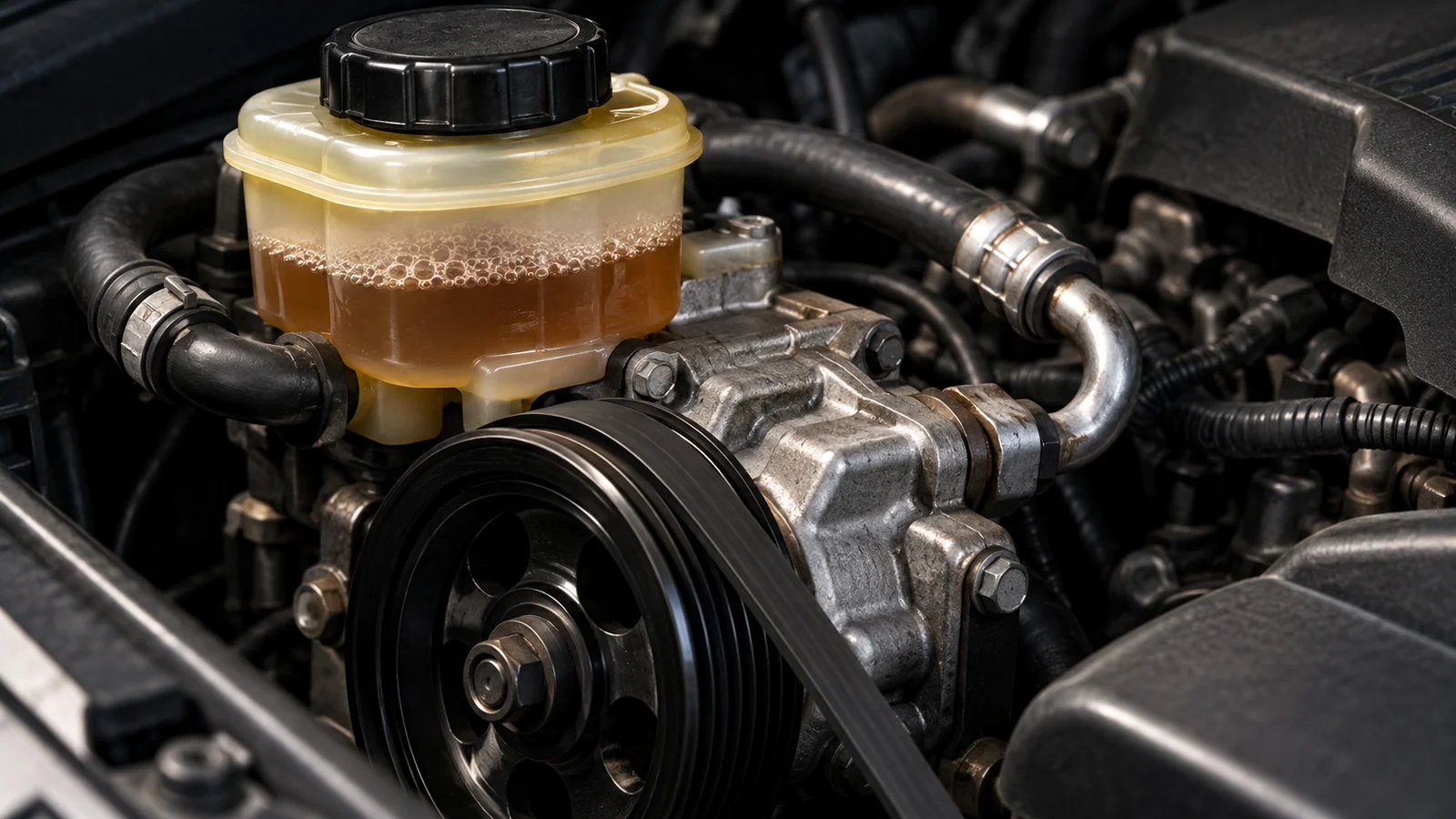
The quick answer
A hydraulic power-steering pump may be faulty if it leaks, makes abnormal noise or cannot provide the required assistance. Those symptoms can also come from low or aerated fluid, a belt problem, restricted hoses or another steering fault. Check the complete system before replacing the pump, especially if the same noise remains after a new pump is installed.
Does your vehicle have a hydraulic steering pump?
Confirm the steering design first. This guide concerns hydraulic systems with a pump and specified fluid. Do not apply reservoir or bleeding advice to a vehicle that uses a different assist arrangement.
On a mechanically driven pump, inspect the drive belt, tensioning arrangement and pulley condition. HELLA notes that a belt fault can cause poor assistance. A squeal from the drive area is not enough to identify internal pump damage.
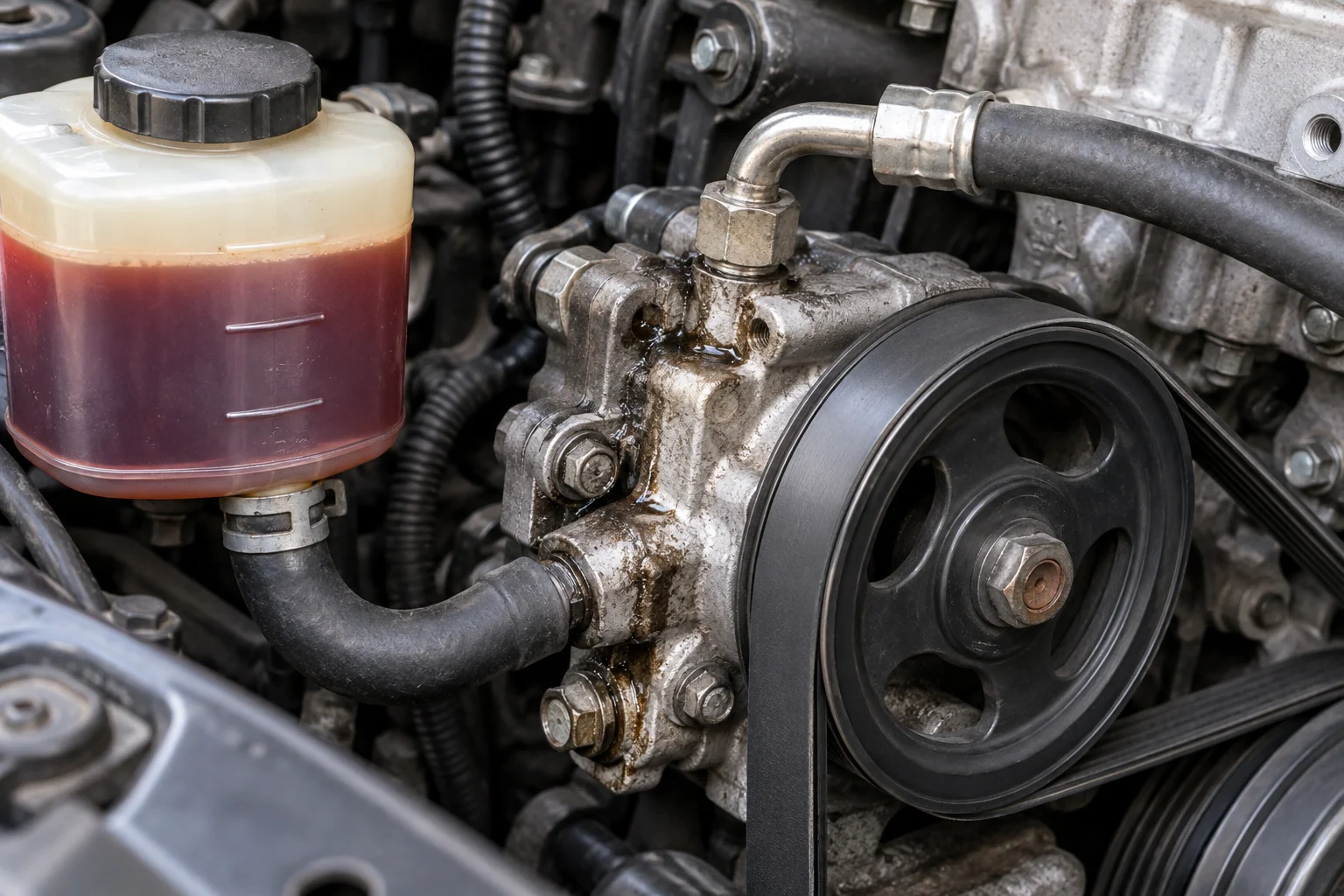
What should be checked when the pump whines or leaks?
Check the fluid level and condition using the vehicle's instructions. Look for leakage at the pump and connected lines. Foaming is a useful observation, but it does not, by itself, prove the pump must be replaced.
CARDONE's troubleshooting bulletin also calls for checking restricted or deteriorating hoses, reservoir-screen blockage where fitted, and a pinched or collapsed feed hose. Mechanical steering parts must move properly too. A pump can be overloaded by a fault elsewhere.
Have the technician trace the actual leak. Fluid around the pump may involve a connection or hose rather than the pump housing. Repair the demonstrated source and use the specified fluid; color alone is not a reliable fluid specification.
Why is a new power-steering pump still whining?
First check whether the original cause was corrected. The wrong fluid, remaining contamination, a supply restriction or incomplete air removal can leave noise or poor assistance after replacement.
CARDONE emphasizes fluid selection, flushing and filtration requirements. Its separate fluid guidance warns that common shop cleaning chemicals can damage steering seals. Follow the approved cleaning and service process rather than adding an unverified treatment.
Bleeding procedures vary. Use the vehicle's instructions and do not copy a full-lock steering routine from an unrelated pump installation. Ask the installer to inspect the work and verify the system before condemning another pump.
How should the pump diagnosis and repair be confirmed?
The technician should separate drive noise, hydraulic supply problems and mechanical steering faults. Where pressure or flow testing is required, use suitable equipment and the manufacturer's procedure. A sound recording cannot replace those checks.
Replace the pump when evidence supports it, then address contamination or other causes that could damage the replacement. Refill, bleed and check for leaks as specified. The related pump-replacement guide covers the installation stage.
If assistance changes suddenly, steering becomes difficult or a significant leak develops, stop safely and arrange help. Do not keep running a hydraulic pump with insufficient fluid or continue driving when steering control is unreliable.
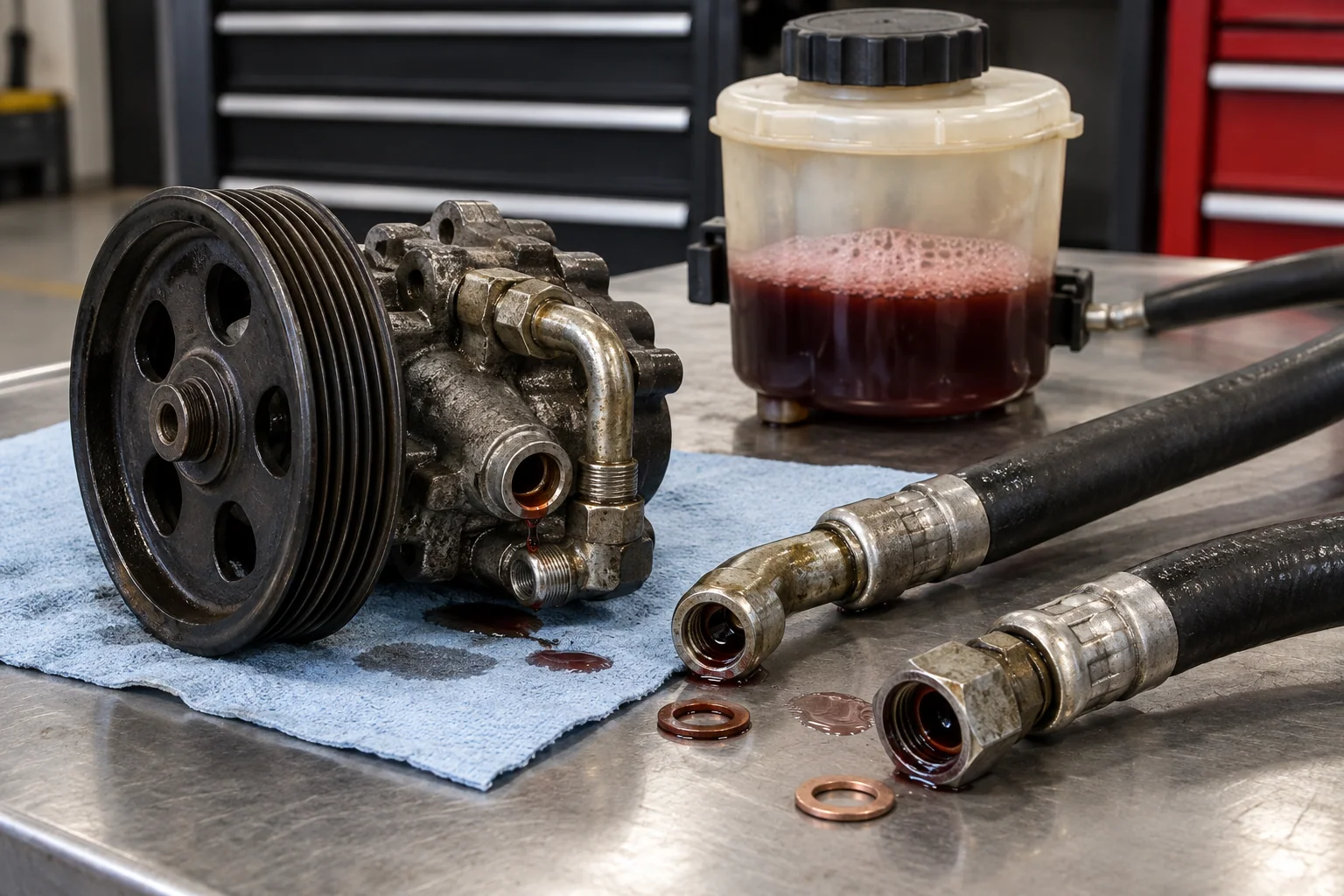
Sources & further reading
- HELLA — Hydraulic steering pump - repair instructions
- CARDONE — CARDONE ProTech
- CARDONE — 3F: Fluid/Flush/Filter - CARDONE Industries
Vehicle designs and maintenance requirements vary. Consult the owner’s manual for your exact vehicle and seek a qualified inspection for a specific fault.