Ignition and engine control
Spark Plug and Ignition Coil Replacement: When Both Are Needed
Published:
Edited and fact-checked by: Jacob Bowen
General information; vehicle-specific diagnosis requires an inspection. How we prepare our guides · This page reserves space for ads. Advertising policy · Privacy choices
The quick answer
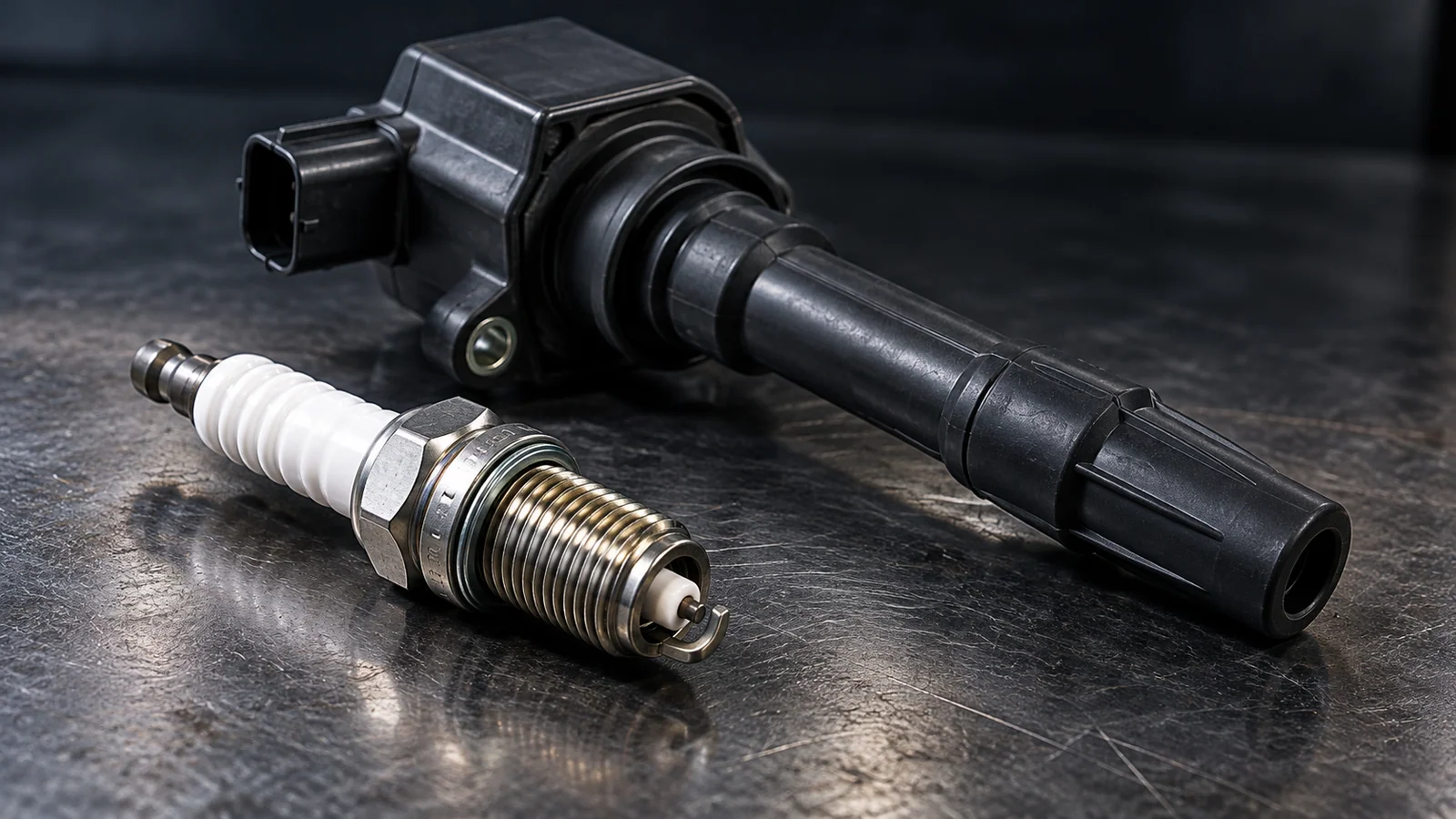
Replace spark plugs and ignition coils together when the plugs are due or faulty and testing also supports a coil fault. A misfire alone does not establish that both parts failed, and one failed coil does not automatically justify replacing every coil. Ask which findings support each item on the estimate.
How are a plug problem and a coil problem distinguished?
The coil supplies ignition voltage; the plug provides the firing point in the cylinder. Their symptoms can overlap, so identify the affected cylinder and check the ignition system rather than buying both parts from a code description.
HELLA recommends inspecting coils, wiring and connections and checking supply, triggering and ignition behavior as appropriate. Its guide also warns that a mechanical engine problem can affect an ignition waveform. A misfire-related electrical trace still needs interpretation in context.
Pico's coil-on-plug test compares primary and secondary voltage behavior on a specific coil design. It requires correctly rated equipment and consistent probe placement. This is a professional diagnostic example, not a reason to disconnect running ignition components or improvise a spark test.
What does the condition of the spark plugs tell you?
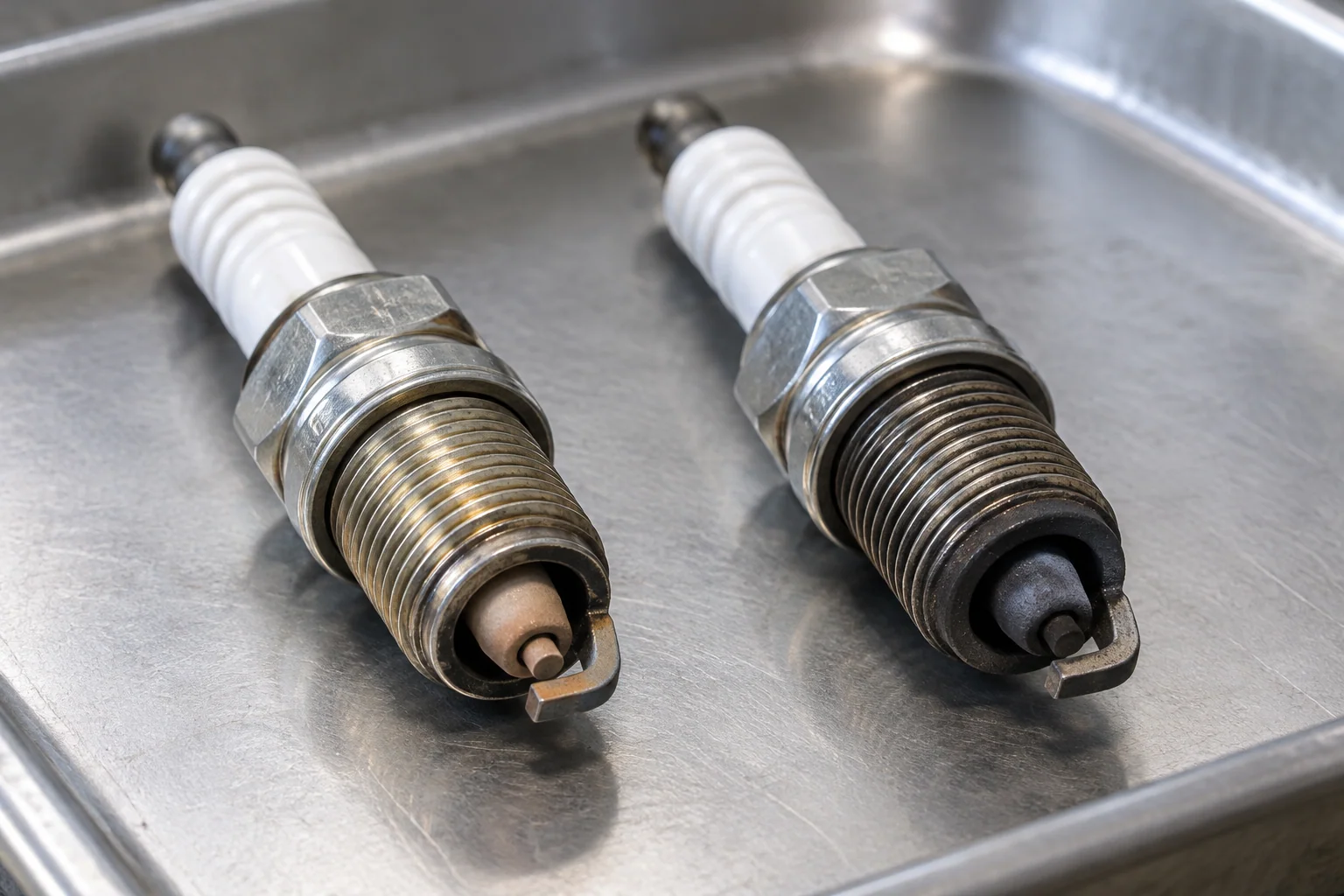
Compare the plugs with maintenance history and inspect them by cylinder. NGK's plug-reading guide explains that deposits and electrode condition can reflect operating problems. A fouled plug may be an effect of another fault, so a new one can foul again if the cause remains.
If the plugs are due under the manufacturer's schedule, replacing them can be appropriate maintenance while a proven coil fault is repaired. That is a different explanation from claiming every coil and plug failed together.
Confirm the actual ignition arrangement. Engines can use individual coils, shared coil packs or other layouts; the number of cylinders is not enough to establish the number of coils being quoted.
What else needs checking during replacement?
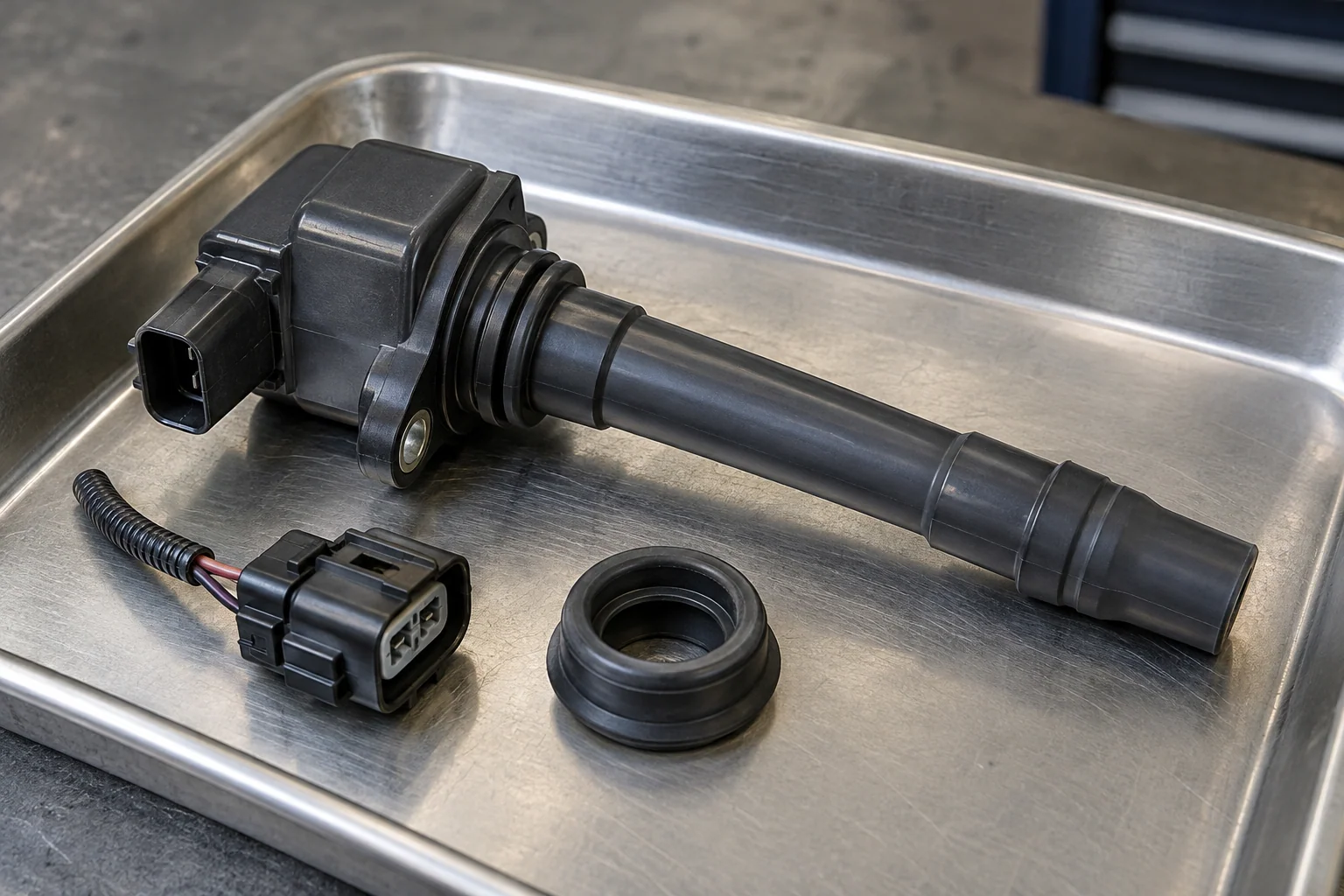
Fit the correct parts and follow the vehicle's plug gap, tightening and coil-installation requirements. Inspect boots, connectors and the plug wells. HELLA notes that oil from a valve-cover sealing fault can damage coil insulation.
If oil or water intrusion is present, ask how its source will be corrected and whether the affected ignition parts remain serviceable. Replacing coils while leaving contamination unresolved is incomplete fault correction.
How much does replacing plugs and coils cost?
RepairPal's US estimates, updated September 3, 2026, list spark-plug replacement at $288–$399 and ignition-coil replacement at $238–$320. The plug estimate includes labor $184–$270 and parts $104–$129; the coil estimate includes labor $74–$109 and parts $164–$211.
Both exclude taxes, fees, location and related repairs. They are separate service benchmarks, not a combined full-set quote. Adding them can duplicate access labor, and neither total establishes a price for every coil on your engine.
Ask the shop to list plug and coil quantities, diagnosis, access work, required seals and any contamination repair. Compare that same scope between estimates.
What if it still misfires after the plugs and coils were changed?
Have the original diagnosis and recent work checked: correct parts, connections, seating and the condition in which the misfire occurs. Then investigate any remaining fuel-delivery, wiring or mechanical cause indicated by testing.
Ask whether the same cylinder is still affected and what evidence rules out the replaced parts and their installation. If it shakes severely or cannot run dependably, stop driving and arrange assistance. More parts without further testing are not a useful next step.
Sources & further reading
- HELLA — Ignition coil – checking, measuring, faults
- Pico Technology — Coil-on-plug - primary and secondary voltage (probe) | Automotive oscilloscope test
- Niterra / NGK — How do I "read" a spark plug? - NGK Spark Plugs
- RepairPal — Spark Plug Replacement Cost Estimate
- RepairPal: ignition-coil replacement cost estimate
Vehicle designs and maintenance requirements vary. Consult the owner’s manual for your exact vehicle and seek a qualified inspection for a specific fault.