Exhaust
Smoke From Under the Hood: Causes and Diagnostic Steps
Published:
Edited and fact-checked by: Jacob Bowen
General information; vehicle-specific diagnosis requires an inspection. How we prepare our guides · This page reserves space for ads. Advertising policy · Privacy choices
The quick answer
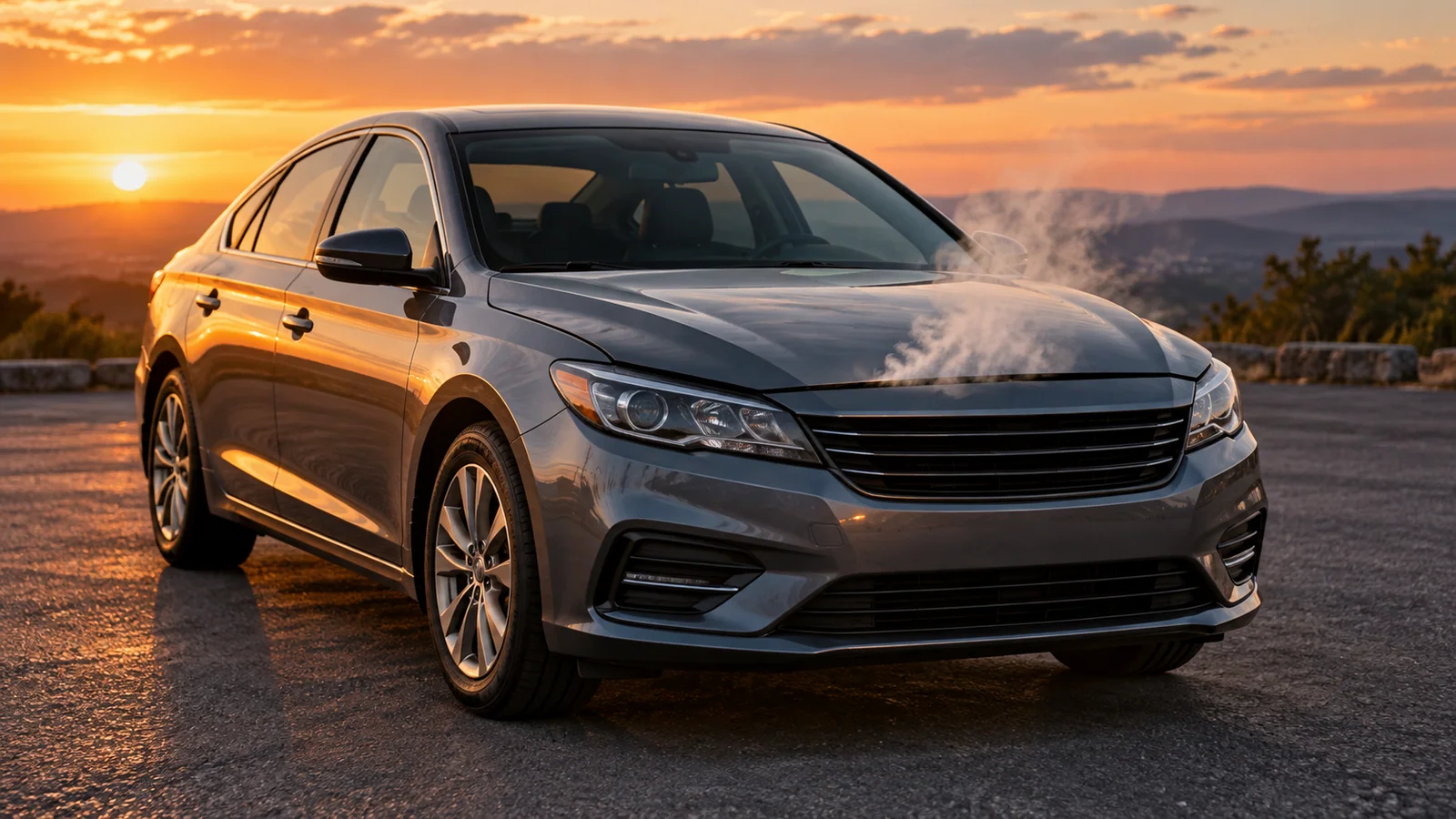
If smoke or steam comes from under the hood, pull over safely and shut the engine off. Keep clear of the engine compartment. If you suspect a fire, get everyone out, move away from the vehicle and traffic, and call 911. Do not open the hood to investigate a possible fire. The plume's color alone cannot tell you whether the cause is coolant, oil or an electrical fault.
What should you do if there may be a vehicle fire?
The US Fire Administration advises stopping safely, turning the engine off and getting everyone out. Move at least 100 feet from a burning vehicle and well away from traffic. Call 911, do not return to the vehicle and do not try to fight the fire yourself.
If you think the fire is under the hood, leave it closed: opening it can make the fire grow. Do not lean over the engine, reach toward wiring or disconnect a battery beside smoke or flames.
Could white smoke under the hood actually be steam?
A cooling-system leak or overheating can release steam that looks like smoke. A sweet odor, visible coolant or a temperature warning can help the technician investigate, but do not approach the plume to smell or identify it.
The GM owner-manual excerpt in the sources warns that steam can burn you even when opening the hood. Stay away and wait until there is no sign of steam or coolant before approaching for inspection. Never remove a hot radiator or pressurized coolant cap. A fixed cooling time does not establish that the system is safe.
How does a shop find the source after the vehicle is safe?
First establish where the smoke came from. Material rising from the engine compartment is a different complaint from blue or white smoke leaving the tailpipe, including on a diesel. Tell the shop the location, warning messages, recent work and whether there was a fluid leak.
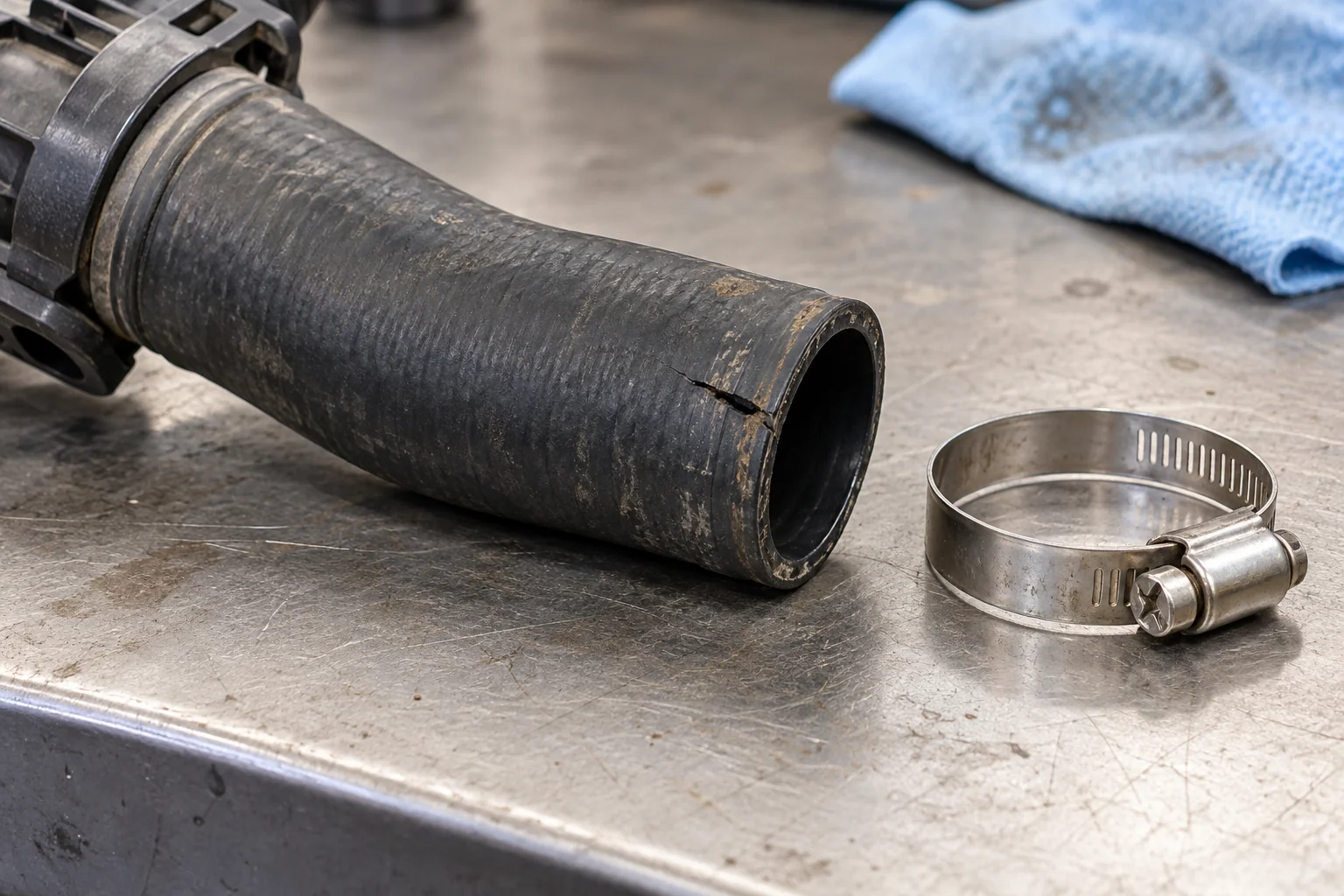
Once safe to inspect, the technician can trace coolant or oil leakage, check fluid levels and inspect affected wiring and components. Fel-Pro's leak checklist includes engine sealing areas, fuel-system seals and cooling-system connections. A leak needs to be located rather than naming a head gasket or valve-cover gasket from smoke color.
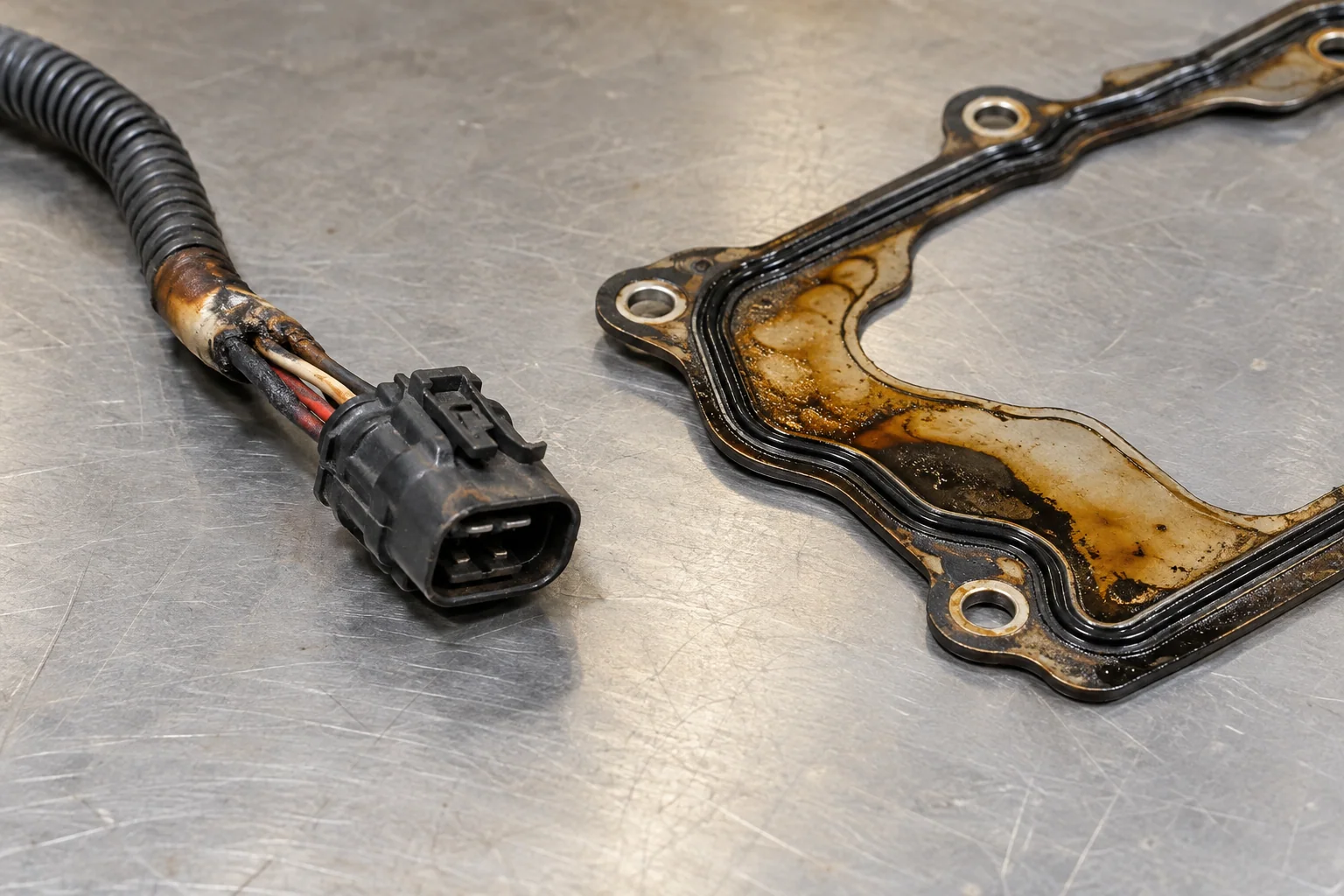
Oil or another fluid contacting a hot surface is one possible explanation; overheating, electrical damage and other faults need different repairs. An under-hood plume does not establish that the engine is burning oil internally.
Can you drive again once the smoke disappears?
Disappearing smoke does not prove the fault is resolved. Do not restart after a suspected fire or keep driving with an overheating warning, significant leak or damaged wiring. Arrange recovery and inspection.
Ask the shop to identify the confirmed source, check damage caused by heat or fluid loss, complete the correct repair and verify normal operation afterward. Topping up a lost fluid or clearing a warning is not enough when the cause remains unknown.
Sources & further reading
- GM owner-manual excerpt: overheating and steam (section 6-35)
- AAA — Dealing With an Overheating Car | AAA Oregon/Idaho
- Fel-Pro — Engine Fluid Leak Inspection Checklist
- US Fire Administration: vehicle fire safety
Vehicle designs and maintenance requirements vary. Consult the owner’s manual for your exact vehicle and seek a qualified inspection for a specific fault.