Exhaust
Smoke From a Car Exhaust: Diagnose It by Color and Conditions
Published:
Edited and fact-checked by: Jacob Bowen
General information; vehicle-specific diagnosis requires an inspection. How we prepare our guides · This page reserves space for ads. Advertising policy · Privacy choices
The quick answer
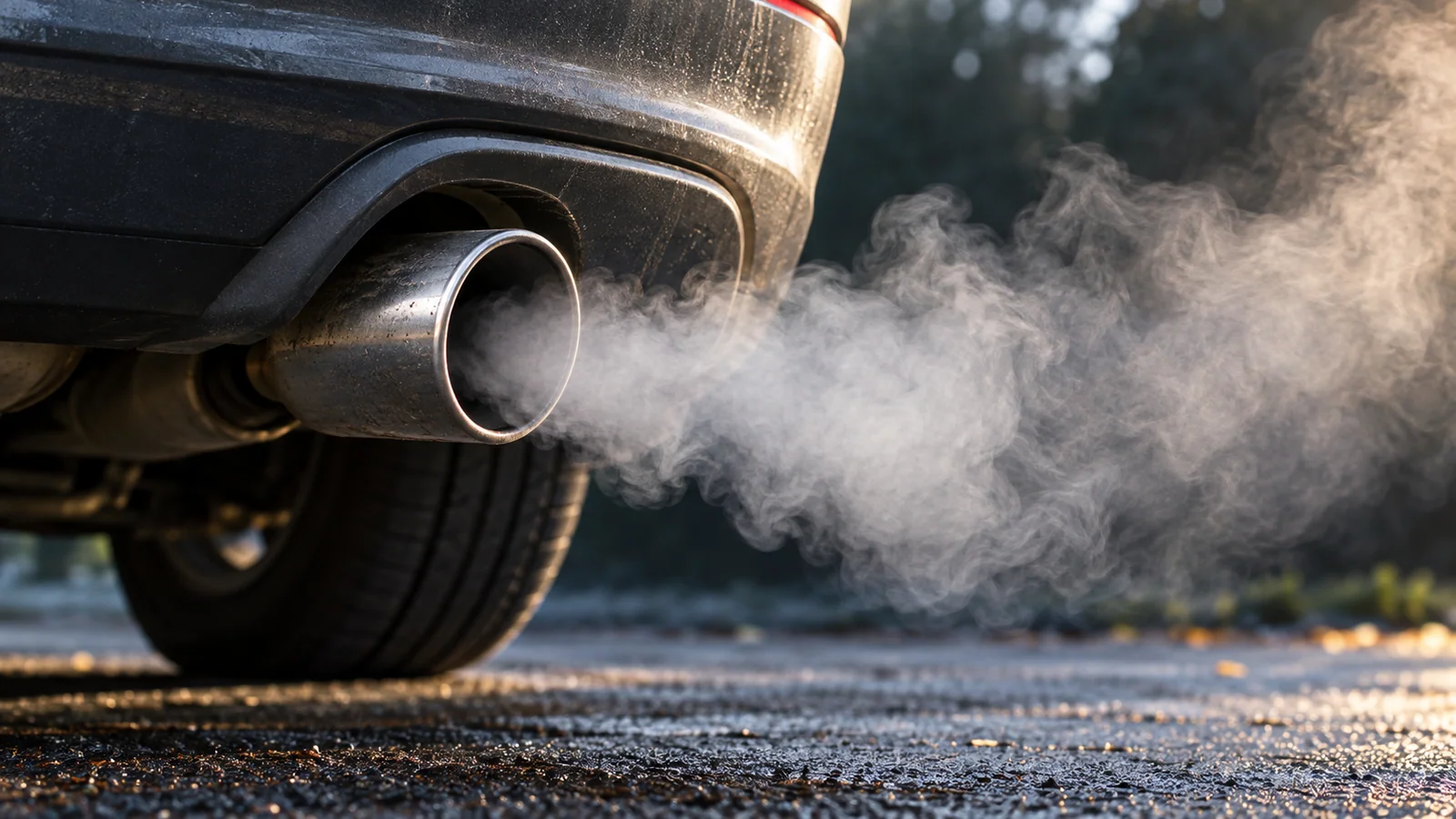
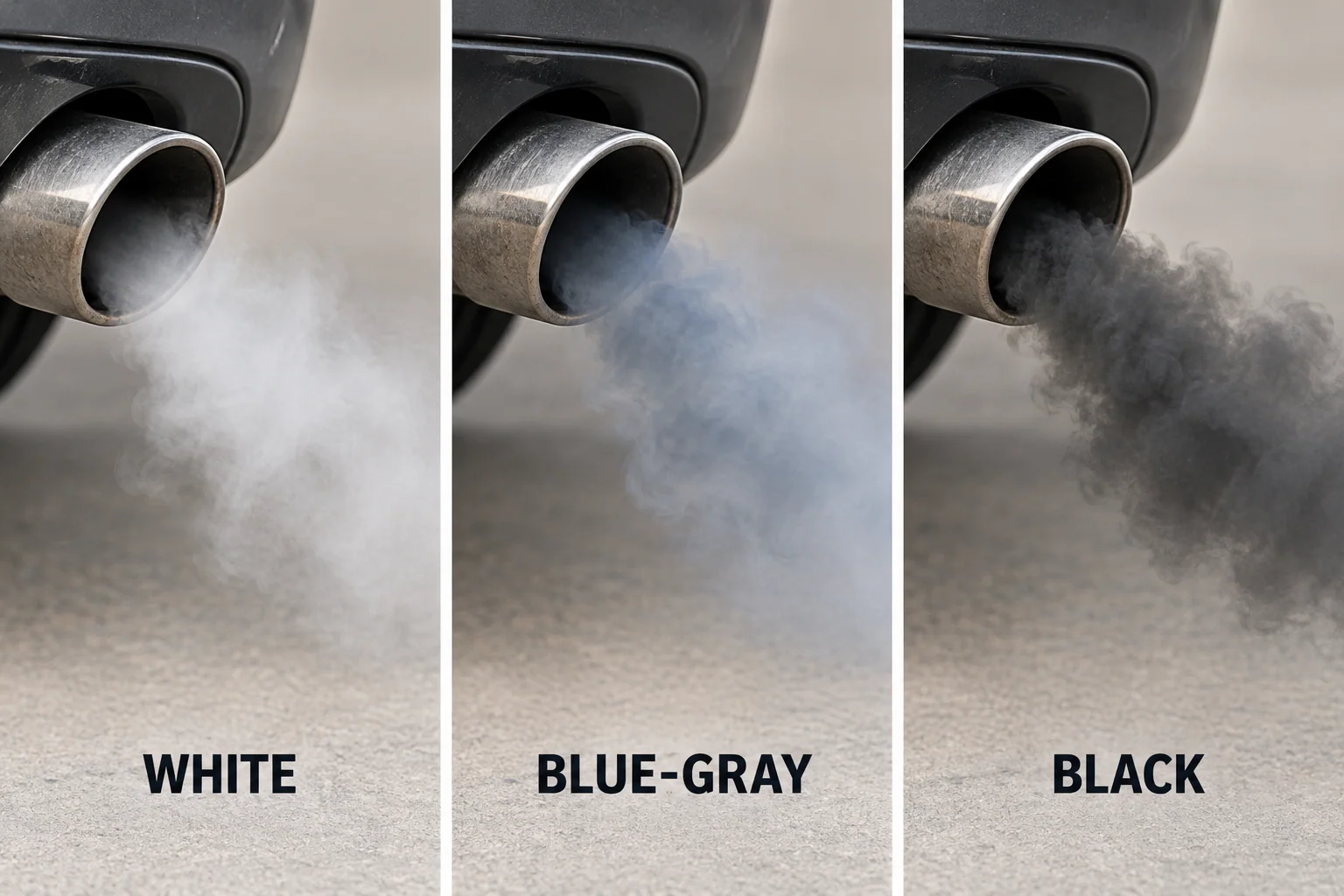
Exhaust smoke needs to be judged by its color, when it appears and whether the engine is losing fluid or running poorly. Blue-gray smoke suggests oil burning; persistent white smoke can involve coolant or, on a diesel, unburned fuel; black smoke points toward a fueling or air-supply problem. Color guides testing—it does not confirm the repair.
What should you record before arranging diagnosis?
Note whether the plume appears only at startup, continues when warm or develops under acceleration. Record oil and coolant loss, warning lights, overheating and rough running. A short video taken safely can help show a symptom that disappears before the appointment.
Tell the shop the year, engine and fuel type. ‘BMW exhaust smoke,’ for example, covers many engines with different systems and test procedures. Do not select parts from the make or smoke color alone.
Is white exhaust always a head-gasket problem?
No. Light water vapor can be normal in cold weather. A persistent dense plume, especially with coolant loss, overheating or rough running, deserves investigation. Do not keep driving to warm the engine if a temperature warning is already present.
Fel-Pro explains that a leaking head gasket and a cracked cylinder head can cause similar symptoms. Cooling-system checks and engine testing can establish the next step, but determining the condition of the head may require removal and machine-shop testing. A failed cooling-system pressure test alone does not identify a head gasket; external leaks must also be considered.
Diesel white smoke can have a fuel-combustion cause, so a coolant diagnosis cannot be assumed from the color.
What does blue or gray smoke tell you?
Blue-gray smoke suggests oil is entering the combustion process. Record oil top-ups and mileage using the correct level-checking method. Valve seals, guides and ring or cylinder problems are possible branches; the smoke does not establish that a complete engine overhaul is necessary.
Describe whether it is a brief startup puff or a continuing cloud. Ask what inspection or testing supports the proposed cause before approving internal engine work.
Does black smoke mean an injector needs replacement?
Black smoke can indicate a fueling or air-supply problem, but an injector is only one possibility. Motorservice explains that incorrect air-mass information can affect fueling, while an intake leak, blocked filter or another system fault can also produce misleading sensor readings.
The shop should review fault codes and operating data, inspect the relevant intake components and test the suspected system. A code naming a sensor does not prove that the sensor is defective. Diesel diagnosis also needs the correct engine and emissions-system information.
When should you stop driving?
Stop safely for overheating, an oil-pressure warning, severe rough running or loss of power that makes driving unsafe. Arrange recovery rather than repeatedly running the engine to watch the smoke.
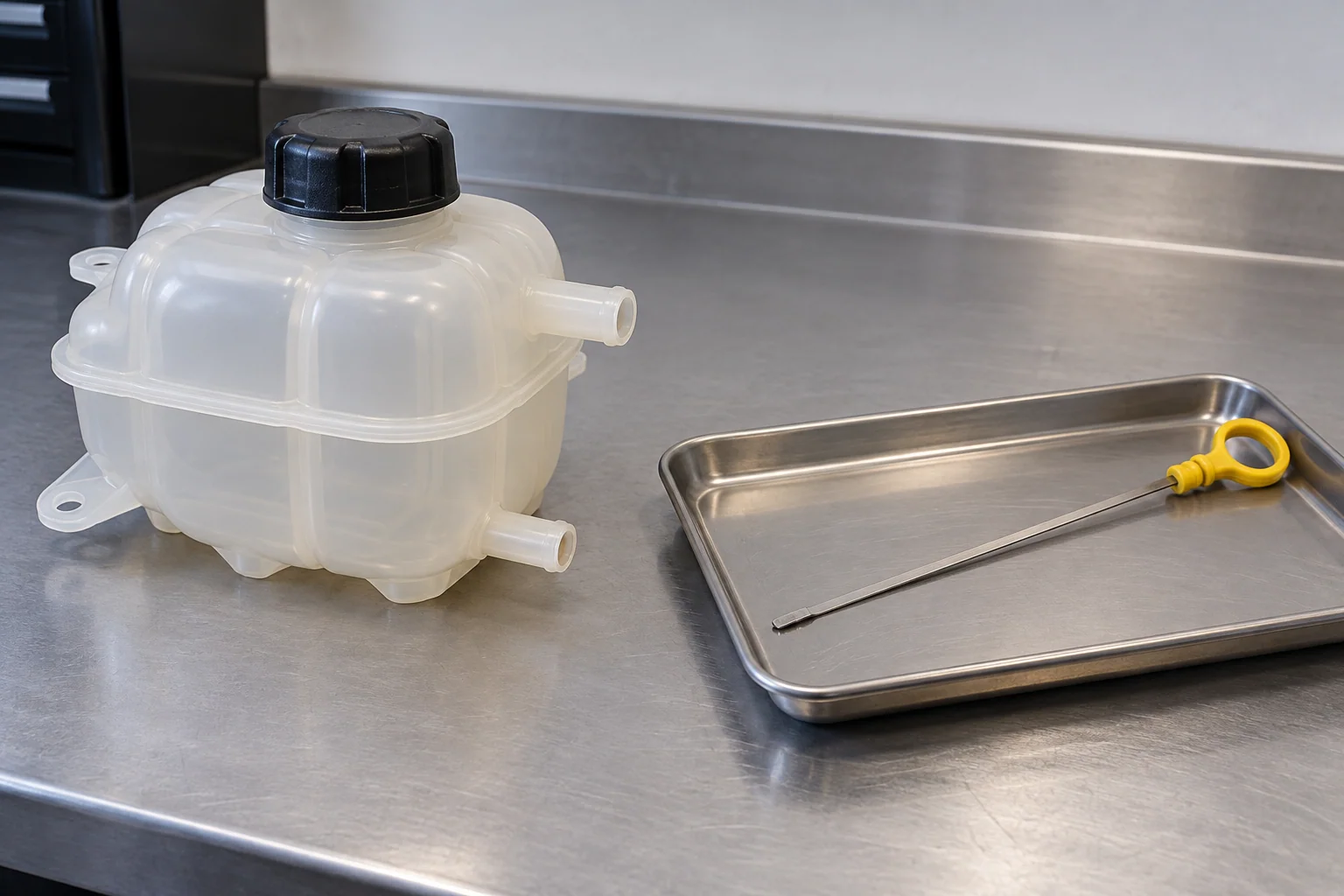
Check coolant only when the engine is cold; never remove a hot cooling-system cap. Smoke from under the hood belongs to a different investigation from tailpipe smoke. Have the actual leak or combustion fault confirmed before agreeing to a gasket, injector or engine replacement.
Sources & further reading
- AA1Car / Larry Carley — Diagnose Exhaust Smoke
- Fel-Pro — Identifying Blown Head Gaskets & Cracked Heads
- MOTOR — Dealing With Oil Consumption Issues
- Motorservice / Pierburg — Air mass sensor: Faults, causes and testing
- Mazda: 2025 CX-5 warning indications
- Mazda: 2025 CX-5 fluid checks and cooling-system precautions
Vehicle designs and maintenance requirements vary. Consult the owner’s manual for your exact vehicle and seek a qualified inspection for a specific fault.