Drivetrain
Clutch Release Bearing: Symptoms, Diagnosis and Repair Options
Published:
Edited and fact-checked by: Jacob Bowen
General information; vehicle-specific diagnosis requires an inspection. How we prepare our guides · This page reserves space for ads. Advertising policy · Privacy choices
The quick answer
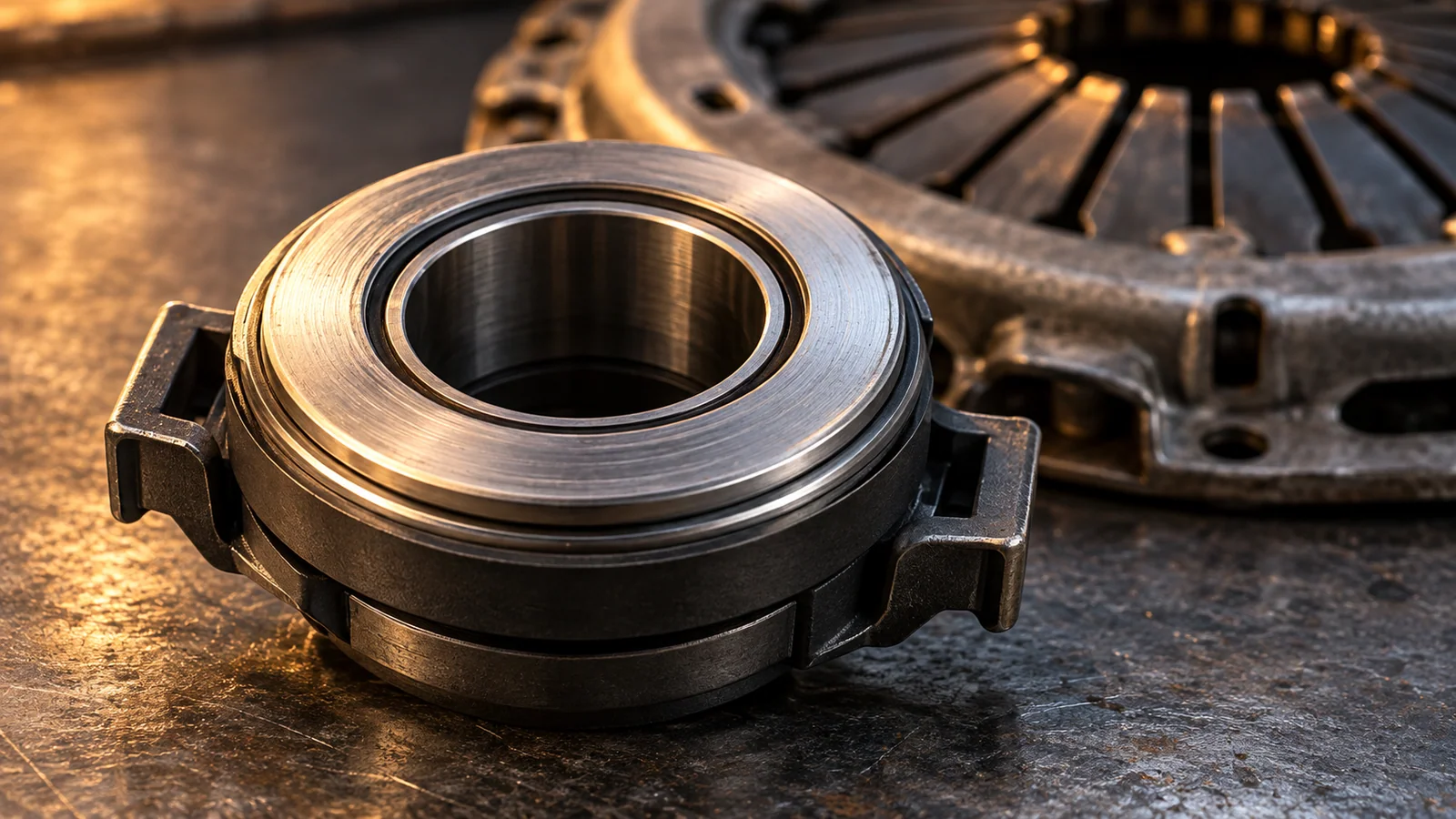
A worn clutch release bearing, also called a throwout bearing, can make noise as the clutch pedal is operated. Pedal position helps diagnosis, but noise alone cannot distinguish it reliably from a pilot bearing, transmission bearing or release-mechanism problem. Confirm the cause before authorizing the transmission removal commonly needed for replacement.
What does the clutch release bearing do?
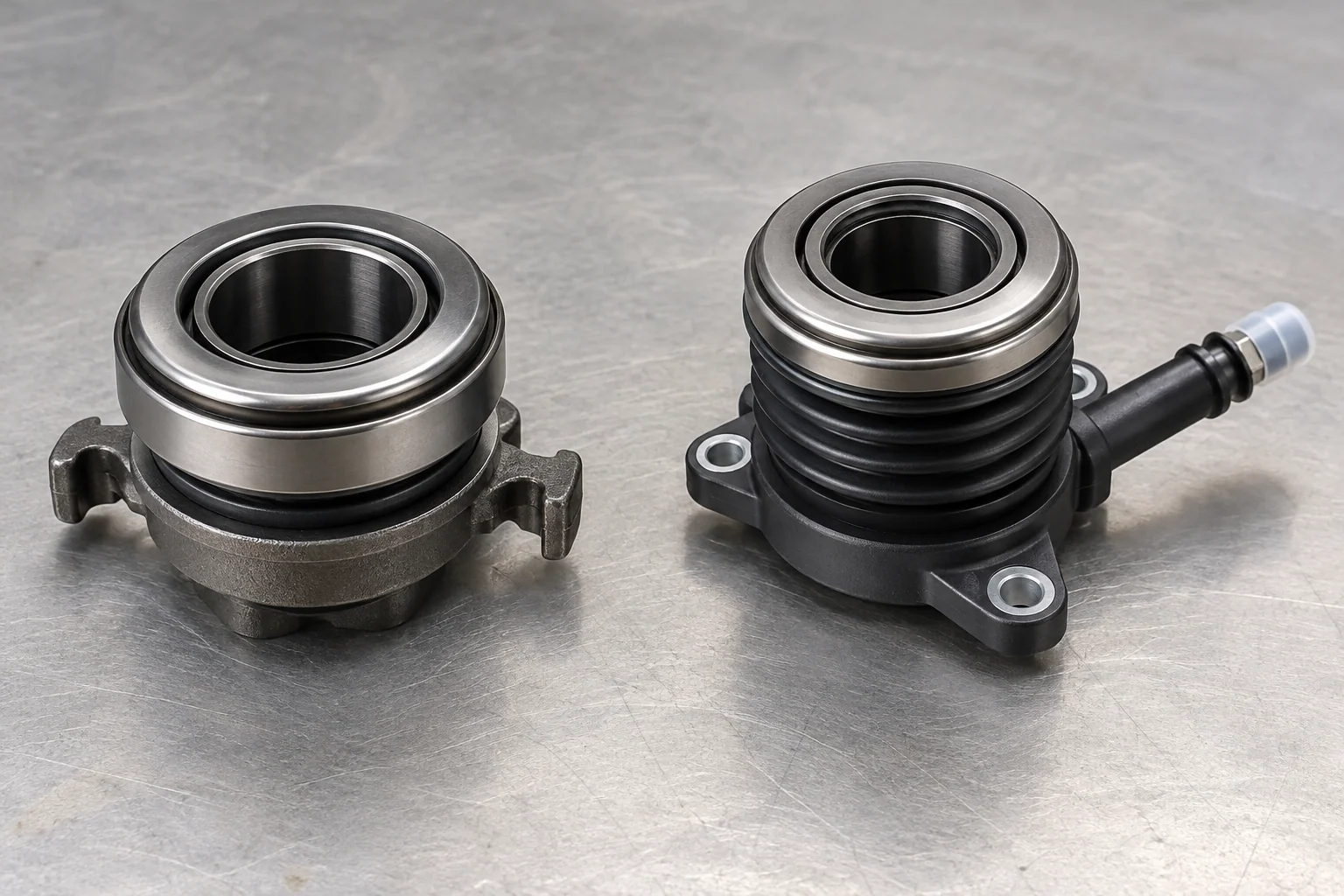
The release bearing transfers force from the release mechanism to the rotating clutch assembly so the clutch can disengage. Designs vary: some use a separate bearing and fork, while others incorporate the bearing into a concentric hydraulic release unit.
Schaeffler’s engineering paper describes how release-system design affects pedal vibration and bearing operation. This is why one vehicle’s normal pedal feel or adjustment method should not be used as the standard for another. Identify the clutch and release system before choosing parts.
How can pedal position help identify the noise?
Tell the technician whether the noise happens with your foot off the pedal, as you begin pressing it or while the pedal is held down. Also note whether it occurs at idle, while selecting a gear or as the car moves away.
ZF recommends comparing these operating conditions and checking the pilot bearing, actuating system and installed parts. A noise that changes with pedal movement gives the technician a useful lead, but it does not establish a release-bearing failure by itself. Avoid repeatedly operating a noisy or malfunctioning clutch just to demonstrate it.
What else can sound or feel like a bad bearing?
A pilot bearing, transmission input-shaft bearing, worn release fork or alignment problem can produce overlapping complaints. Hydraulic faults can prevent full release without the bearing being the original cause. If the problem began after clutch work, correct parts, assembly and alignment need attention.
A clutch that will not disengage may cause difficult gear selection, grinding or vehicle creep. Do not force the shifter or continue driving when you cannot disengage the clutch reliably. Arrange inspection or recovery as needed.
Should the shop replace just the bearing or the whole clutch?
That decision depends on inspection and the condition of the clutch, not noise alone. Once access is available, the shop should assess the release mechanism and related components. ZF describes bearing damage associated with off-center contact, guide-tube wear and inadequate preload; installing another bearing without addressing its cause can repeat the problem.
A bearing-only repair may be appropriate for a confirmed isolated fault. Worn or damaged clutch components may justify a wider repair. Ask for the findings and the additional parts and labor before approving a complete kit.
Why can throwout-bearing replacement be expensive?
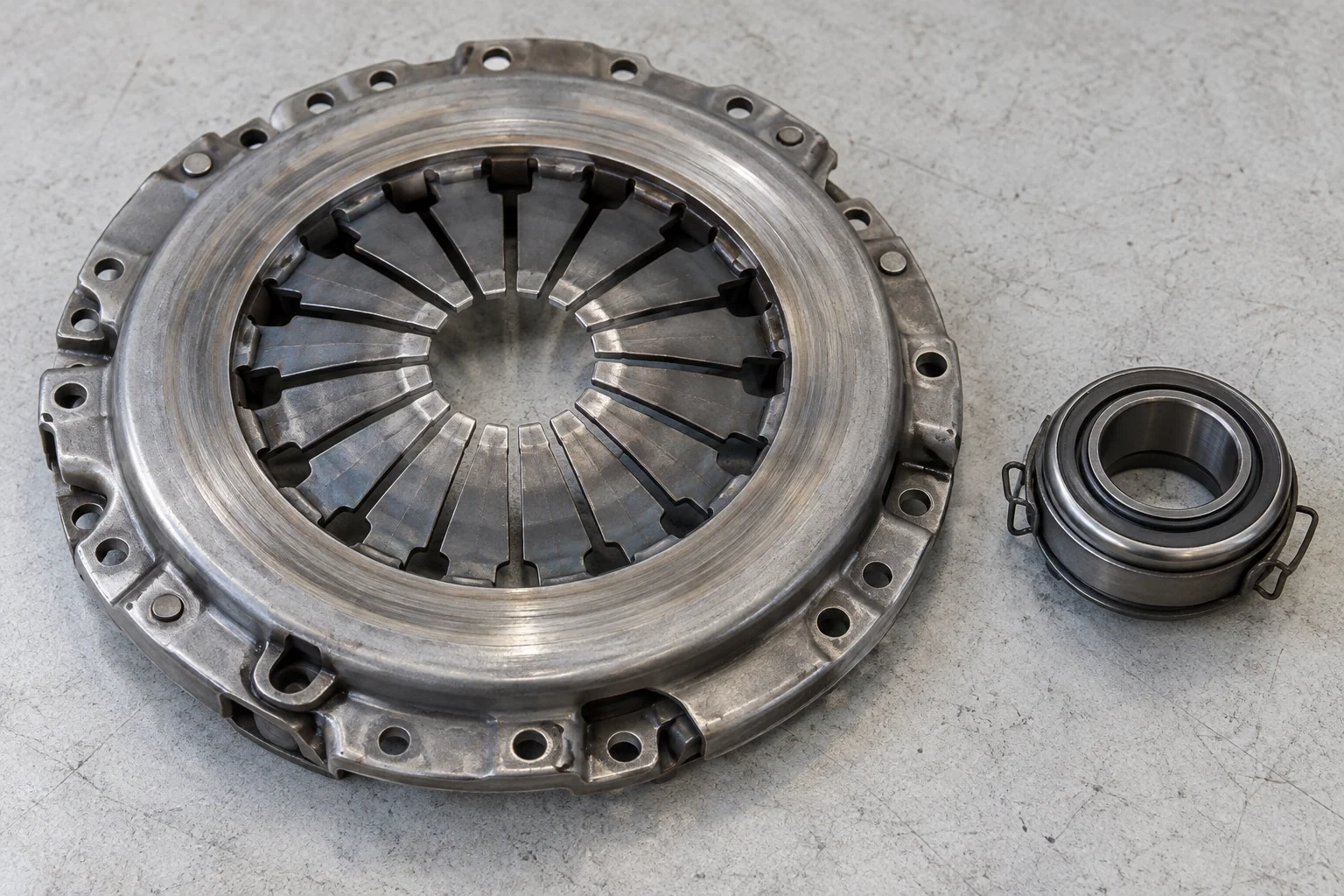
The bearing’s purchase price does not represent the complete job. Separating the transmission or transaxle from the engine is labor-intensive, and some release bearings are supplied as part of a hydraulic assembly.
Request a quote identifying removal and installation labor, the bearing or release unit, any necessary fluid or bleeding work and the reasons for additional clutch parts. Compare bearing-only and clutch-kit options with shared access labor accounted for once. An exact price requires the vehicle and transmission details.
Sources & further reading
- ZF Aftermarket / SACHS — Clutch Noises? Workshop Tips on Possible Causes
- Schaeffler / LuK — Clutch Operation: Schaeffler Symposium
- AA1Car / Larry Carley — Clutch Diagnosis & Repair
Vehicle designs and maintenance requirements vary. Consult the owner’s manual for your exact vehicle and seek a qualified inspection for a specific fault.