Engine
Valve Cover Gasket Symptoms: How to Test and Confirm the Fault
Published:
Edited and fact-checked by: Jacob Bowen
General information; vehicle-specific diagnosis requires an inspection. How we prepare our guides · This page reserves space for ads. Advertising policy · Privacy choices
The quick answer
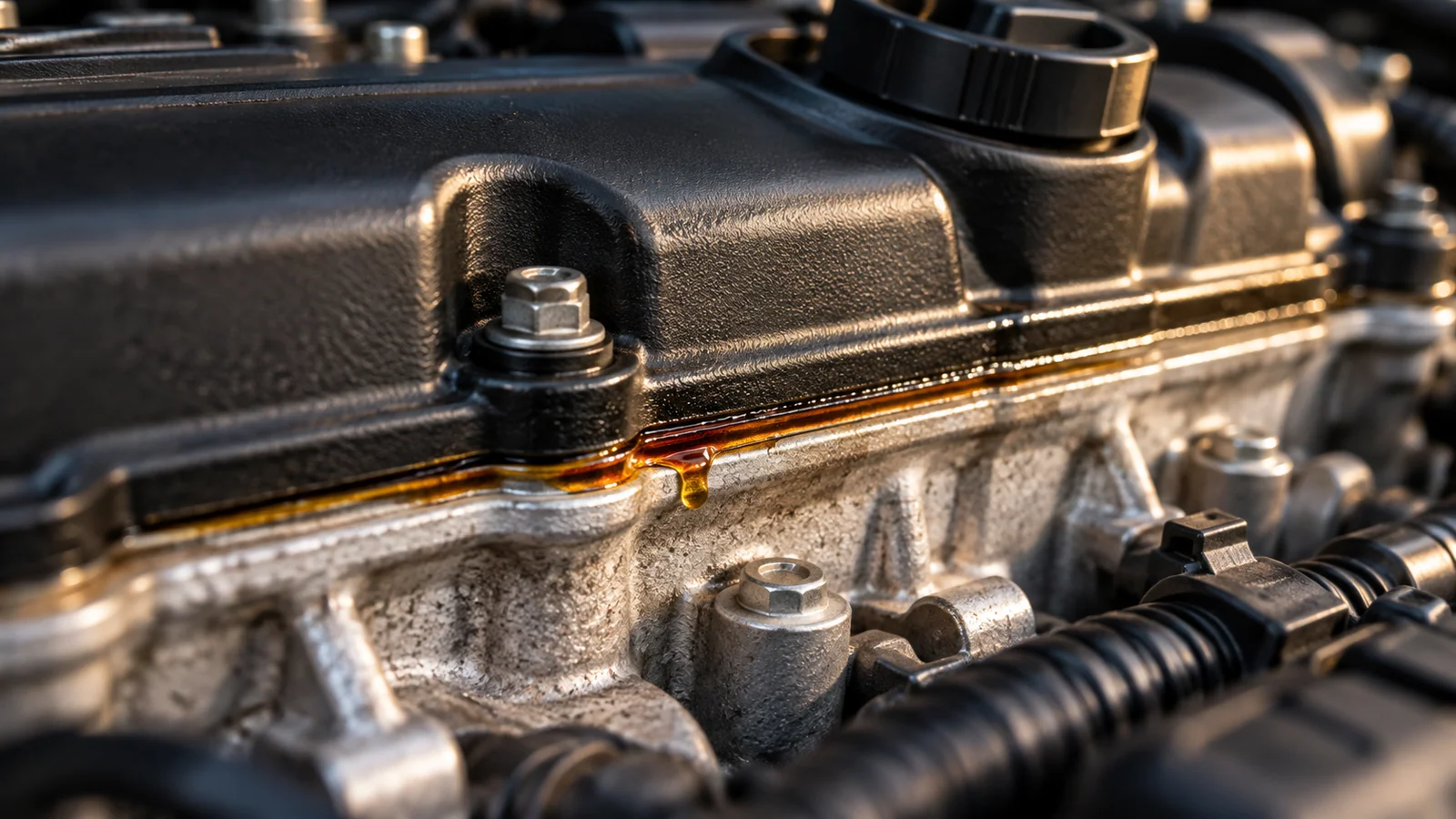
A leaking valve-cover gasket commonly leaves engine oil around the joint between the cover and cylinder head. Some engines can also leak oil into spark-plug wells through separate tube seals. Confirm where fresh oil starts before replacing parts: a damaged cover, spilled oil or a different engine leak can require a different repair.
How do you confirm that the valve cover is leaking?
Have the oily area inspected and, where necessary, cleaned so the next appearance of fresh oil can be traced. RepairPal describes cleaning and rechecking, with oil-compatible dye and a UV light when needed to locate a difficult leak.
Ask the technician to show the origin, not just the lowest oily component. Fel-Pro's inspection checklist includes valve covers, timing covers, crankshaft seals and other engine gasket locations because visible oil alone does not distinguish them. A photo of the first wet joint is more useful than a photo of an oil-coated engine.
Rocker cover and valve cover are names for the same general component. A search result for a Subaru or Jeep does not establish which cover, gasket or leak path your particular engine has.
What does oil around a spark plug mean?
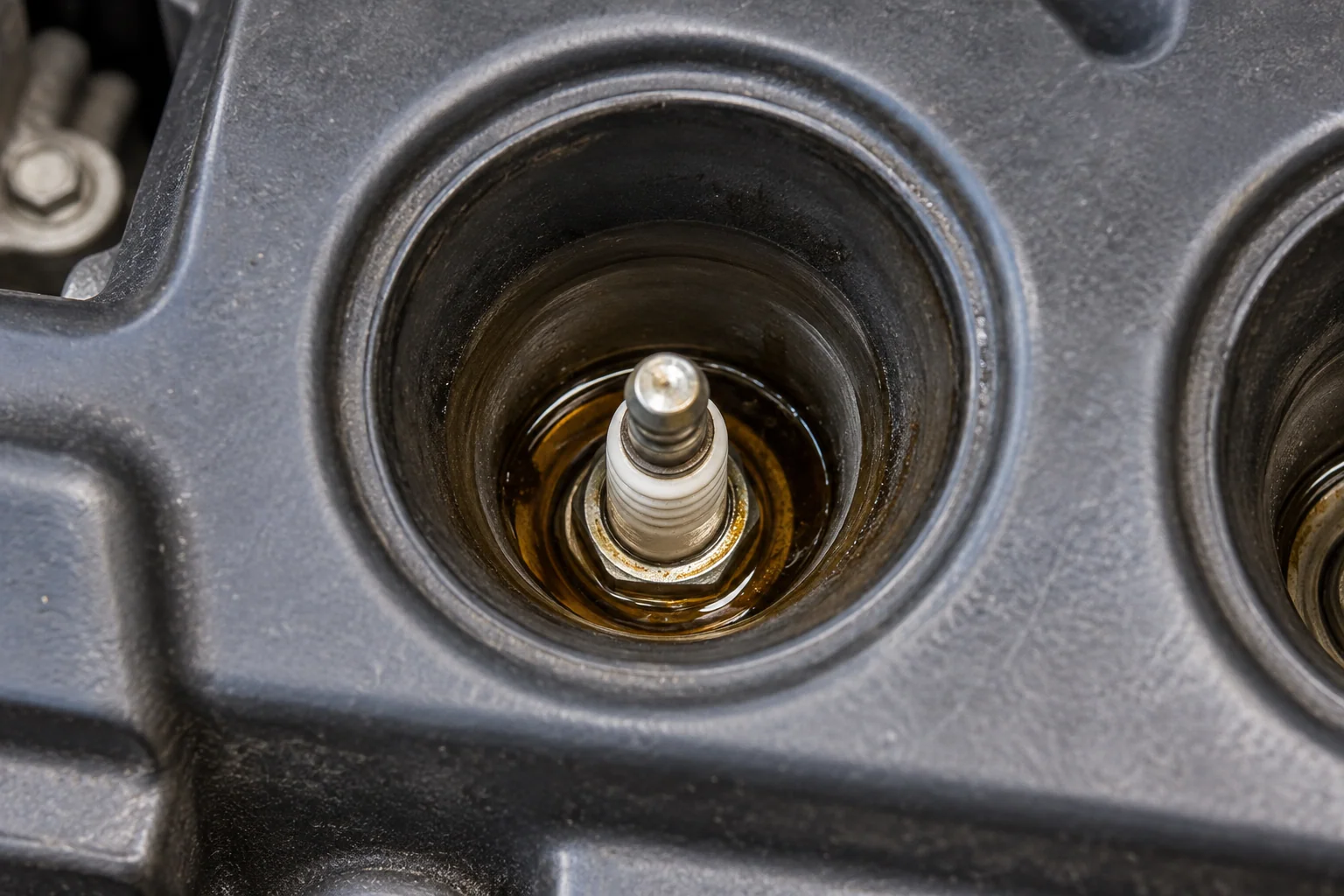
Oil pooled in a plug well deserves a separate check from oil around the outside perimeter. Fel-Pro explains that some covers use spark-plug tube seals and that leakage into these tubes can cause a misfire.
Oil outside the plug is also a different finding from deposits on its firing end inside the cylinder. Ask where the oil was found before accepting a diagnosis of internal oil burning or buying plugs and coils. Any running problem still needs to be checked, rather than attributed to the gasket solely because both are present.
Does it need a gasket or an entire valve cover?
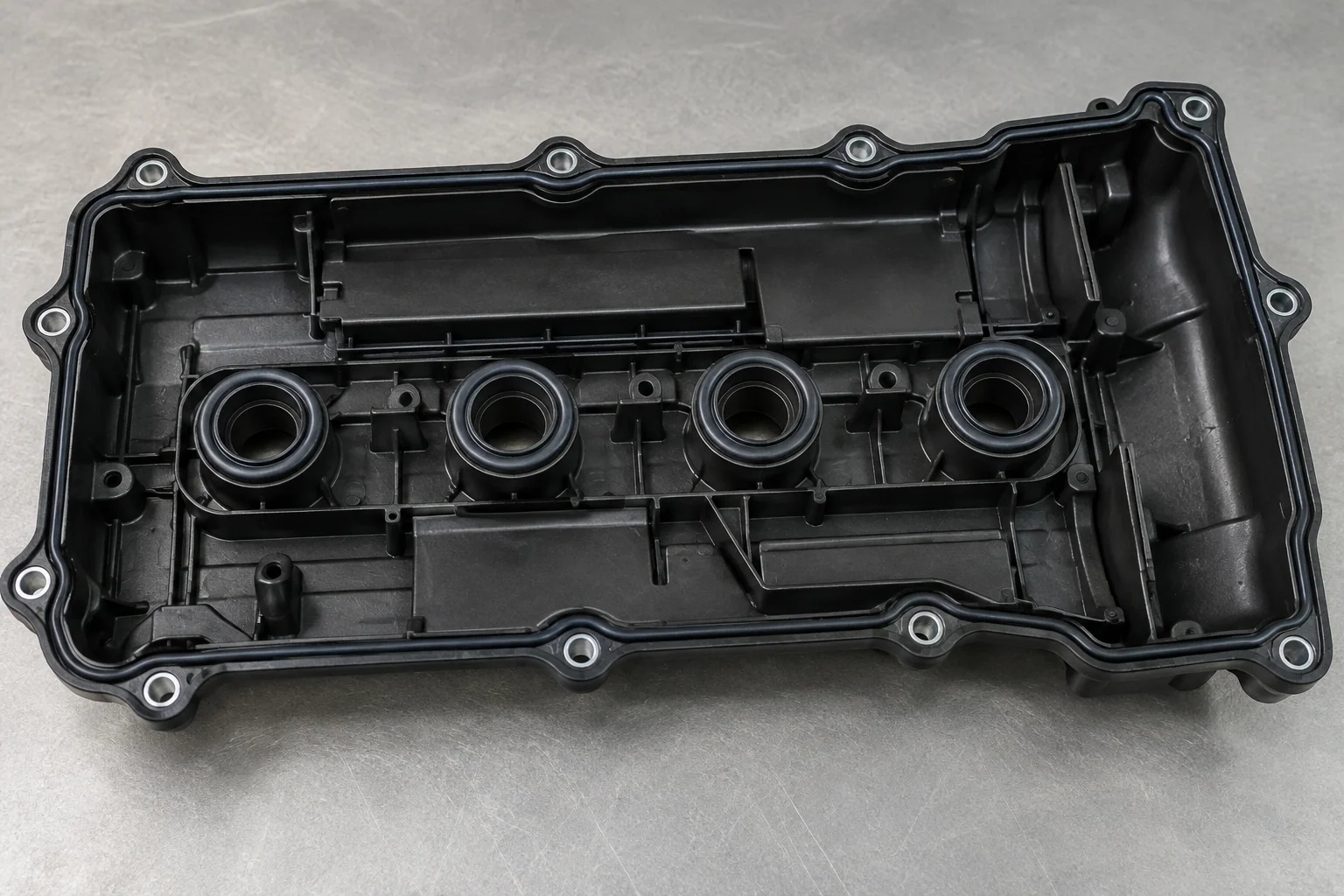
That depends on the condition and design of the cover. Fel-Pro advises checking plastic covers for cracks and other covers for damage or distortion. A new gasket cannot restore a damaged sealing surface.
For a sound cover, the repair may include the perimeter gasket, applicable tube seals and bolt grommets. The exact parts and procedure must match the engine. On some vehicles, access requires substantial additional disassembly.
More sealant or tighter bolts are not reliable fixes. Fel-Pro's molded gaskets install clean and dry, with limited RTV only where specified at particular joints. Correct installation also requires the manufacturer's tightening specification and sequence.
Can you drive with a valve-cover leak?
Have the leak assessed rather than assuming every seep requires immediate transport or that every oil leak is harmless. Its rate, where the oil is going and the engine's oil level matter.
If there is active smoke, oil reaching hot components, rapid oil loss or an oil-pressure warning, stop safely and switch off the engine. Arrange assistance instead of continuing to monitor it while driving. Check oil level only by the vehicle's specified method; topping up does not repair the leak.
What should a repair estimate and follow-up include?
RepairPal's US valve-cover gasket estimate, updated September 3, 2026, is $375–$514: labor $288–$423 and parts $87–$91. Taxes, fees, location and related repairs are excluded. A complete-cover replacement or work on multiple covers can have different scope.
Ask which cover is leaking, which seals are included and whether the cover itself is reusable. After repair, the area should be cleaned and checked again so residual oil does not get mistaken for a new leak.
Sources & further reading
- Fel-Pro — How to Install a Valve Cover Gasket
- Fel-Pro — Tips for Installing Press-in-Place Valve Cover Gaskets
- Fel-Pro — Engine Fluid Leak Inspection Checklist
- RepairPal — Valve Cover Gasket Replacement Cost Estimate
Vehicle designs and maintenance requirements vary. Consult the owner’s manual for your exact vehicle and seek a qualified inspection for a specific fault.