Diagnostics and warning lights
ABS Light On: Causes and Diagnostic Steps
Published:
Edited and fact-checked by: Jacob Bowen
General information; vehicle-specific diagnosis requires an inspection. How we prepare our guides · This page reserves space for ads. Advertising policy · Privacy choices
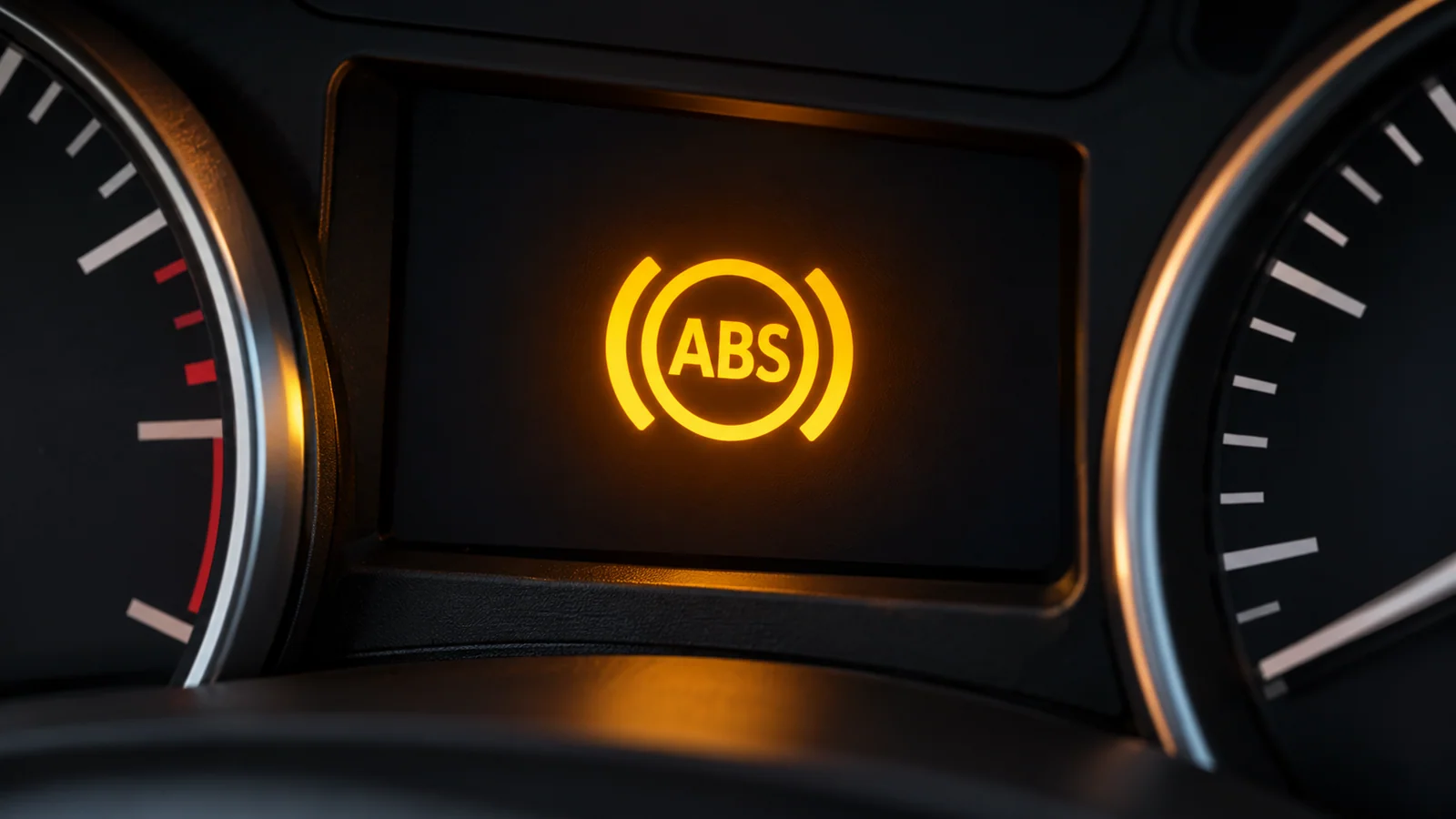
The quick answer
An ABS light that stays on indicates a fault requiring diagnosis in the anti-lock braking system. Anti-lock operation and related assistance may be unavailable. If the brake warning light is also on, the pedal feels abnormal or stopping ability changes, stop safely and arrange assistance. Do not assume that replacing a wheel-speed sensor or clearing a code will fix the problem.
Can you drive with the ABS light on?
Check your owner's manual and any other warning messages before continuing. An ABS-only warning and a warning involving the main braking system are different situations. Do not perform a hard-stop experiment to see whether ABS works.
For a specific example, the 2025 Mazda CX-5 manual says an ABS-only malfunction can leave conventional braking available without ABS, while brake assist may not operate. It directs owners to have the car towed when both ABS and brake warning lights are on. That is not a promise that every vehicle with an ABS light has otherwise normal brakes.
An unusual pedal, severe pulling, fluid leakage or reduced stopping ability needs immediate attention regardless of which light is showing. Stop safely and arrange recovery if braking is unreliable.
Why can ABS and traction-control lights come on together?
ABS uses wheel-speed information to manage braking when wheels are at risk of locking. Other systems can share those signals. Delphi explains that a wheel-speed fault can also affect traction-control operation, so several warnings may stem from one signal problem.
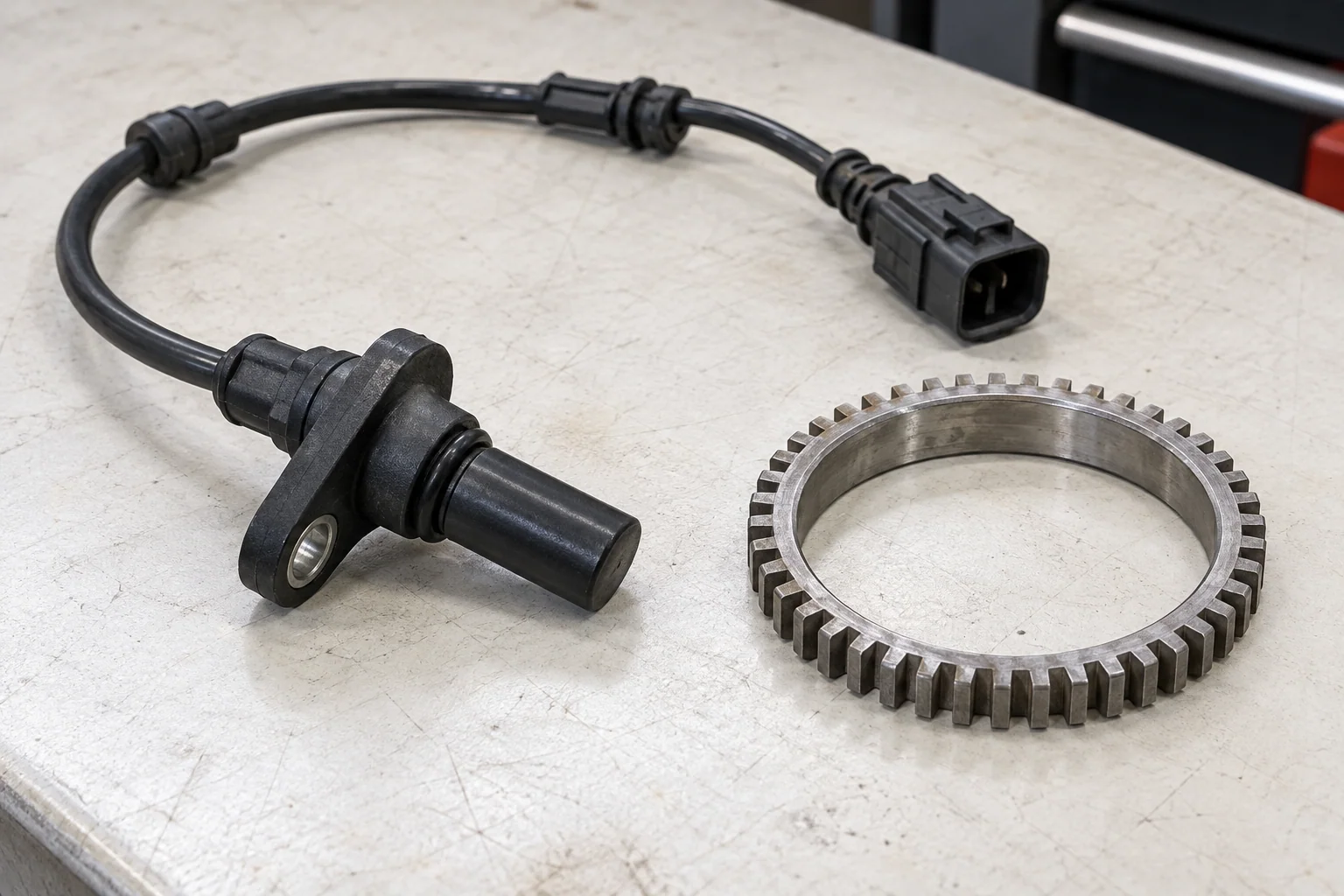
That still does not identify a failed sensor. A damaged rotating target, wiring fault, poor connection or another system fault can interfere with the information reaching the control unit. The vehicle's actual brake-system design determines the next tests.
What should a shop check before replacing ABS parts?
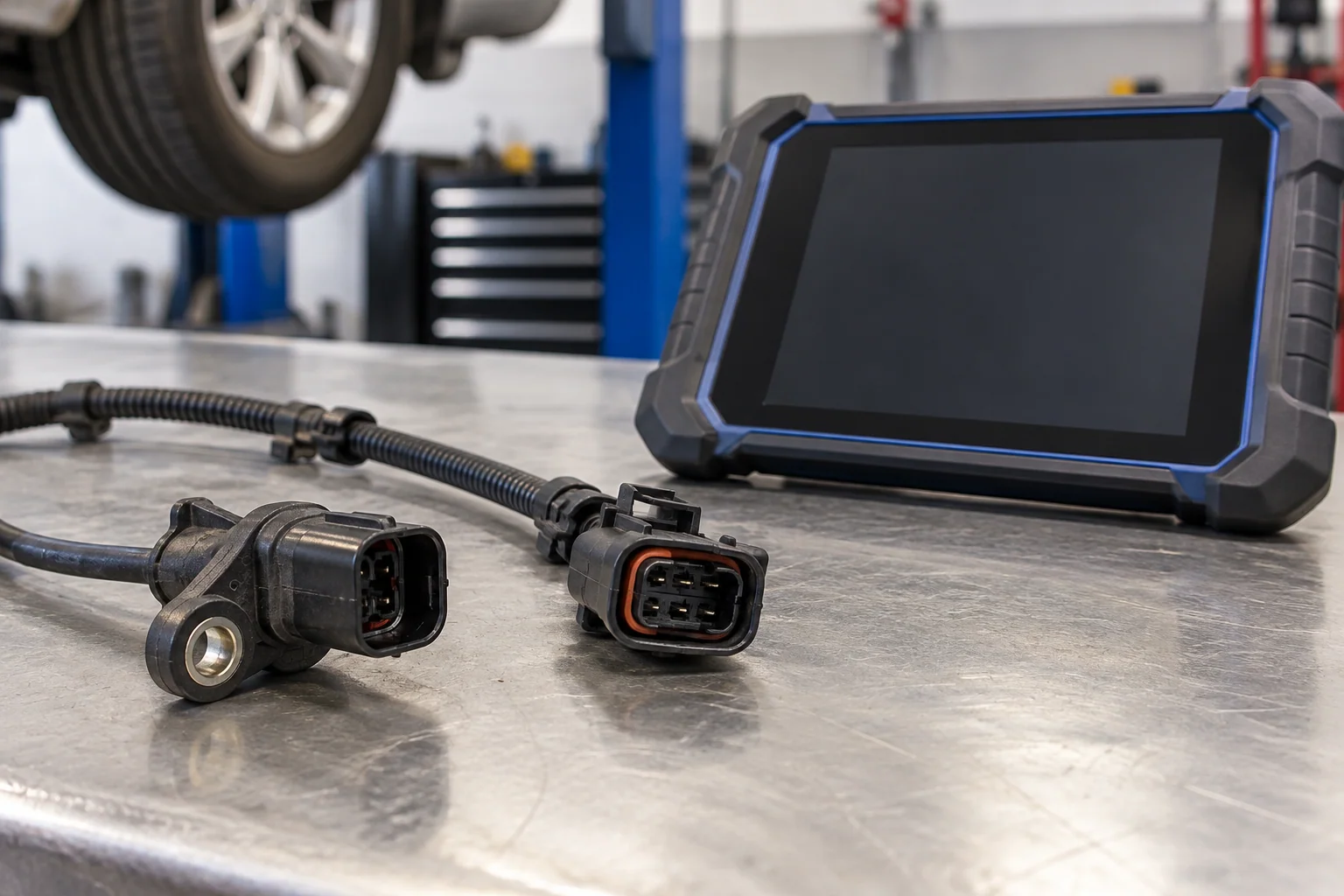
Use diagnostic equipment that can communicate with the ABS system and read its relevant codes and live data. Record the codes, compare wheel-speed information and check supply voltage and wiring before choosing parts.
Inspect the sensor harness, connectors, installation and rotating target. HELLA's worked example finds mechanical damage to a sensor supply cable. A code naming a sensor location therefore does not independently prove an internal sensor failure.
Testing also depends on whether the sensor is active or passive. HELLA specifically cautions against treating an active sensor's internal resistance as an ordinary ohmmeter test. Correct equipment, specifications and signal interpretation matter.
How do you know the ABS repair is complete?
Ask what test confirmed the fault and what the repair corrected. A sensor, harness, target or control-system problem needs its own repair path. Follow the vehicle manufacturer's procedures and required final checks.
The shop should verify the relevant live data, warning behavior and fault memory after repair under safe test conditions. Clearing the warning without confirming operation is not the same as repairing it. Commercial-truck and trailer ABS warnings need their own vehicle and system instructions.
Sources & further reading
- HELLA — Check and change ABS and wheel speed sensors
- Delphi — Anti-lock Brake, Stability Control, and Traction Control Systems
- Delphi — Making sense of your sensors: ABS sensor
- Mazda: 2025 CX-5 ABS and brake-warning instructions
Vehicle designs and maintenance requirements vary. Consult the owner’s manual for your exact vehicle and seek a qualified inspection for a specific fault.