Diagnostics and warning lights
ABS and Traction Control Lights Together: Symptoms, Diagnosis and Repair Options
Published:
Edited and fact-checked by: Jacob Bowen
General information; vehicle-specific diagnosis requires an inspection. How we prepare our guides · This page reserves space for ads. Advertising policy · Privacy choices
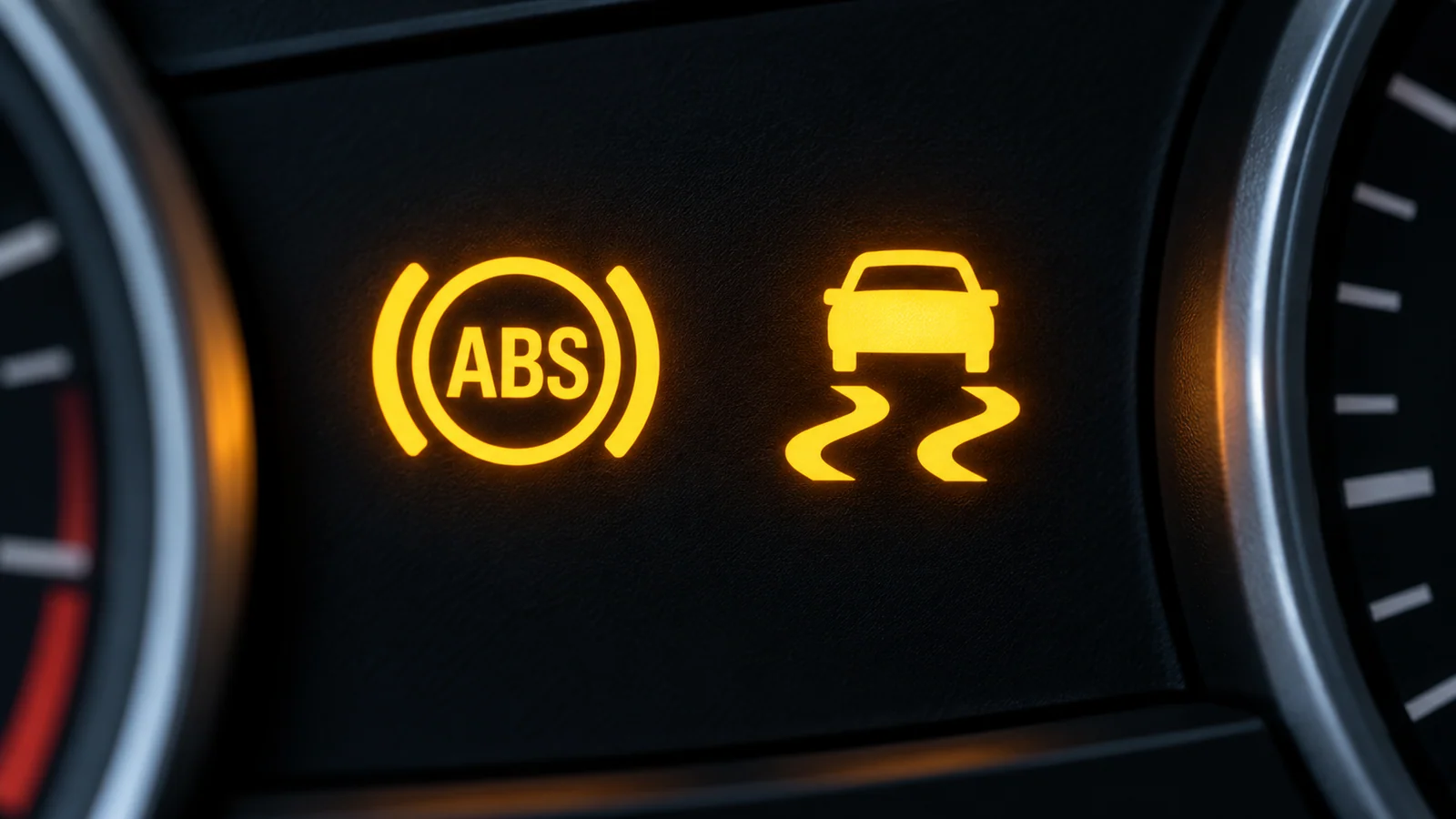
The quick answer
ABS and traction-control lights can come on together because the systems share information, including wheel speeds. One fault can disable several assistance functions, but the lights do not identify the failed part. Check the exact warning messages and arrange diagnosis. If a brake-system warning also remains on, or braking feels abnormal, stop safely and arrange transport.
What changes if the brake warning is also on?
Treat a brake-system warning as more urgent than assuming only an assistance feature is unavailable. Chevrolet's guidance distinguishes an ABS-only warning from ABS plus a brake-system warning, which can mean a problem with the regular brakes as well.
Its brake-warning guidance says to stop carefully and have the vehicle towed if the warning persists. Use your own vehicle's manual and message, and do not continue driving with abnormal pedal feel, fluid leakage or reduced braking.
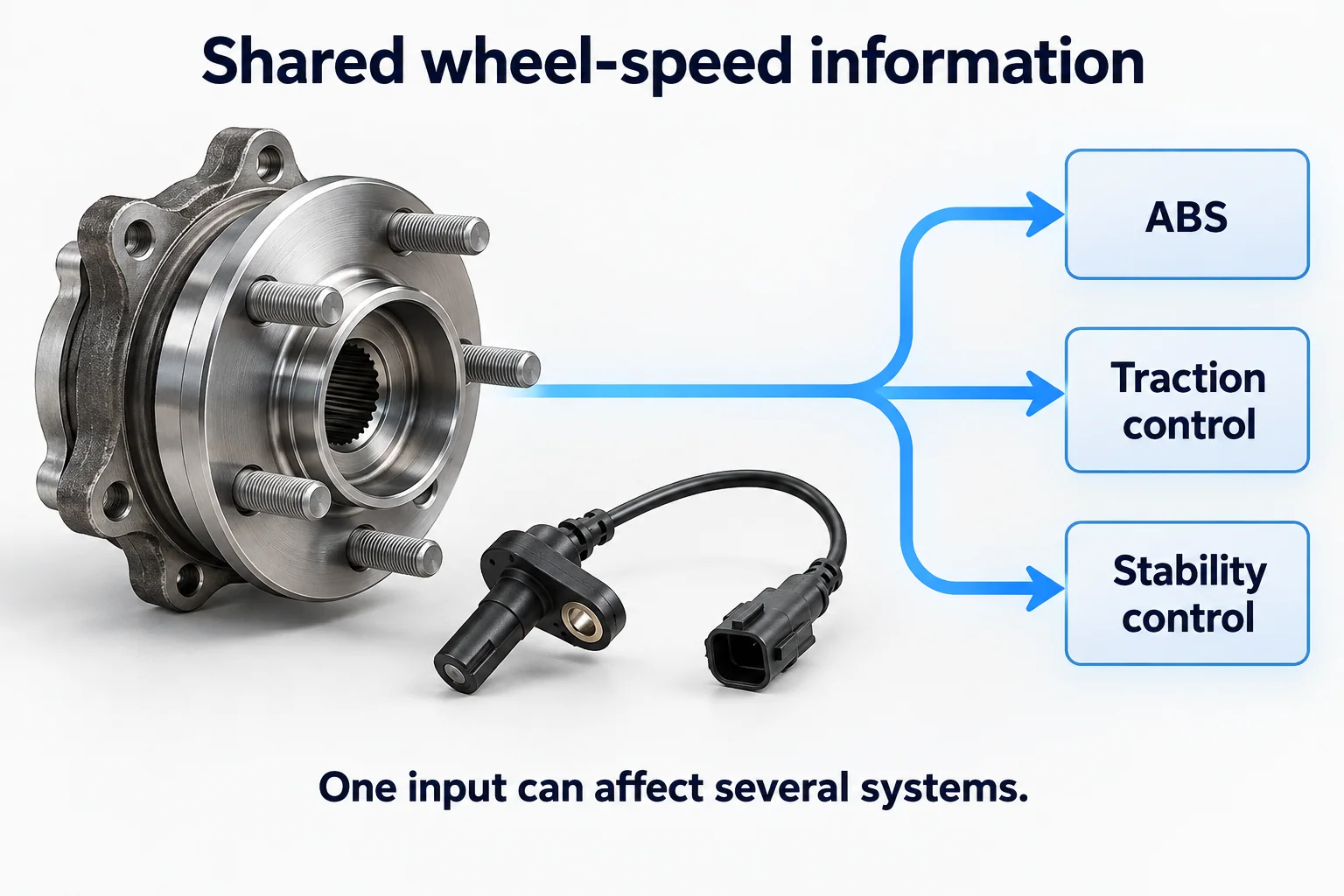
Why can one problem affect ABS and traction control?
HELLA explains that wheel-speed information is used by ABS, traction control and stability systems and is also shared with other vehicle controls. An unusable signal can therefore have effects beyond one warning lamp.
Delphi's training outline also identifies steering-angle, lateral and yaw sensors as part of chassis diagnosis. The system needs more information than wheel speed alone, so multiple lights do not prove that a particular wheel sensor is bad.
Is a flashing traction light always a fault?
No. A flashing indicator can mean the system is intervening, while a separate 'off' indicator can reflect a selected setting. Chevrolet makes that distinction in its TCS/ESC guidance; steady illumination can indicate a malfunction. Confirm the meaning for your vehicle.
Tell the shop whether the warnings stay on, appear only after the car moves, or began after tire, bearing or battery work. Record the complete messages. Do not deliberately provoke a skid or hard stop to test whether the system works.
What should the shop check before replacing a sensor?
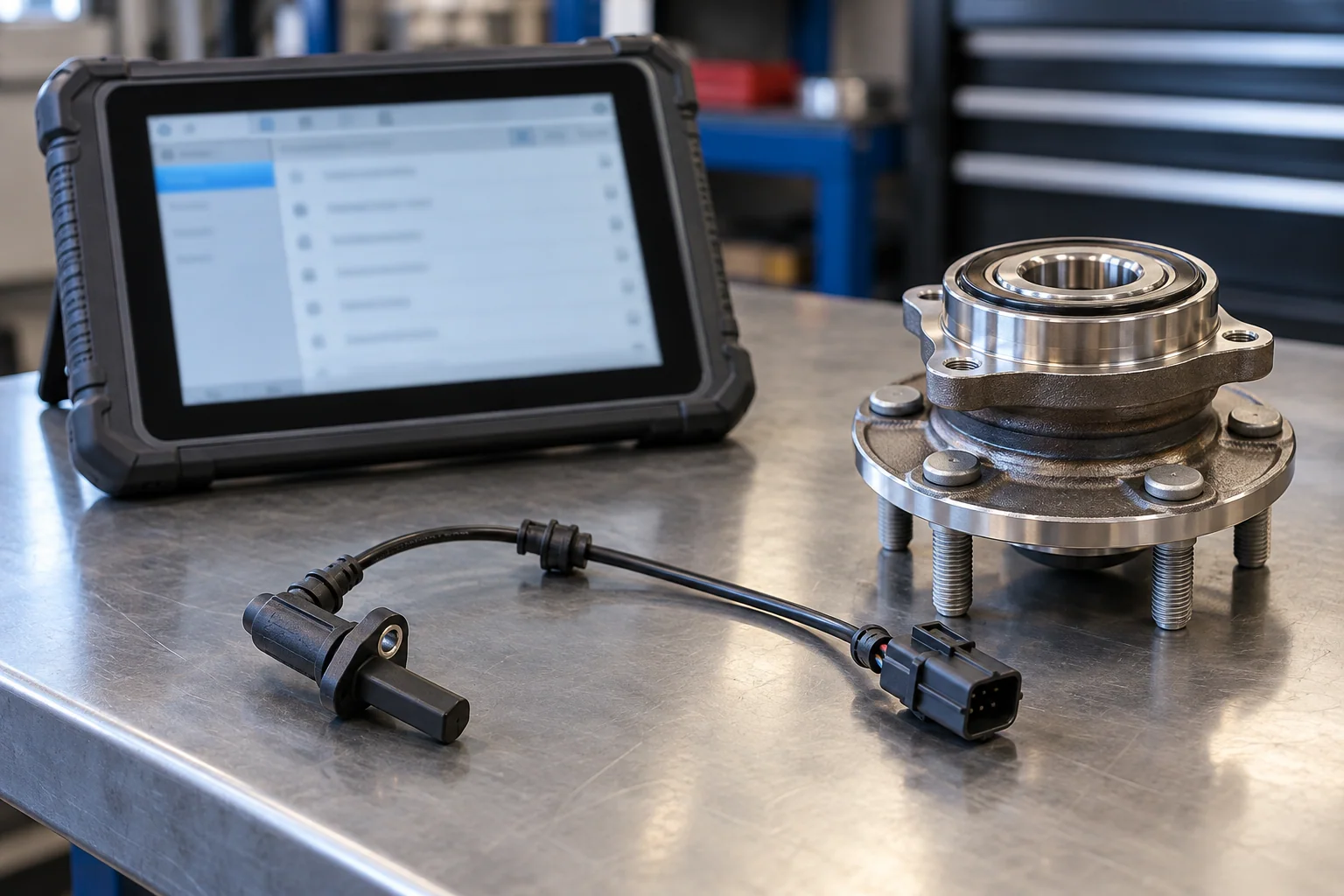
Read the ABS and stability-control module's faults with suitable equipment. A basic engine-code reader may not provide the necessary chassis data. Compare the relevant wheel-speed signals and inspect the indicated circuit and mechanical components.
HELLA includes wiring damage, encoder damage and increased bearing clearance among causes of bad wheel-speed information. It also checks the electrical supply. Testing must match the sensor type: an active sensor cannot be evaluated with a generic resistance rule.
What should a successful repair establish?
The finding should identify whether the problem is a circuit, sensor, encoder, mechanical condition or another verified system fault. Ask what test supports the proposed part and whether any vehicle-specific setup is required afterward.
After repair, confirm that the relevant signals and warning behavior are correct. A cleared light does not demonstrate that an intermittent fault is gone. If an engine warning is also present, have its codes assessed rather than assuming every warning has the same cause.
Sources & further reading
- Delphi — Anti-lock Brake, Stability Control, and Traction Control Systems
- MOTOR — The Straight Stuff on Electronic Stability Control Systems
- HELLA — Check and change ABS and wheel speed sensors
- Chevrolet: ABS, brake and traction-control warning lights
Vehicle designs and maintenance requirements vary. Consult the owner’s manual for your exact vehicle and seek a qualified inspection for a specific fault.