Ignition and engine control
Camshaft Position Sensor: Symptoms, Diagnosis and Repair Options
Published:
Edited and fact-checked by: Jacob Bowen
General information; vehicle-specific diagnosis requires an inspection. How we prepare our guides · This page reserves space for ads. Advertising policy · Privacy choices
The quick answer
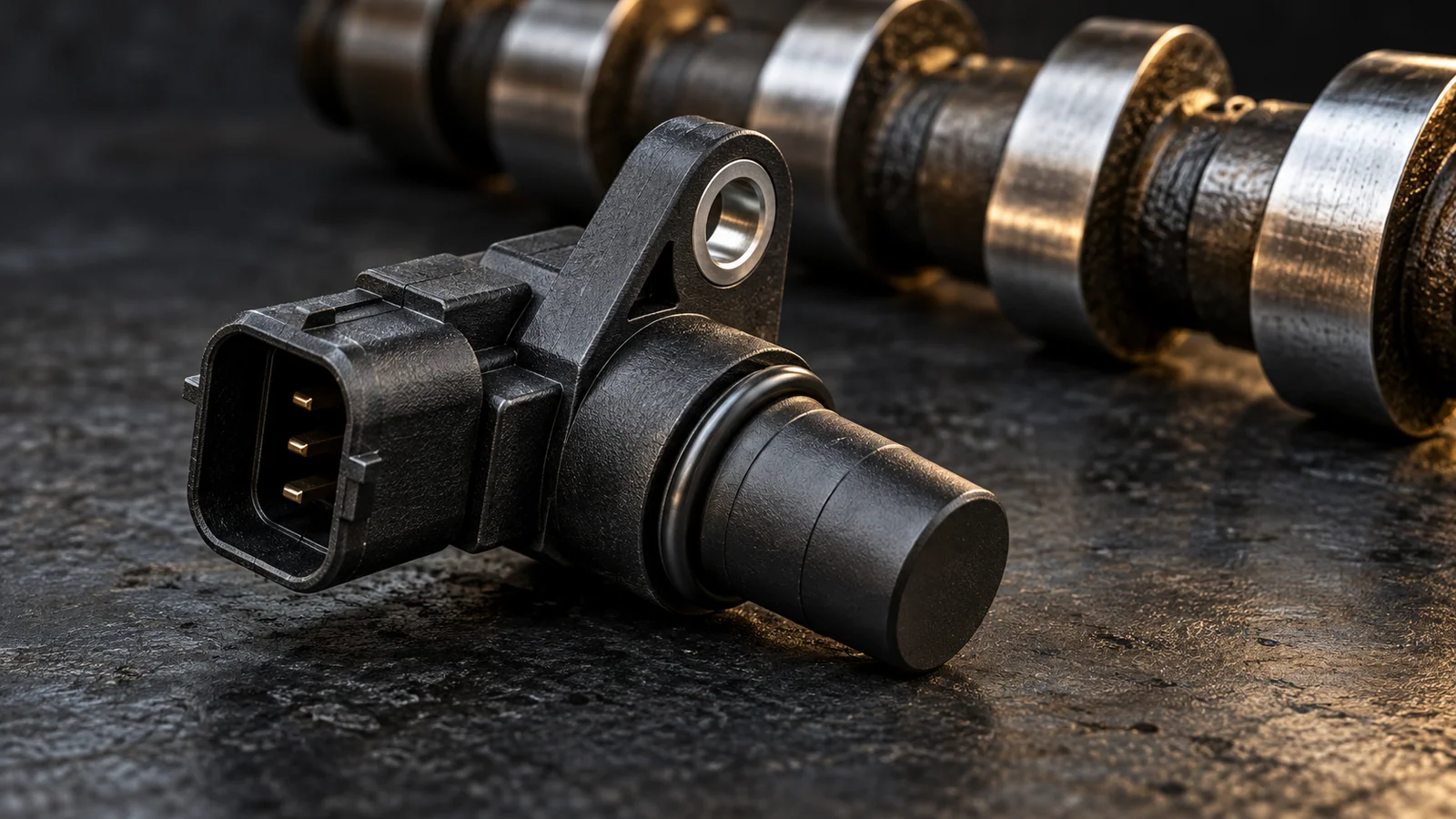
A camshaft-position signal problem can cause hard starting, stalling, erratic running or a warning light. Those symptoms do not prove the sensor is bad. Read the exact codes, identify the sensor and circuit, and verify its signal, connections and related mechanical condition before replacing it. Testing differs between Hall-effect and inductive sensors.
What does the camshaft-position sensor tell the engine computer?
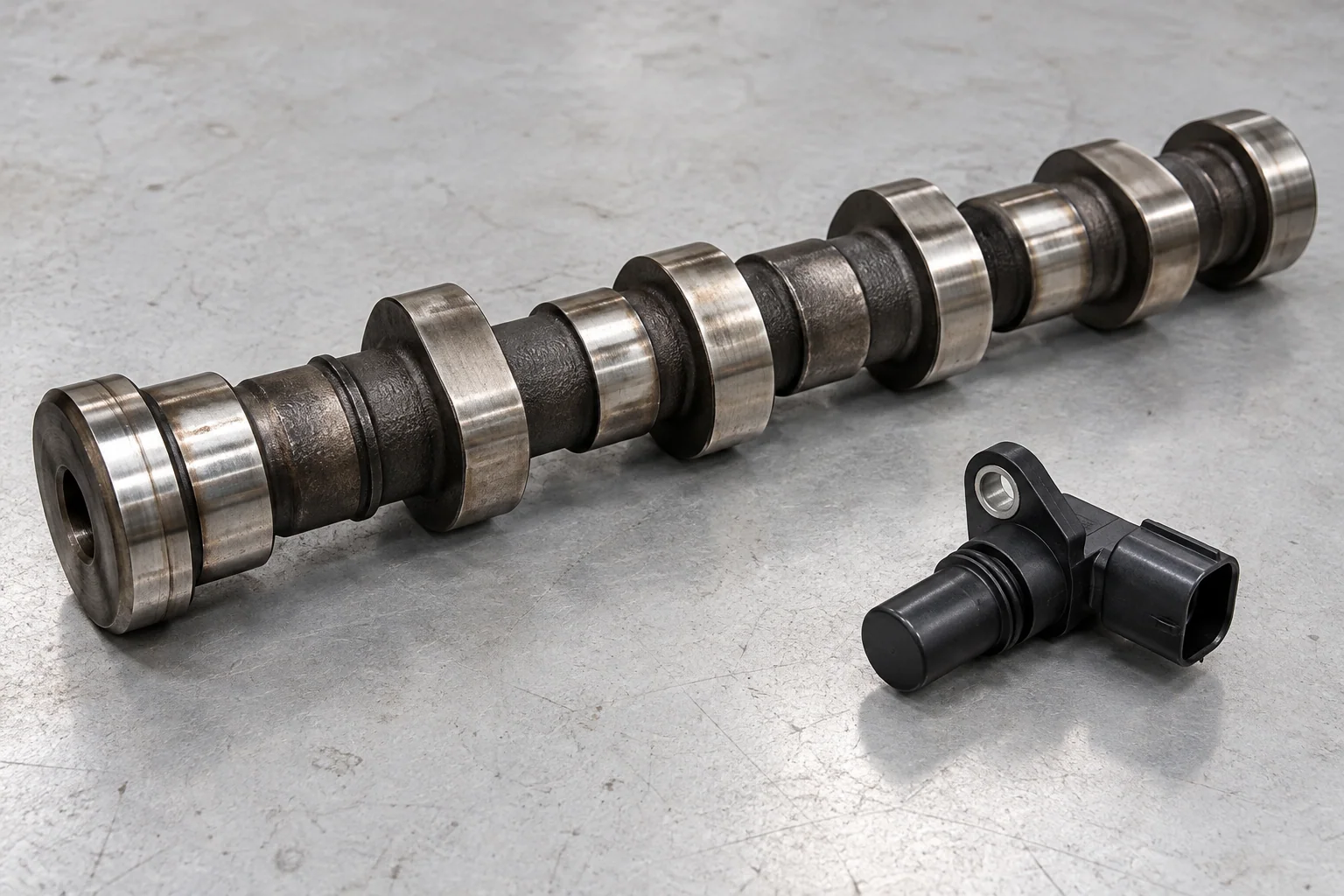
The sensor provides a camshaft reference used for functions such as injection timing, ignition timing on gasoline engines and variable valve control. Together with crankshaft information, it helps the controller establish engine position.
Identify the actual sensor, bank and circuit from the engine's service information. A symptom or a bank number does not give one universal location. Procedures for different Power Stroke, Hemi, Cummins or other engines should not be interchanged.
Can a faulty cam sensor make the engine stall or refuse to start?
Yes, depending on the engine and failure. Pico lists cranking without starting, cutting out, erratic running and limited-operation modes among possible consequences. HELLA also lists starting difficulty and stored fault codes.
The overlap with other faults is substantial. Record whether the problem is hot or cold, intermittent or constant, and which codes appeared. If the engine cuts out in traffic or cannot run reliably, stop safely and arrange assistance.
How does the sensor design change the test?
An inductive sensor generates a signal as its rotating target disturbs a magnetic field. Pico notes that its output depends on rotational speed. A Hall-effect sensor uses powered electronics and provides a switched digital signal.
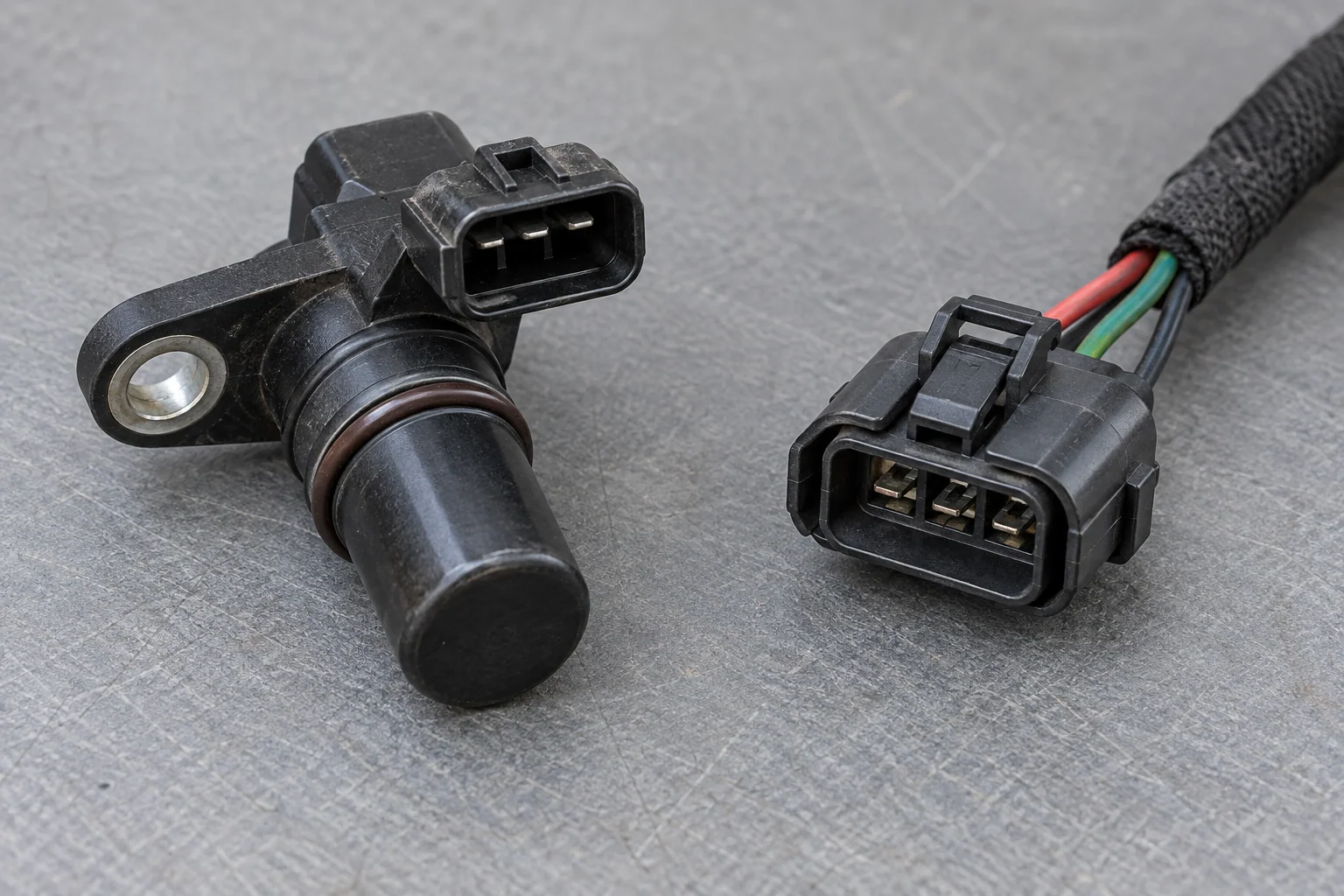
The technician should identify the design and correct terminals before checking supply, ground and output as appropriate. A waveform needs comparison with the manufacturer's information under the specified conditions. Do not apply a universal resistance test, supply voltage or example waveform to every sensor.
Inspect the harness and connector for damage, corrosion or poor contact. Pico's fault guidance also includes target damage, contamination and incorrect fitment or gap. A missing or distorted signal can therefore require more investigation than simply fitting a new sensor.
What if the cam and crank information does not agree?
The diagnostic procedure should establish whether the problem is signal generation, the circuit or the mechanical relationship being measured. Compare the relevant signals and inspect mechanical timing when the evidence calls for it.
A sensor reports what passes its sensing point. Replacing it cannot correct a damaged target or an actual mechanical timing fault. Ask what test separates the proposed sensor failure from those alternatives.
When is sensor replacement justified?
Replace the sensor when testing identifies an internal or physical failure, using the correct part and installation instructions. Repair a damaged connection or target instead when that is the demonstrated cause.
Verify the signal and original starting or running complaint after repair, then complete any required manufacturer checks. Cleaning a sensor or clearing a code is not proof of a lasting repair, and any learning procedure must be confirmed for the exact engine.
Sources & further reading
- HELLA — Camshaft position sensor - function & troubleshooting
- Pico Technology — Camshaft position sensor (inductive) | Automotive oscilloscope test
- Pico Technology — Camshaft position sensor (Hall effect) | Automotive oscilloscope test
Vehicle designs and maintenance requirements vary. Consult the owner’s manual for your exact vehicle and seek a qualified inspection for a specific fault.