Drivetrain
Flywheel Symptoms: How to Test and Confirm the Fault
Published:
Edited and fact-checked by: Jacob Bowen
General information; vehicle-specific diagnosis requires an inspection. How we prepare our guides · This page reserves space for ads. Advertising policy · Privacy choices
The quick answer
Rattling, chattering or vibration around the clutch and transmission can involve a flywheel, but the noise alone does not prove it needs replacement. A dual-mass flywheel can also react to poor cranking, uneven engine running or shutdown-system faults. Check those causes and inspect the correct flywheel design before authorizing transmission removal or parts replacement.
Is the problem a mechanical flywheel or a sensor?
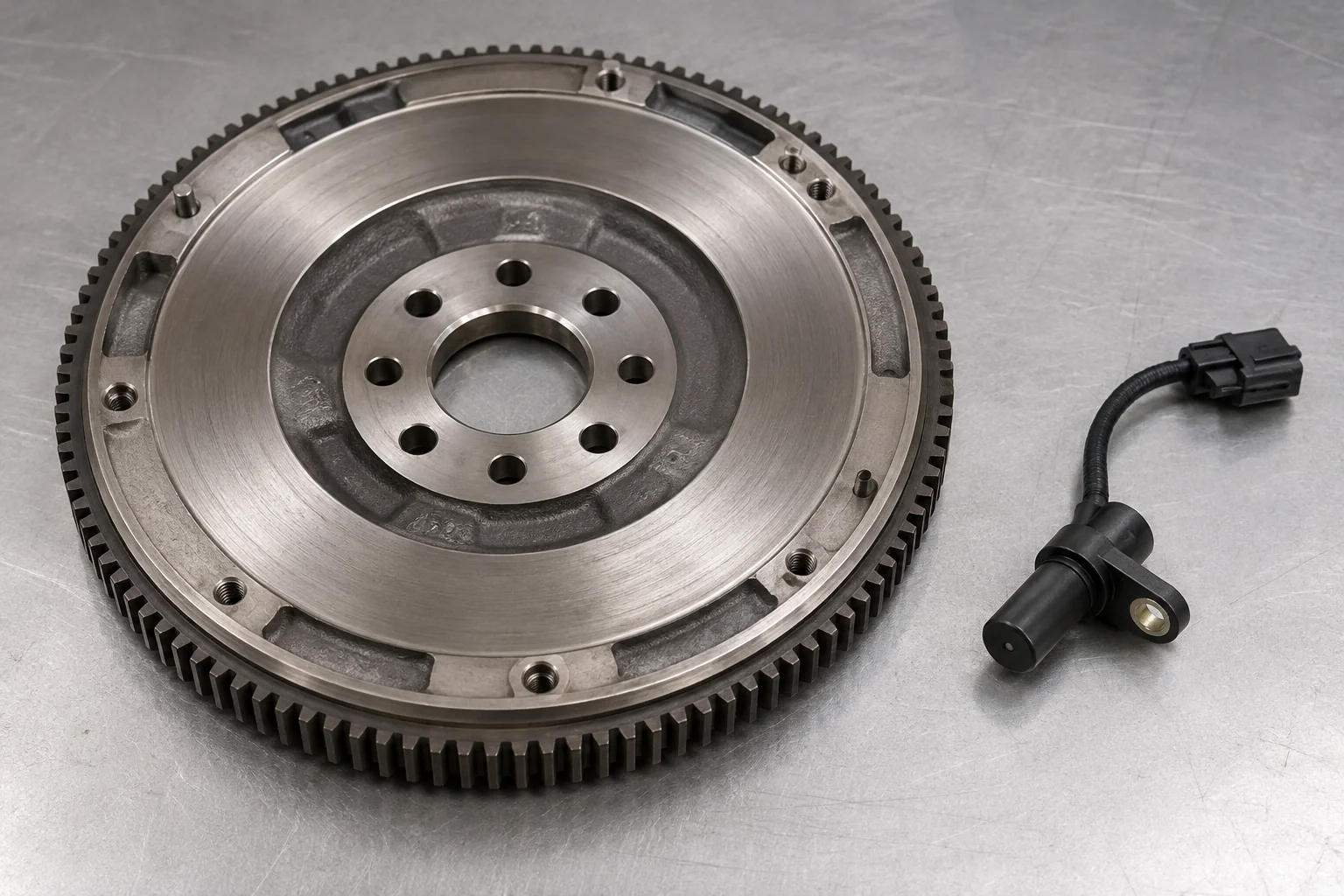
First confirm which component is being discussed. A mechanical flywheel diagnosis is different from diagnosis of an engine-position sensor or its signal. If a scan report identifies a crankshaft-position sensor fault, start with the crankshaft-sensor guide and the vehicle's diagnostic procedure.
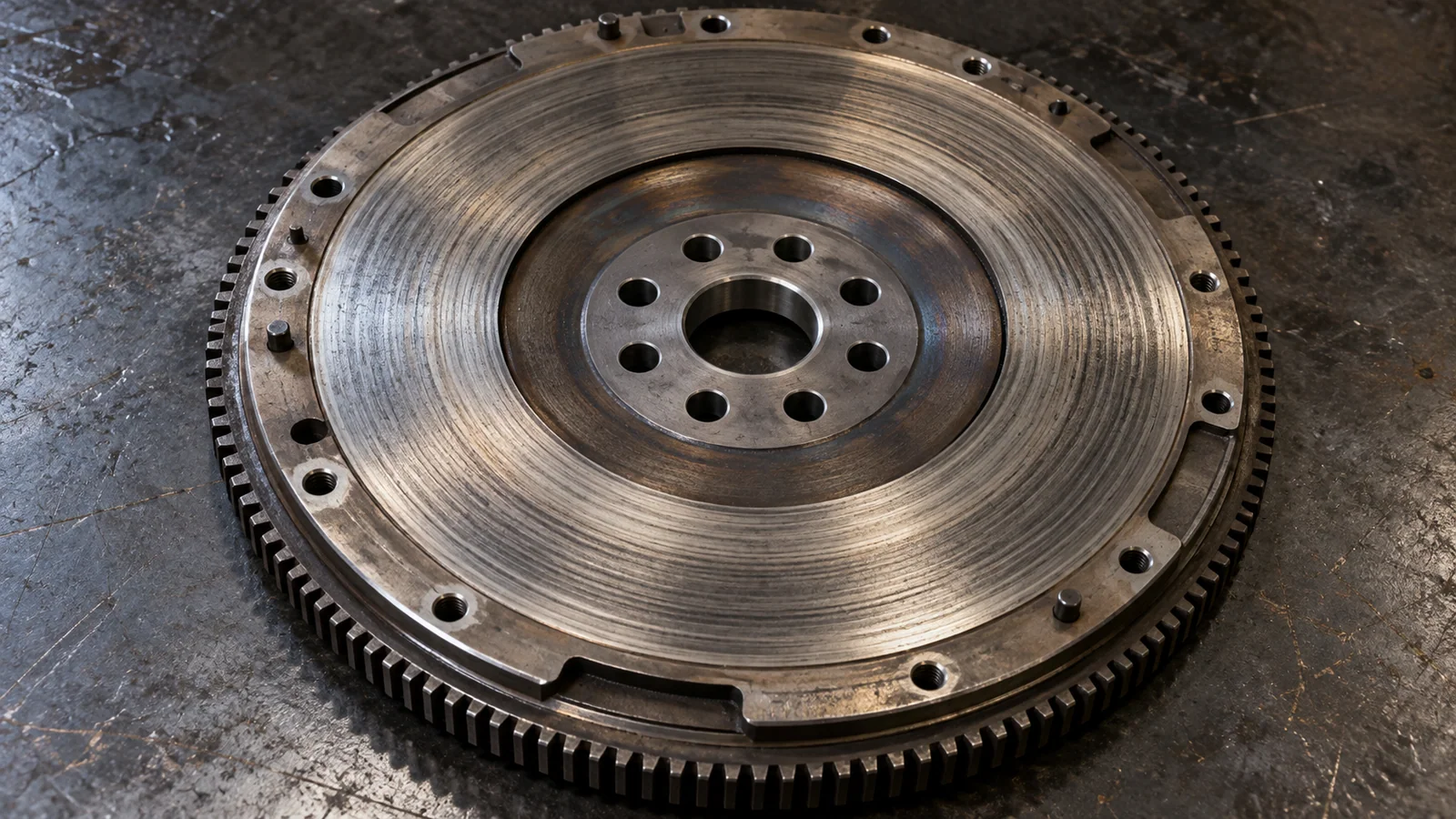
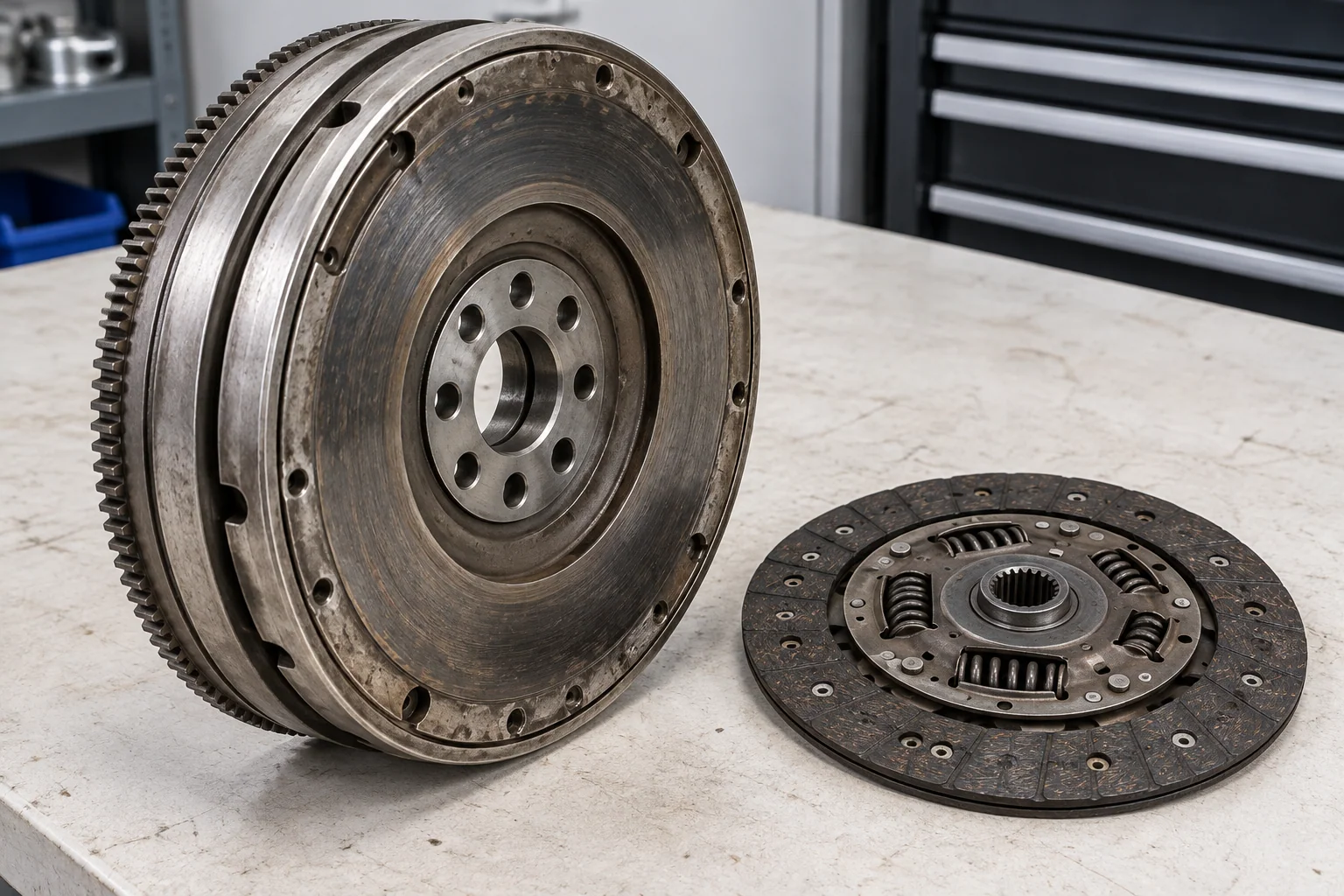
Also identify whether the vehicle has a rigid flywheel, a dual-mass flywheel or another driveplate arrangement. Inspection and repair methods differ. A dual-mass unit contains coordinated internal components and needs its own test and handling instructions.
What can imitate a bad dual-mass flywheel?
ZF's noise guidance recommends looking beyond the DMF itself. Note whether the complaint happens during cranking, acceleration or engine shutdown.
- During starting: battery condition, resistance at starter-circuit connections and starter performance can affect cranking and vibration.
- While driving: uneven combustion, ignition or fuel-injection problems and operating at excessively low engine speed under load can contribute to rattling or bucking.
- At shutdown: on systems that use them, air-shutoff flap, vacuum-control or EGR faults can produce harsh stopping and driveline noise.
How should a dual-mass flywheel be tested?
Use the procedure and tools for the actual unit. ZF's standard SACHS DMF tool checks torsional free travel, spring-force consistency and bearing movement. ZF explicitly excludes other manufacturers' DMFs and certain driveplate or dual-clutch versions from that tool's assessment.
Movement is therefore something to measure and interpret using the applicable instructions, not an automatic failure verdict. ZF also cautions that a current-condition inspection cannot reliably predict remaining service life. Ask the shop what finding is outside specification rather than accepting an unsupported mileage promise.
If the noise began after clutch or transmission work, installation needs attention too. ZF's Audi driveplate example warns that removal damage to the flexplate can cause wobble, noise and premature DMF failure. That is a design-specific possibility, not a diagnosis for every Audi.
Can a flywheel be resurfaced instead of replaced?
Do not apply rigid-flywheel machining practices to a DMF. LuK's handling bulletin prohibits machining the DMF friction surface and says a dropped DMF must not be reused. The internal assembly can be damaged even when the outside does not tell the whole story.
For any proposed resurfacing, require permission and limits from the applicable manufacturer. If replacement is justified, follow the exact handling, fixing-bolt and installation instructions. The related replacement guide covers the repair stage in more detail.
Ask for the confirmed fault, the condition of associated clutch components and the plan to verify the original complaint afterward. Severe vibration, unreliable clutch operation or difficulty controlling the vehicle warrants professional inspection before further driving.
Sources & further reading
- Schaeffler / LuK — Dual mass flywheel
- ZF Aftermarket / SACHS — Dual-Mass Flywheel (DMF) - Noises When Starting the Engine, When Traveling, or When Switching
- ZF Aftermarket / SACHS — DMF with driveplate - Remove transmission
- ZF SACHS: dual-mass flywheel testing-tool scope and limitations
Vehicle designs and maintenance requirements vary. Consult the owner’s manual for your exact vehicle and seek a qualified inspection for a specific fault.