Emissions
P0446: Causes, Diagnostic Tests and Repair Options
Published:
Edited and fact-checked by: Jacob Bowen
General information; vehicle-specific diagnosis requires an inspection. How we prepare our guides · This page reserves space for ads. Advertising policy · Privacy choices
The quick answer
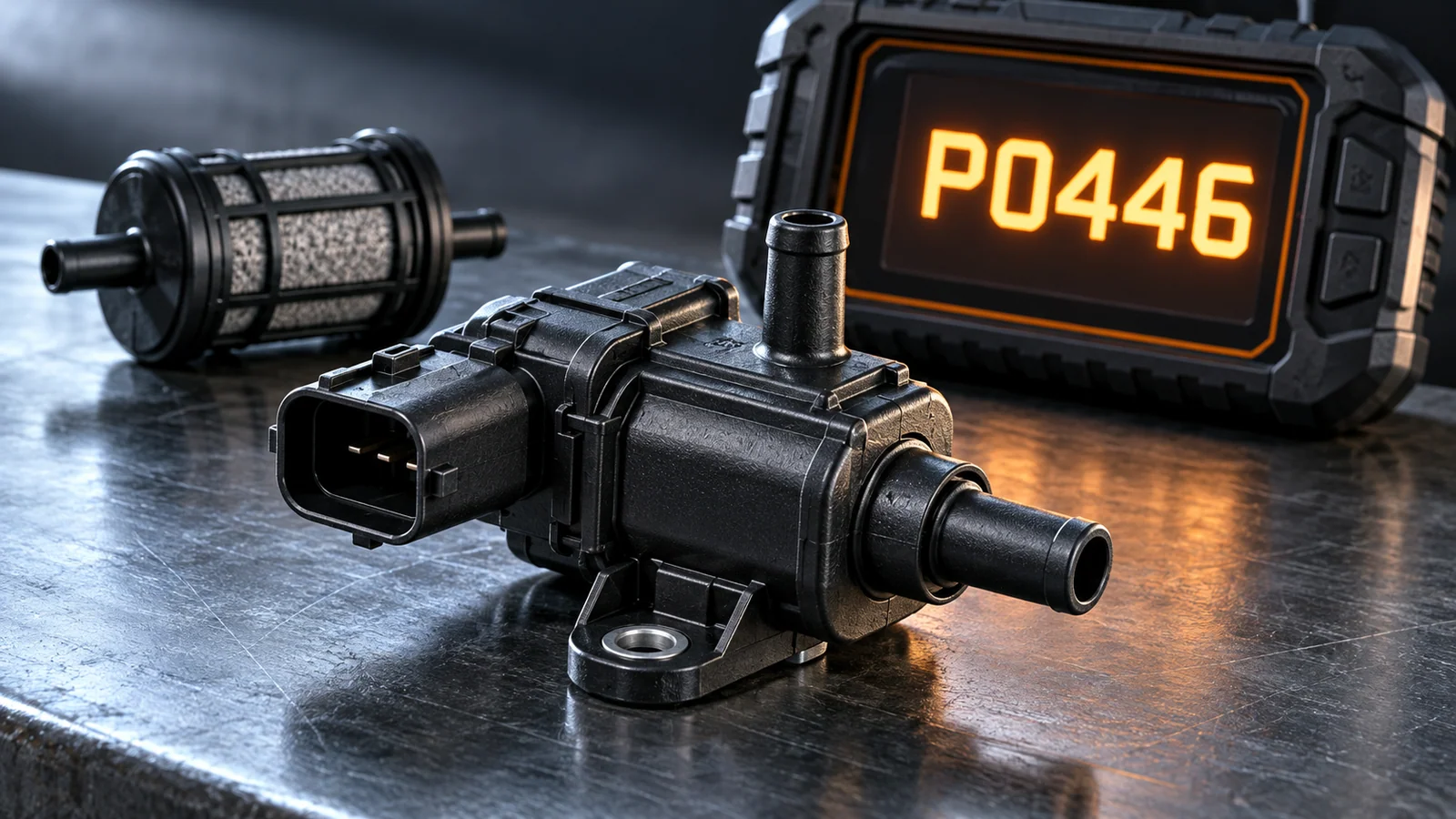
P0446 identifies a fault involving the evaporative-emissions system's vent control or vent operation. The exact diagnostic meaning depends on the vehicle. A restricted air path, a valve problem or an electrical fault can require different repairs, so replacing the gas cap or a vent valve based only on the code is a guess.
What should you do when P0446 appears?
Record the full code, any other codes and whether the warning is current or stored. Tell the technician if the fuel pump repeatedly shuts off while filling, if the problem follows wet or dusty conditions, or if you smell fuel.
Arrange diagnosis rather than clearing the light repeatedly. Strong fuel odor or visible fuel leakage needs prompt attention away from ignition sources; the code alone does not establish that a liquid-fuel leak is present.
Why does the vehicle's EVAP design matter?
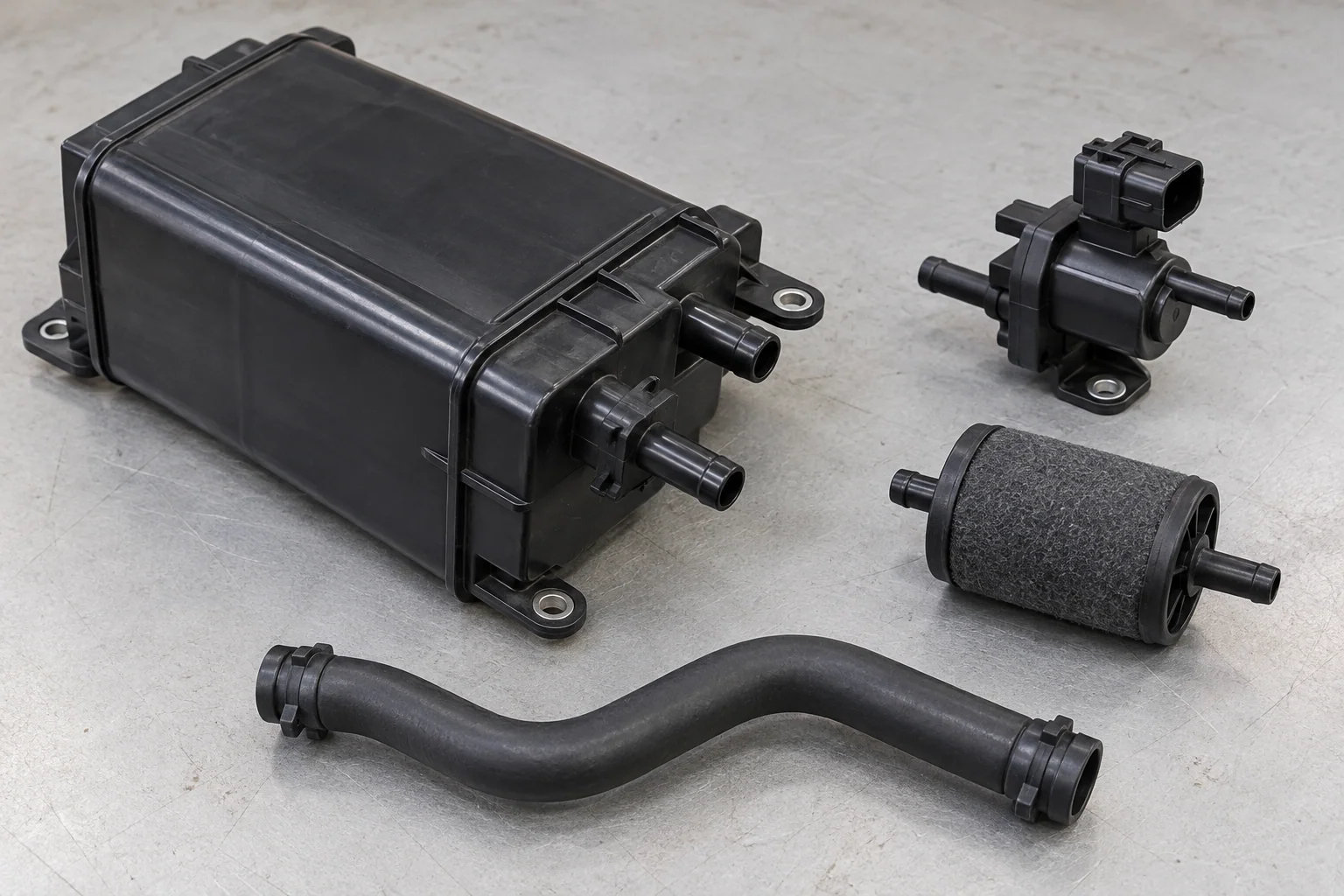
The EVAP system captures fuel vapor in a charcoal canister and later directs it into the engine. Its air path, valves and monitoring method vary. A generic reader's description is a starting point, not a complete test procedure.
HELLA lists P0446 as a vent-control-circuit malfunction. Manufacturer documentation can describe a more specific functional check. Confirm the year, engine and system before deciding which component the code implicates.
What checks are useful before replacing parts?
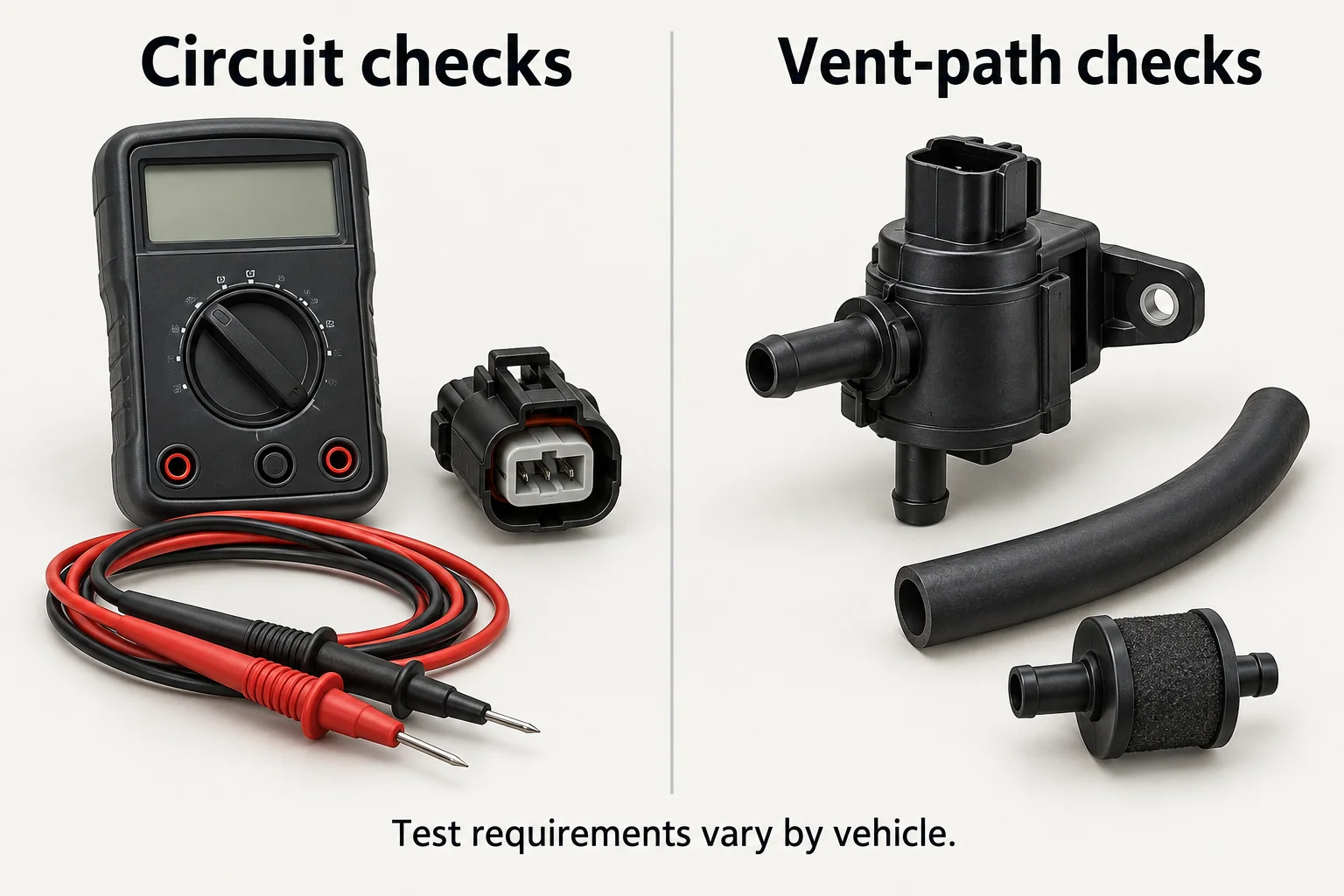
Inspect the relevant hoses, connections, canister and electrical connectors for damage. Where the manufacturer's diagnostic branch calls for an electrical test, verify the relevant supply, ground and control circuit using its wiring information.
For a flow problem, the question is whether the intended path actually opens and closes and whether pressure responds correctly. Use the vehicle's commanded tests and specified equipment. Hearing a valve click is only part of the picture; it does not show that the entire vent path flows correctly.
A leak search and a restriction test answer different questions. Ask which test failed and what that result demonstrates before approving a canister or valve.
How do verified Toyota and GM examples differ?
Toyota's 2002 Camry 2AZ-FE technical description shows P0446 checks involving both the canister closed valve and the pressure switching valve. The computer evaluates pressure changes as it operates them. This illustrates why naming the easiest valve to reach is insufficient; it is not a procedure for every Toyota.
GM bulletin 09-06-04-028D concerns specified 2007–2010 Escalade, Avalanche, Suburban 1500, Tahoe and Yukon models. It describes hard filling and EVAP codes associated with dirt or water entering the vent system. GM requires diagnosis before the revised vent-valve repair and says not to replace the canister unless its condition warrants it. Confirm current applicability; this bulletin does not cover every Silverado, Sierra or Chevrolet.
What should the repair and follow-up include?
The repair should correct the proven fault: damaged wiring, an inoperative valve, a restricted path or another verified condition. Keep the estimate tied to that finding rather than to P0446 alone.
Ask how the shop will confirm the commanded operation and relevant monitor result after repair. A warning light that has just been cleared is not evidence that the system now works. There is no single repair price or universal drive cycle for this code.
Sources & further reading
- HELLA — OBD-II powertrain DTC definitions (English)
- MOTOR — Evap Emissions Diagnostics By the Numbers
- HELLA — Activated charcoal canister – facts & info
- MOTOR — Toyota DTC P0446 | Foreign Service
- Toyota: 2002 Camry 2AZ-FE EVAP system and P0446 monitoring
- General Motors: bulletin 09-06-04-028D, EVAP vent contamination
Vehicle designs and maintenance requirements vary. Consult the owner’s manual for your exact vehicle and seek a qualified inspection for a specific fault.