Emissions
P0456: Causes, Diagnostic Tests and Repair Options
Published:
Edited and fact-checked by: Jacob Bowen
General information; vehicle-specific diagnosis requires an inspection. How we prepare our guides · This page reserves space for ads. Advertising policy · Privacy choices
The quick answer
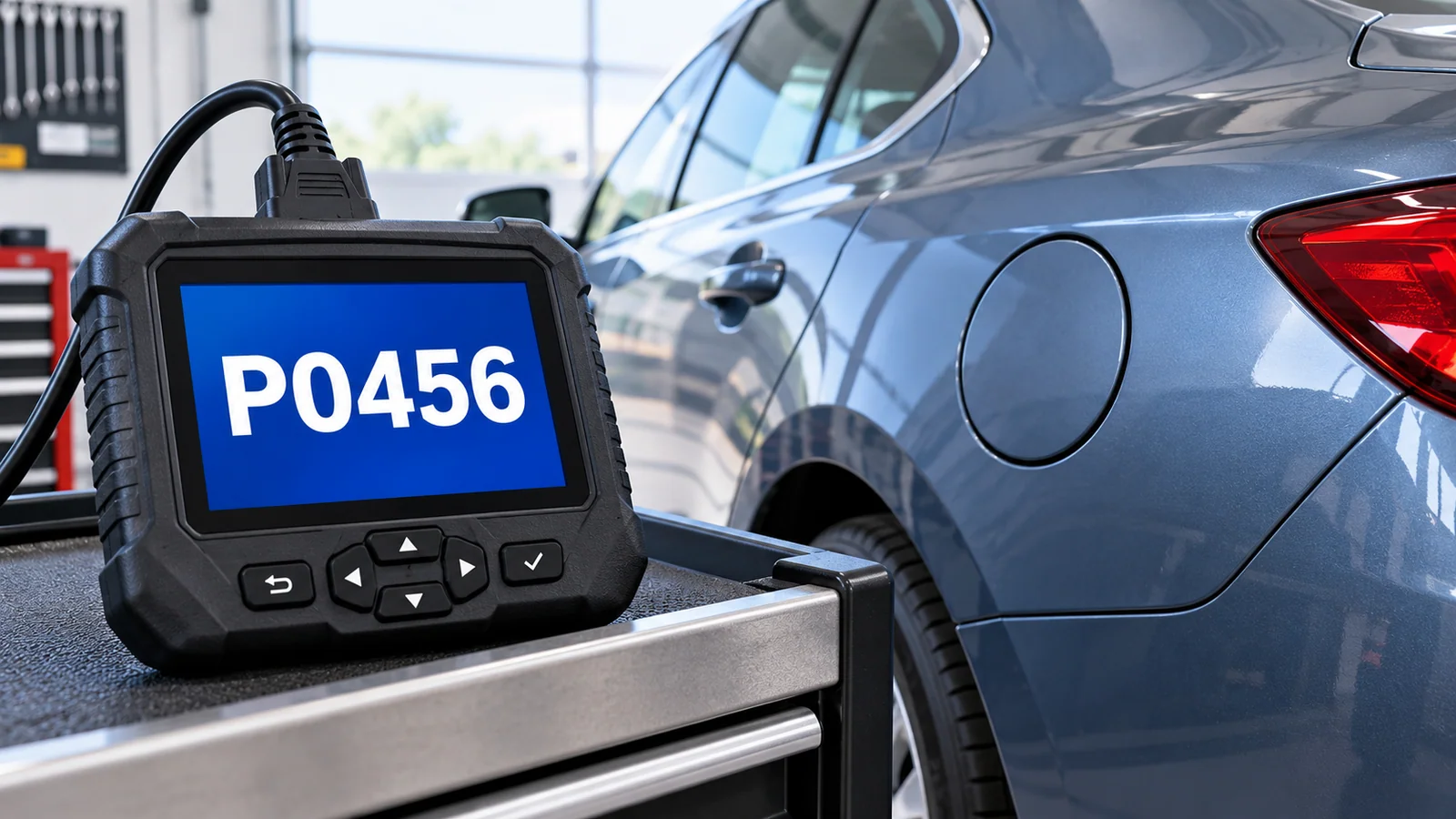
P0456 means the evaporative-emissions system detected a very small leak condition. A cap or seal can be involved, but the code does not identify the failed part. Check the filler arrangement, then have the shop confirm the leak and system operation using the procedure for the vehicle rather than replacing parts by guesswork.
Is P0456 the same as P0455?
Both concern EVAP leak detection, but P0456 identifies a very small leak condition and P0455 a gross or large one. The category describes the monitor's finding; it does not provide a repair location or one universal test procedure.
A small-leak code is not evidence that every part of the fuel system is safe. Visible fuel leakage or a strong fuel-leak smell needs prompt assistance.
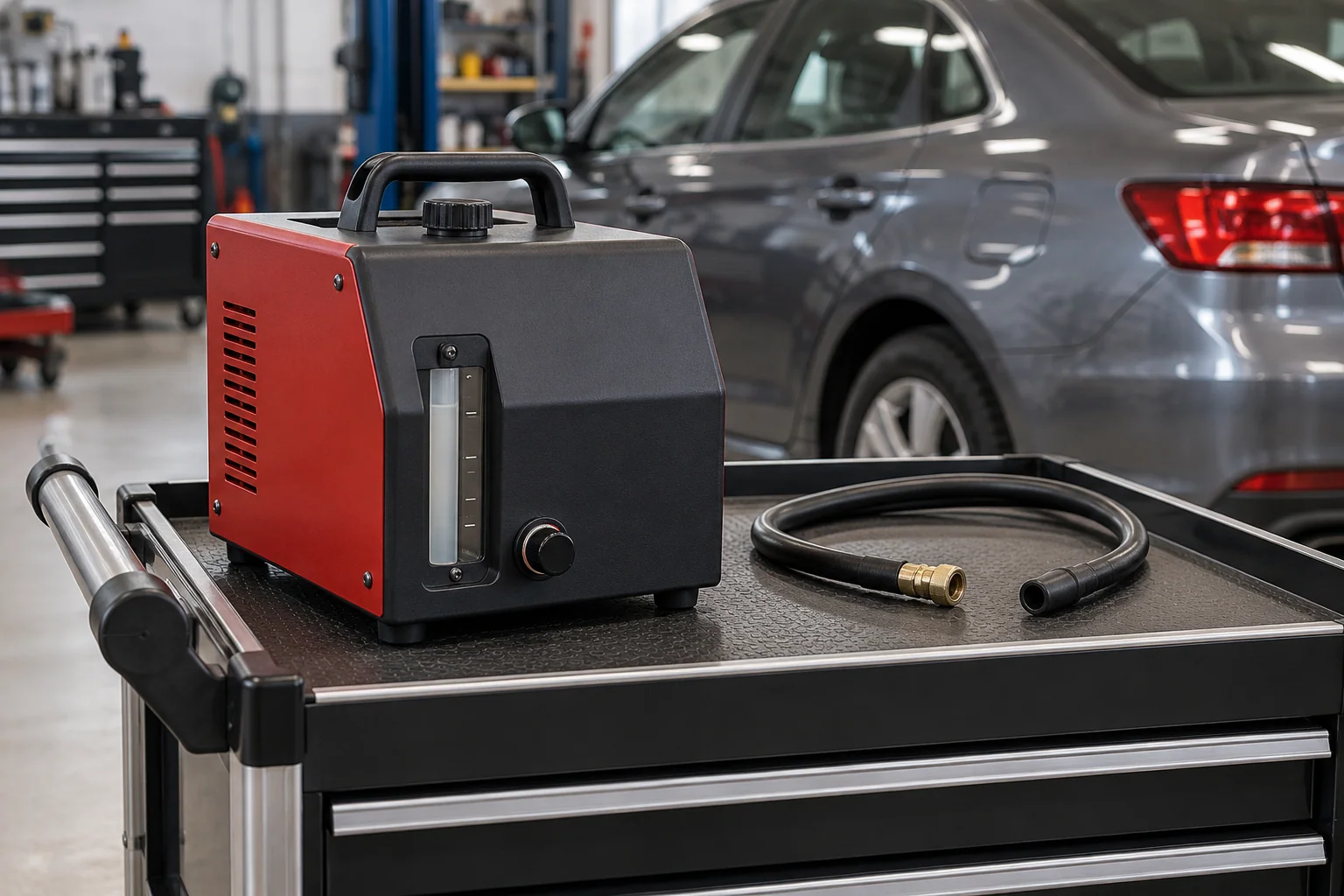
What if a smoke test does not reveal the leak?
That result needs interpretation rather than an immediate parts replacement. The technician should confirm the appropriate test setup and use the vehicle's diagnostic sequence to decide what to check next.
Carlton Banks documented a useful example in Underhood Service: a 2003 Dodge Caravan with the 3.3L engine had P0456, but the initial smoke check did not reveal visible escaping smoke. Further isolation and testing located the problem at an earlier fuel-tank repair.
Does a matching technical bulletin prove the repair?
No. In the same Caravan case, the author found a bulletin about an erroneous P0456 code, but its PCM part-number range did not match. He continued testing instead of replacing the computer.
That is the published author's case. It illustrates why the vehicle, component identification and conditions in a bulletin matter as much as the code in its title.
Should you start with a new gas cap?
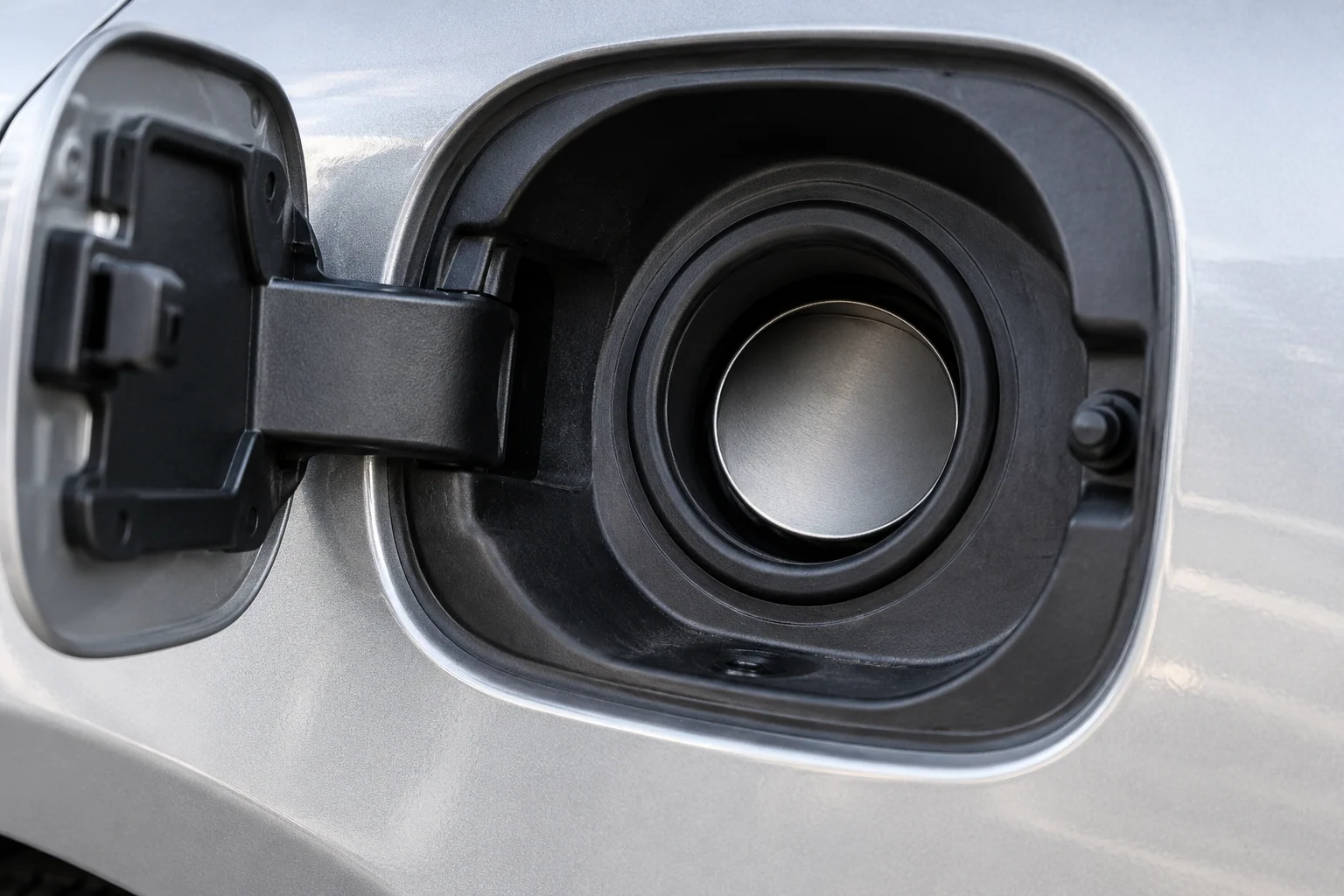
Inspect and refit a removable cap according to the owner's manual, and report any damage. Do not assume a capless system needs the same approach. If the warning remains, ask which test supports the proposed cap, hose, valve or other repair.
A matching code on another Dodge, Jeep, Ford or Toyota is a starting point for research, not proof of the same defect.
How should the shop confirm P0456 is resolved?
Ask for the repaired leak point or failed component to be retested, followed by the applicable system check. Avoid a promise that a fixed number of miles clears every vehicle.
The diagnosis determines the cost. A cap repair, a valve fault and fuel-tank work are different jobs, so request an estimate for the demonstrated problem.
Sources & further reading
- HELLA — OBD-II powertrain DTC definitions (English)
- snapon.com — EVAP System Operation and Testing
- MOTOR — Chrysler's Evap System
- Underhood Service — P0456 Code: Chrysler
Vehicle designs and maintenance requirements vary. Consult the owner’s manual for your exact vehicle and seek a qualified inspection for a specific fault.