Emissions
P0442: Causes, Diagnostic Tests and Repair Options
Published:
Edited and fact-checked by: Jacob Bowen
General information; vehicle-specific diagnosis requires an inspection. How we prepare our guides · This page reserves space for ads. Advertising policy · Privacy choices
The quick answer
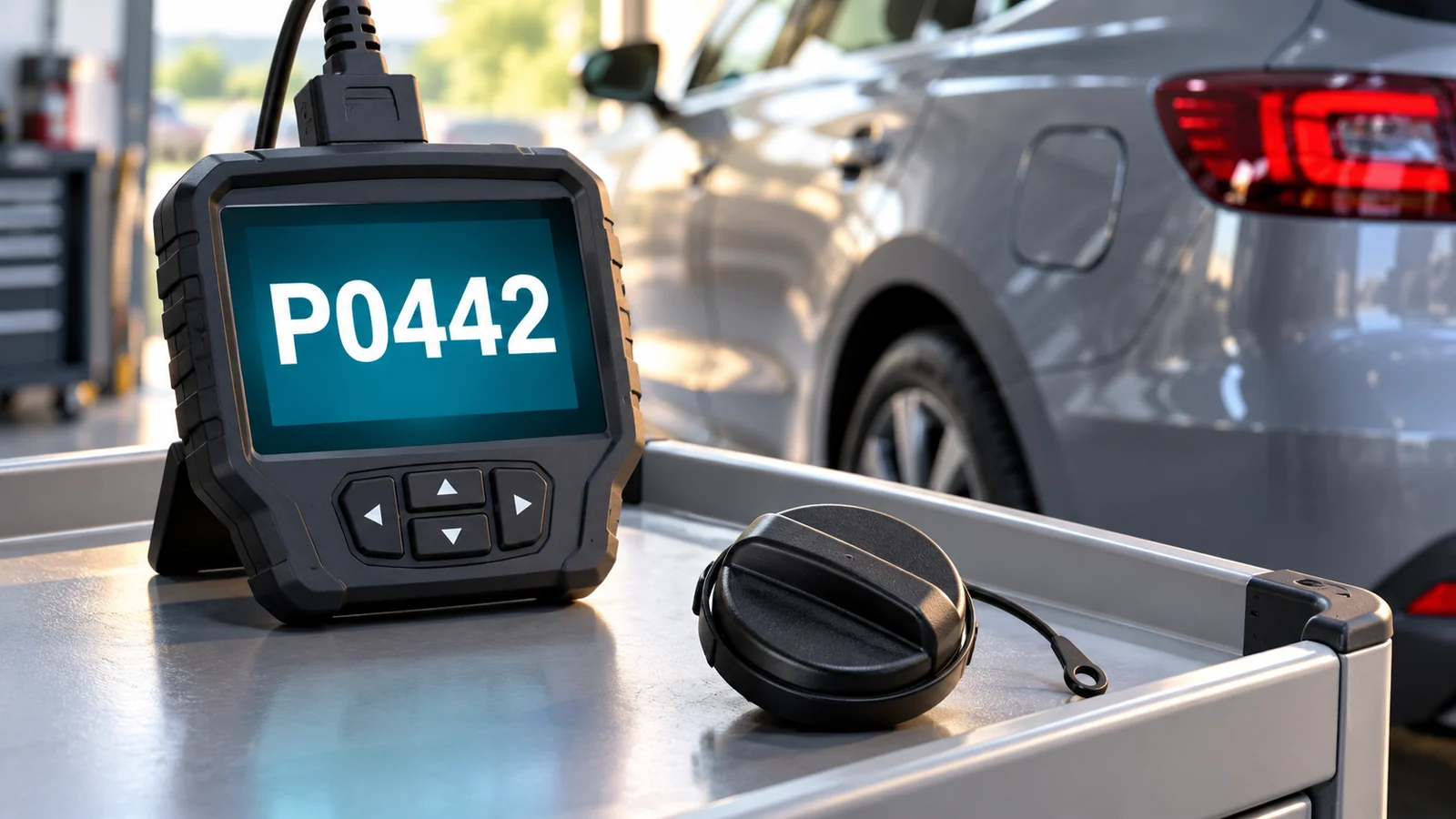
P0442 means the evaporative-emissions system detected a small leak. It does not identify where the leak is or prove that the gas cap needs replacement. Check the fuel-filler closure according to the owner's manual, then have a persistent warning diagnosed. The next step is to determine why the vehicle's EVAP system cannot seal as expected, using the procedure for that exact vehicle.
What is leaking when P0442 appears?
The EVAP system controls fuel vapor. Its leak monitor checks system behavior under particular conditions; it is not simply a detector for liquid fuel on the ground. A small-leak code does not tell you a measured hole size or identify a particular hose.
If you notice a strong fuel smell, visible liquid fuel or a running problem, treat that as a separate reason for prompt attention. Do not assume the word small makes those symptoms harmless.
Could it be the cap, a hose or a valve?
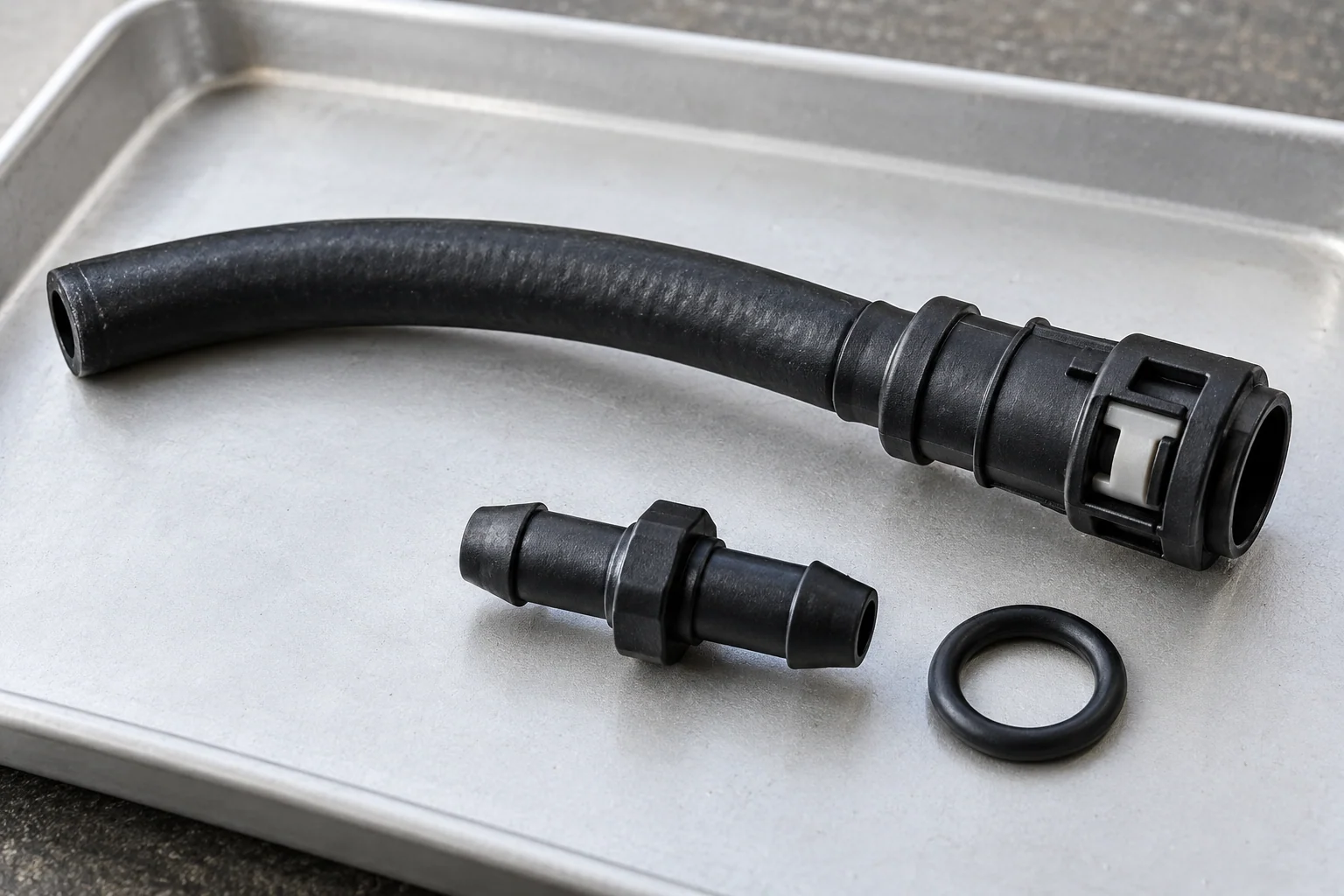
Any proposed cause needs evidence. Where fitted, the cap and filler seal deserve a check, along with the relevant lines and connections. A valve that fails to seal can also interfere with a leak test without leaving an obvious cracked hose.
Tell the shop about recent refueling, tank work or previous EVAP repairs. Keep the complete code list: a valve-circuit code calls for electrical checks, while a leak complaint needs the appropriate sealing and functional tests. Related codes should not all be treated as the same fault.
What should an EVAP diagnosis establish?
Ask how the system was prepared for testing, which section failed, and what observation identifies the problem. An appropriate smoke test can locate a leak, but valve position and test setup matter. Do not connect unregulated shop air or improvise a smoke source around fuel vapors.
A commanded valve test or other functional check may be needed to distinguish a leaking valve from a damaged line. The test strategy depends on the design rather than on whether the vehicle badge says Chevrolet, Toyota, Volkswagen or another make.
Why does the exact model and build date matter?
Ford bulletin 10-1-3 is a specific example: it addresses certain 2009 Escape and Mariner Hybrids and 2010 Fusion and Milan Hybrids built on or before April 6, 2009, with P0442, P0456 or P1450. It calls for EVAP diagnosis and an applicable PCM calibration update.
That historical instruction does not mean every Ford with P0442 needs programming. A technician must verify current service information, build applicability and the vehicle's existing calibration before choosing that path.
How do you confirm that P0442 is fixed?
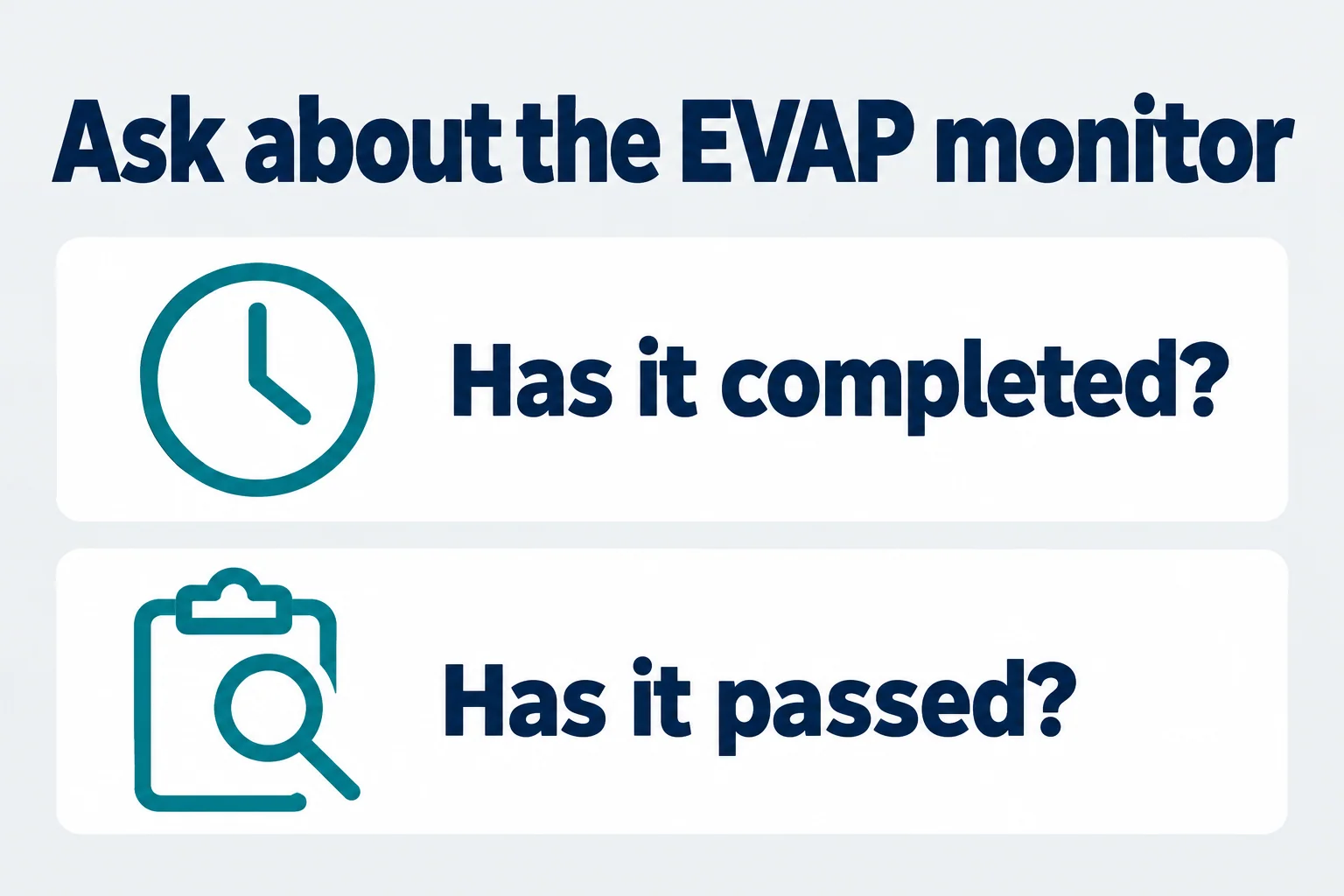
The repair should address the demonstrated leak or functional fault, followed by the applicable verification test. Ask whether the EVAP monitor has completed and passed; simply clearing the code does not show that it has.
There is no universal number of miles that guarantees the monitor will run. Keep the findings and the part or calibration details so a returning warning can be investigated without starting over.
Sources & further reading
- HELLA — OBD-II powertrain DTC definitions (English)
- snapon.com — EVAP System Operation and Testing
- MOTOR — Chrysler's Evap System
- Ford Motor Company — TSB 10-1-3
Vehicle designs and maintenance requirements vary. Consult the owner’s manual for your exact vehicle and seek a qualified inspection for a specific fault.