Emissions
P0496: Causes, Diagnostic Tests and Repair Options
Published:
Edited and fact-checked by: Jacob Bowen
General information; vehicle-specific diagnosis requires an inspection. How we prepare our guides · This page reserves space for ads. Advertising policy · Privacy choices
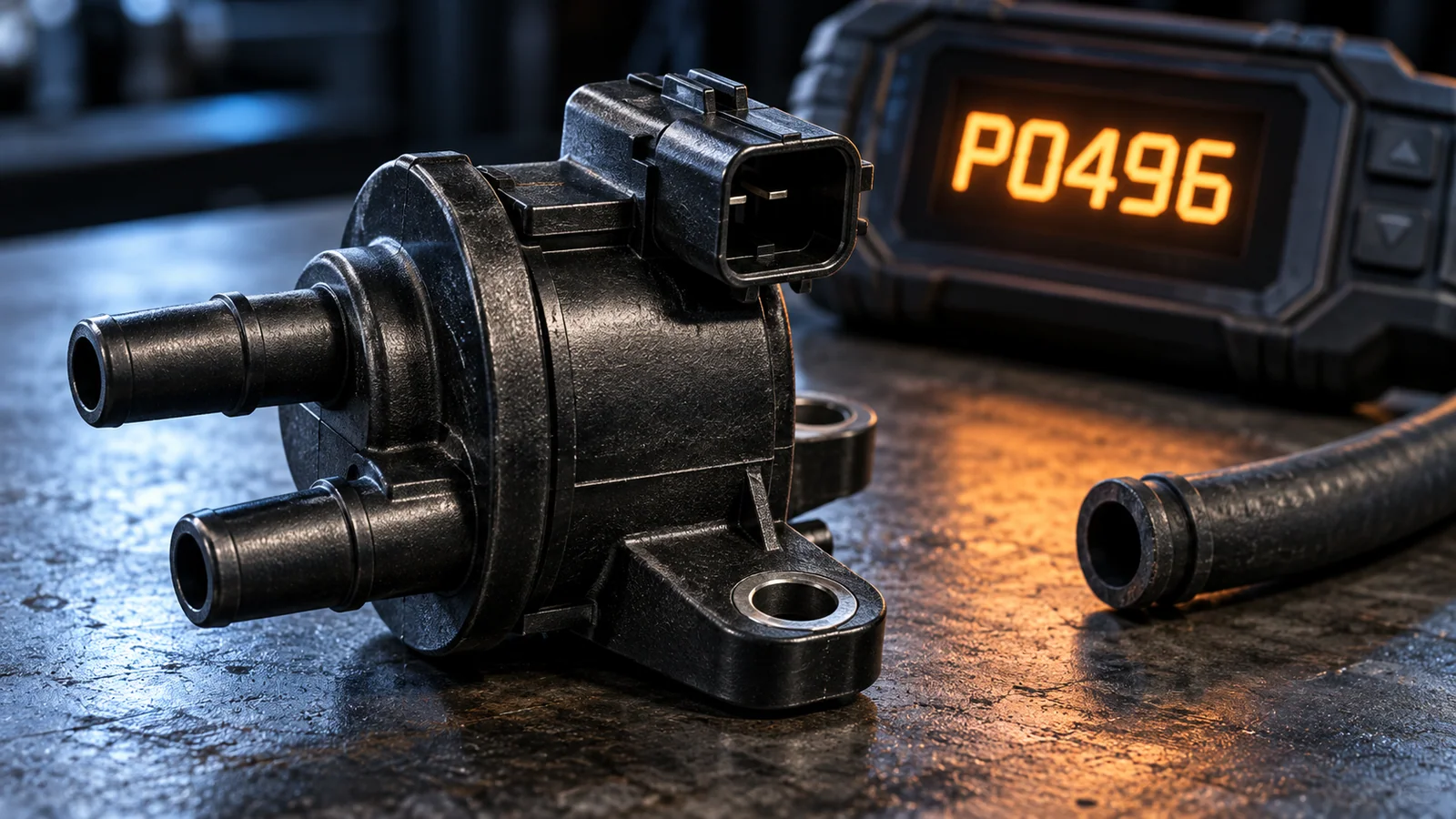
The quick answer
P0496 generally means excessive EVAP purge flow; on many GM applications it specifically describes flow when purge is not commanded. A purge valve that does not seal is one possibility, but the code does not prove the valve failed. Confirm the vehicle's definition and test its operation before buying a part.
What is purge flow, and why would it be a problem?
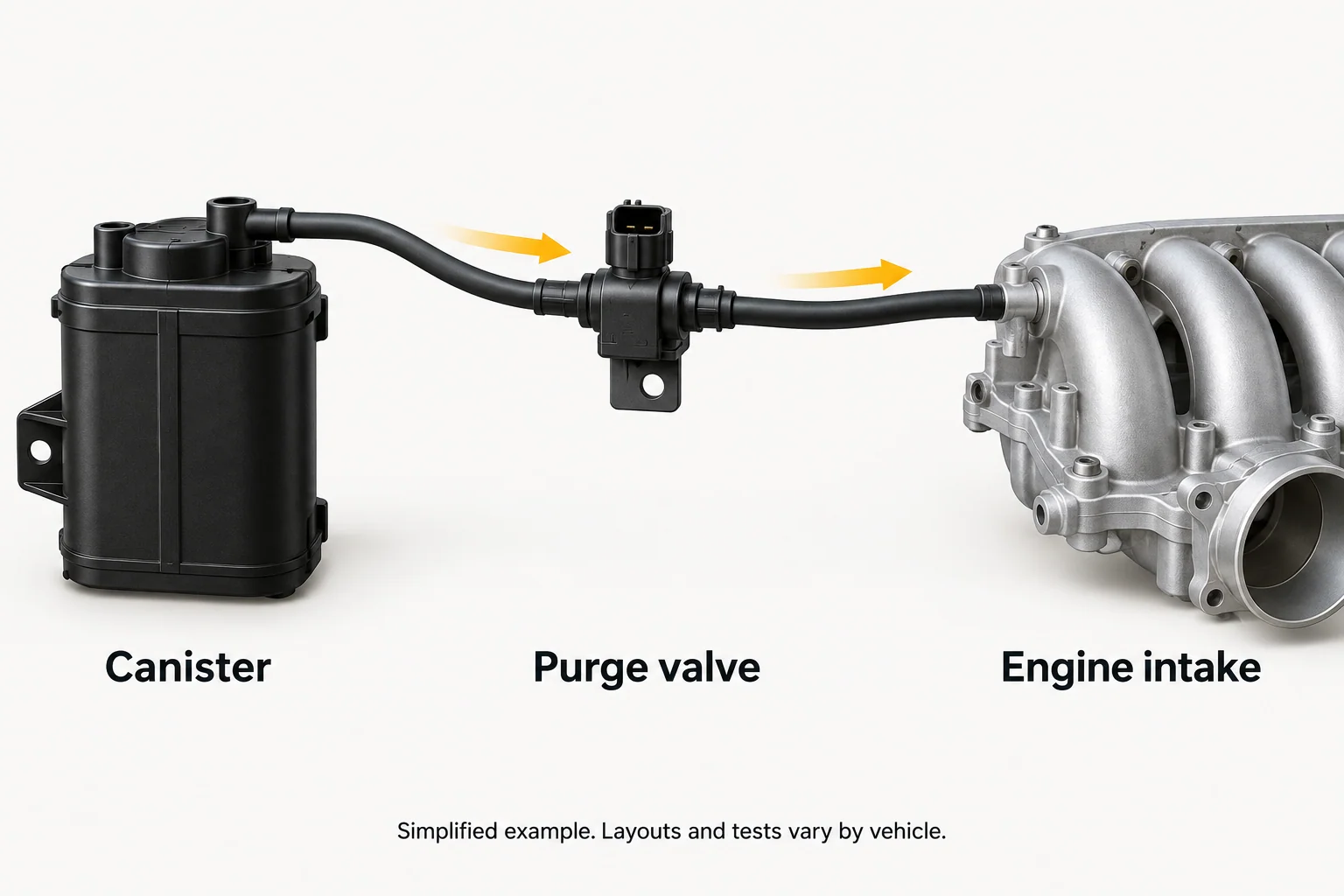
The charcoal canister stores fuel vapor, and the purge valve controls its delivery to the engine. That flow must suit the engine's operating conditions. Unintended flow can interfere with mixture control rather than simply release a harmless puff of vapor.
Related faults can produce an erratic idle, rough running or difficulty starting. Record when symptoms occur, including any connection with refueling, but do not treat that timing as a diagnosis.
Is this the same as a loose gas cap or an EVAP leak?
No. P0496 is a flow-related code, while other EVAP codes identify particular leak or circuit conditions. A cap problem should be established on its own evidence. Replacing a cap does not demonstrate that unwanted purge flow has stopped.
Read the full code and any companion codes for the exact engine. A vehicle with additional purge hardware may need a different test arrangement from the conventional system shown in a general diagram.
What should the technician test?
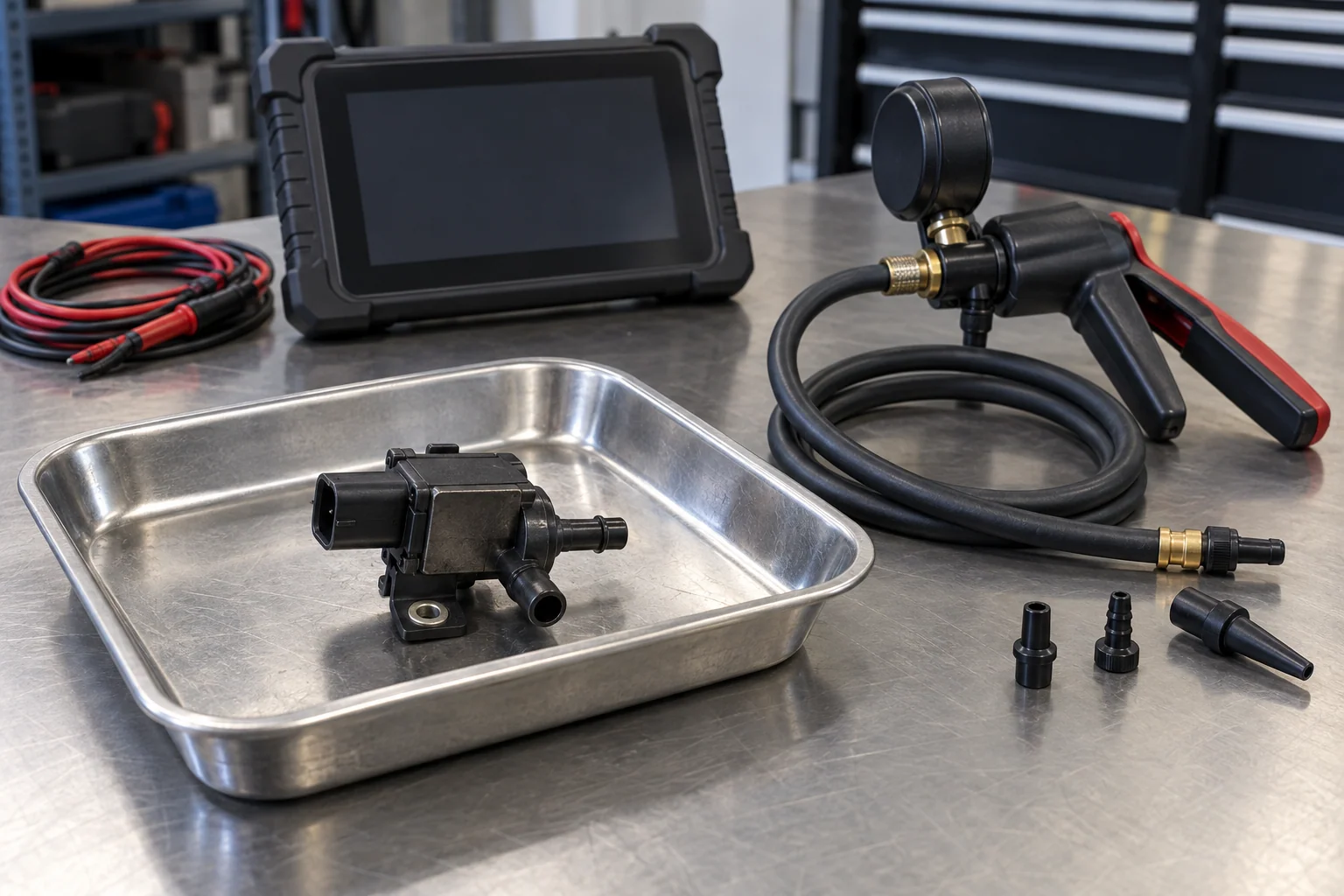
Inspect the relevant lines, connections and electrical connectors for damage. Then distinguish what the computer commands from what the valve and vapor path actually do. The manufacturer's procedure determines the operating conditions and the appropriate sealing or pressure-response checks.
Pico's purge-solenoid guide describes testing the control signal using manufacturer information. That electrical check is useful, but a plausible control signal alone does not establish that the valve seals mechanically. Ask what test showed unwanted flow and whether the valve was supposed to be closed at that point.
If the circuit behaves incorrectly, investigate its supply and control path. If the valve fails the applicable sealing test, determine whether contamination or another system fault contributed before replacing it.
Can replacing the purge valve be only part of the repair?
Yes, on an application with a verified contributing fault. GM bulletin 17-NA-409 describes oil or contamination causing a stuck purge valve on specified 2014–2018 new-body-style Impalas with the 3.6-liter LFX and aluminum camshaft covers.
For that documented condition, GM calls for the revised cam-cover gasket after the purge valve has been validated as the cause and replaced. This is a narrowly defined example, not a gasket recommendation for every Traverse, Enclave, Encore or vehicle carrying P0496. Confirm the bulletin and current service instructions against the actual vehicle.
What should you do before approving the repair?
Ask for the failed test, an estimate tied to the confirmed fault and the plan to verify operation afterward. A recently cleared warning light is not enough. No single valve price represents every P0496 repair.
Arrange service promptly if starting or idle quality changes. If the engine stalls, runs severely rough, or you notice a strong fuel odor or liquid leak, stop somewhere safe and arrange assistance. Avoid ignition sources around suspected fuel leakage.
Sources & further reading
- HELLA — OBD-II powertrain DTC definitions (English)
- Pico Technology — Carbon canister purge valve solenoid (voltage) | Automotive oscilloscope test
- HELLA — Activated charcoal canister – facts & info
- General Motors: bulletin 17-NA-409, Impala purge-valve contamination
Vehicle designs and maintenance requirements vary. Consult the owner’s manual for your exact vehicle and seek a qualified inspection for a specific fault.