Emissions
P0452: Causes, Diagnostic Tests and Repair Options
Published:
Edited and fact-checked by: Jacob Bowen
General information; vehicle-specific diagnosis requires an inspection. How we prepare our guides · This page reserves space for ads. Advertising policy · Privacy choices
The quick answer
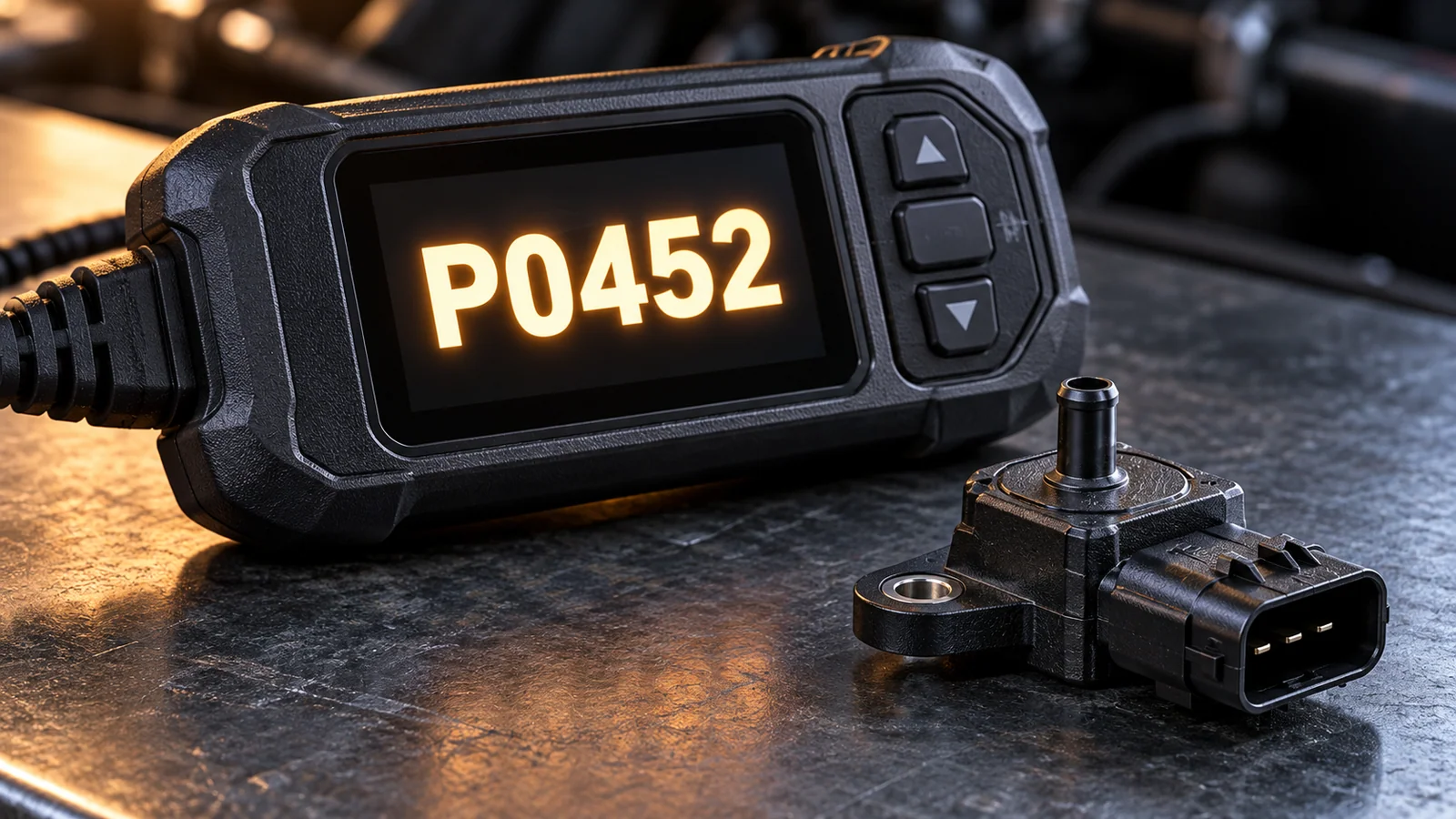
P0452 means the evaporative-emissions pressure-sensor input is too low for the system’s expected operating range. It points diagnosis toward the sensor signal and its circuit; it does not confirm a loose gas cap or prove that the tank has low fuel pressure. Check the exact vehicle’s definition and diagnostic procedure before replacing parts.
Which pressure does P0452 refer to?
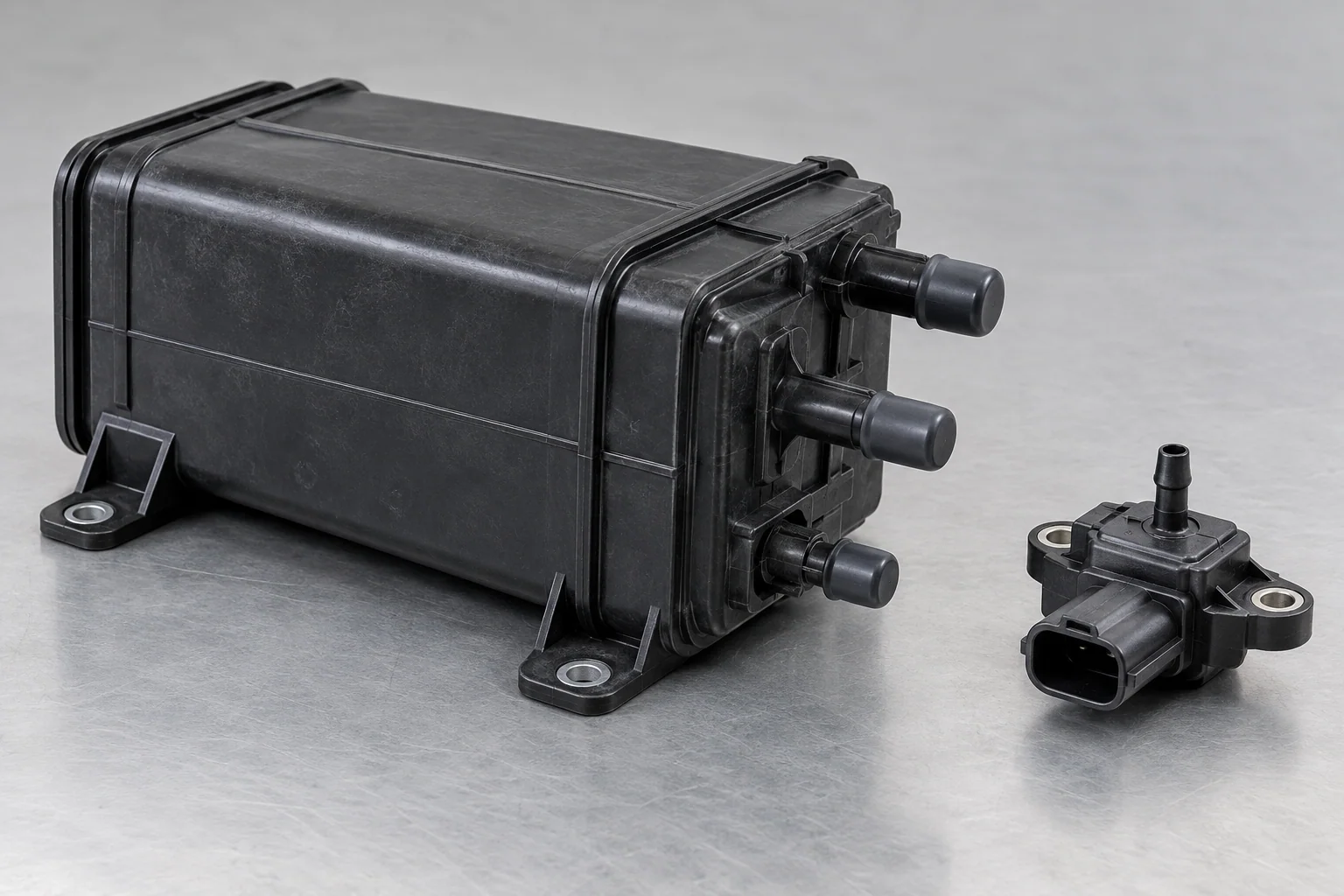
The EVAP system captures fuel vapor. Its pressure sensor helps the control system evaluate conditions in the tank or vapor system. This is different from the fuel-delivery pressure used to supply the engine.
HELLA lists P0452 as EVAP pressure-sensor low input. Ford’s 2020–2023 gasoline OBD summary describes it as fuel-tank pressure-sensor circuit low. The terminology can vary, so identify the actual sensor and monitor for your vehicle.
What should be checked before replacing the sensor?
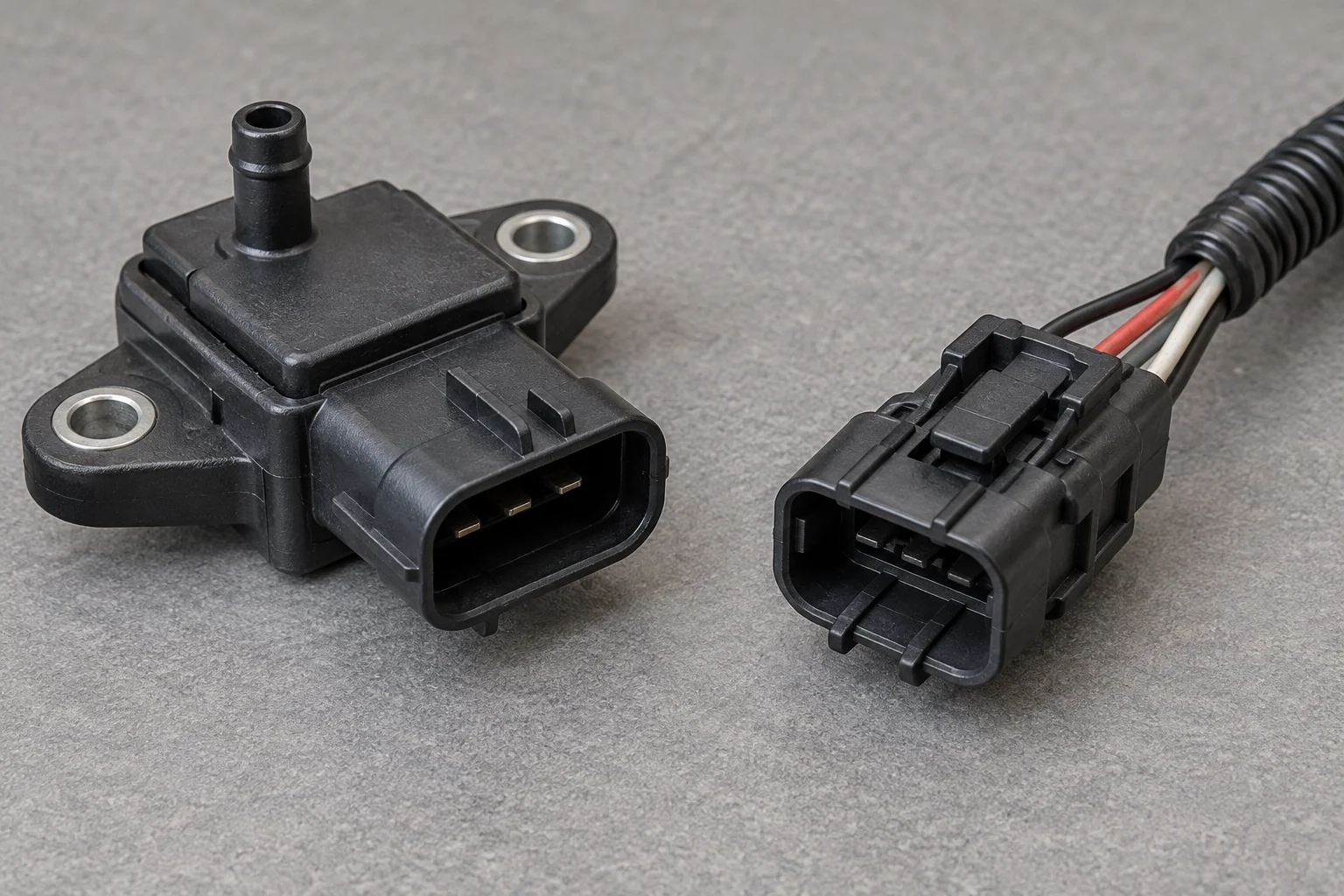
Record the complete codes and available operating data before clearing them. The technician should inspect the relevant connector and harness, then check the sensor’s specified supply, ground and signal circuit.
Compare the scan-tool pressure reading with the electrical measurement and the conditions prescribed by the service procedure. The aim is to distinguish a faulty sensor from an incorrect supply, damaged wiring or a signal that does not represent actual pressure. Low input alone cannot make that distinction.
Will tightening the gas cap or smoke testing fix it?
Neither should be assumed to fix a low-input circuit fault. A leaking cap and an electrically implausible sensor reading are different diagnostic branches. A reliable pressure signal matters before using that signal to judge system sealing.
Snap-on describes separate EVAP components and vehicle-specific tests. Leak or commanded-flow testing can be useful when the diagnostic path calls for it, but it does not replace electrical checks for P0452. Do not pressurize the tank with improvised equipment.
Are the same readings correct on every vehicle?
No. Ford publishes a pressure-to-voltage relationship and monitoring thresholds for the systems covered by its summary. Those values describe that application; they are not universal meter targets.
Ask which service specification the technician used. Sensor location, access and repair procedures also need to be established for the exact vehicle rather than inferred from the code number.
What confirms that the repair worked?
The shop should demonstrate a plausible sensor signal and complete the applicable verification procedure after repairing the confirmed wiring, connection or component fault. Simply erasing P0452 does not show that the problem is resolved.
If fuel is leaking or a strong fuel odor is present, stop using the vehicle and arrange safe inspection. Report those symptoms when booking service rather than treating the problem as a warning light alone.
Sources & further reading
- HELLA — OBD-II powertrain DTC definitions (English)
- Ford Motor Company — 2020–2023 MY Gasoline OBD System Operation Summary
- snapon.com — EVAP System Operation and Testing
Vehicle designs and maintenance requirements vary. Consult the owner’s manual for your exact vehicle and seek a qualified inspection for a specific fault.