Ignition and engine control
Throttle Position Sensor: Symptoms, Diagnosis and Repair Options
Published:
Edited and fact-checked by: Jacob Bowen
General information; vehicle-specific diagnosis requires an inspection. How we prepare our guides · This page reserves space for ads. Advertising policy · Privacy choices
The quick answer
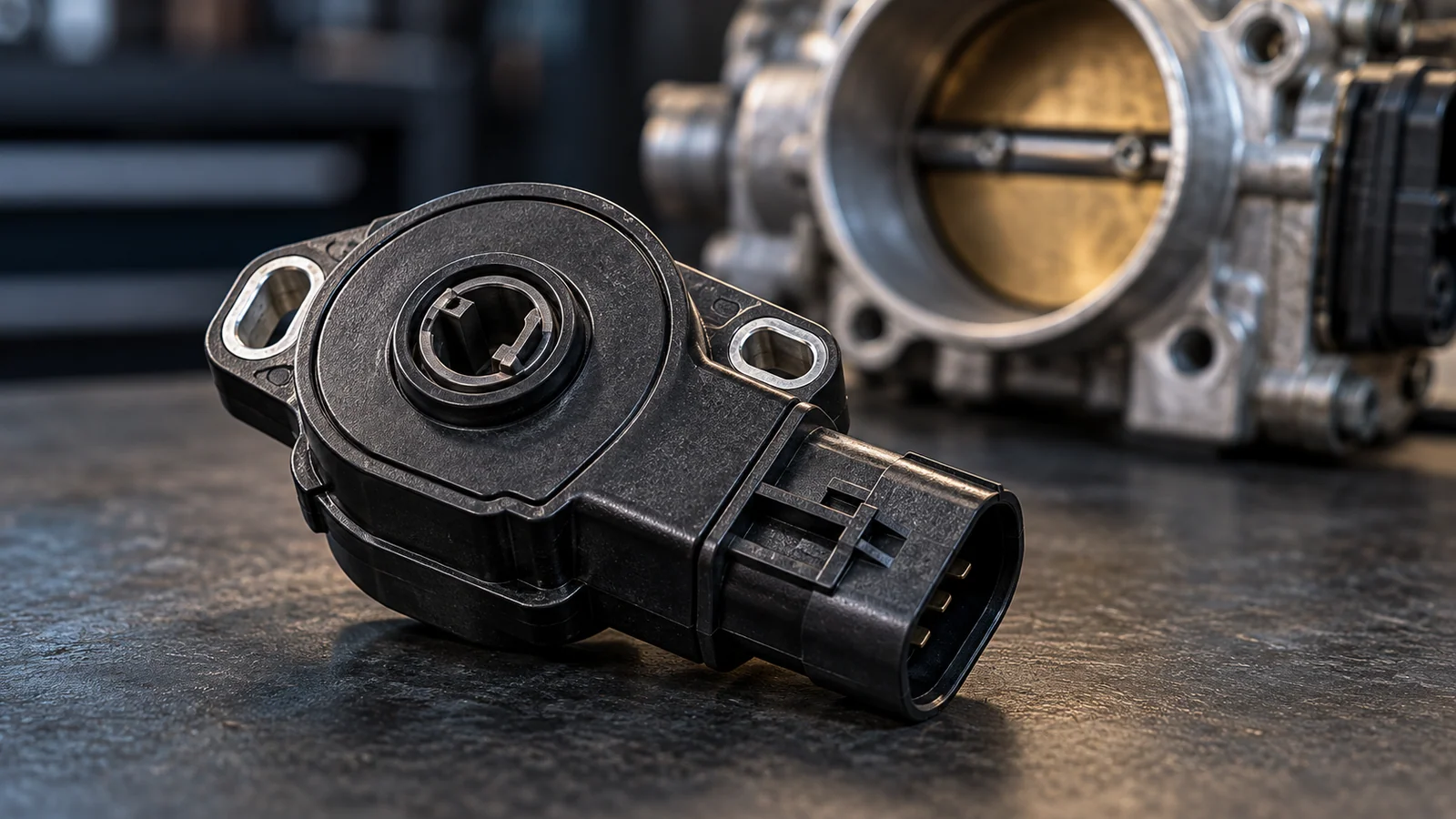
A faulty throttle-position sensor can cause hesitation, erratic running, poor acceleration or a warning light. These symptoms also have other causes, so the sensor should be tested before replacement. Diagnosis checks its supply, ground and position signal, along with wiring and the correct operation of the throttle assembly.
Is a throttle-position sensor the same as a throttle switch?
Not necessarily. A position sensor reports throttle angle, while the switch design described by HELLA identifies idle and full-load positions. These components require different tests.
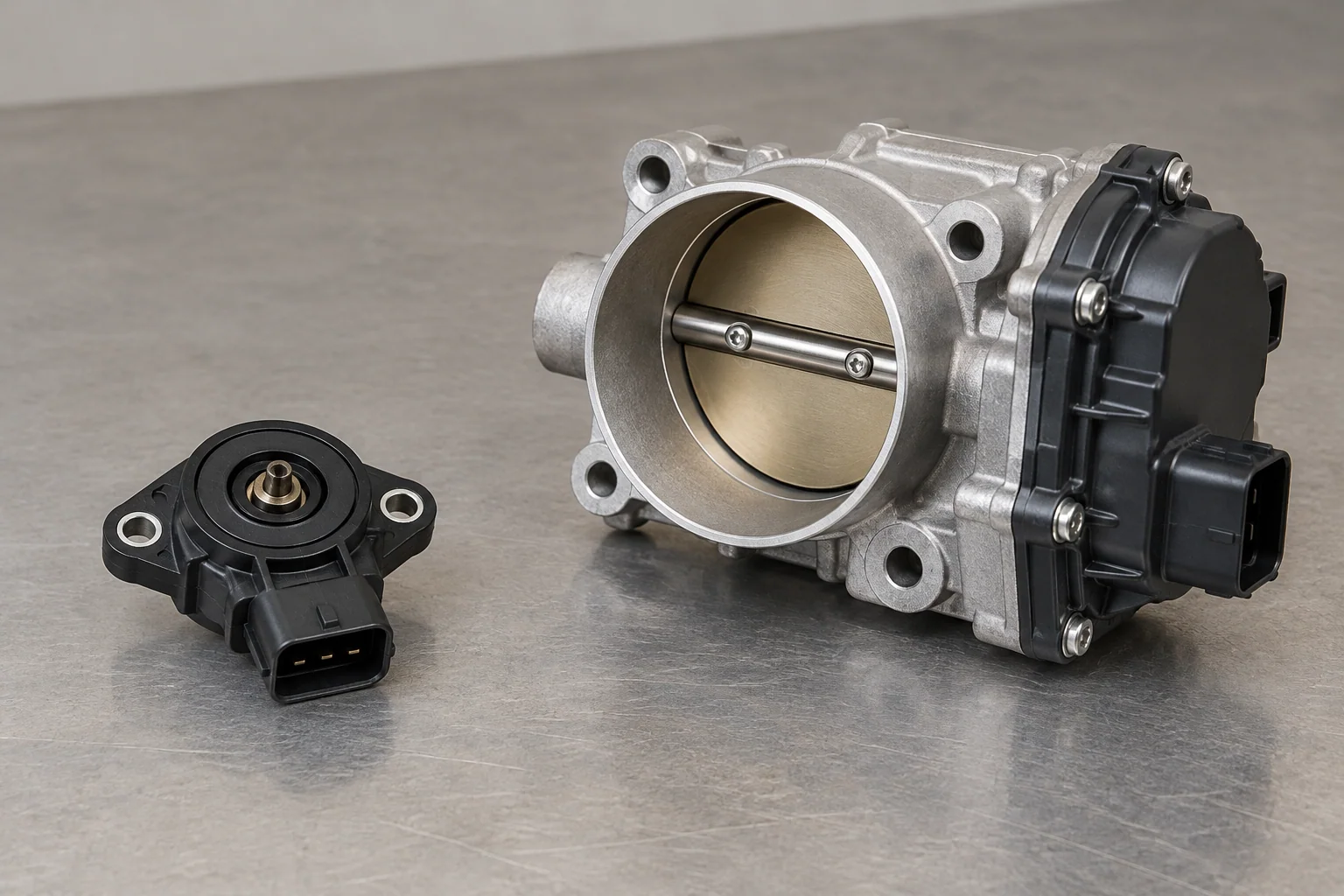
Some position sensors are separate parts; others are combined with the throttle actuator. Confirm the year, engine and assembly design before ordering a sensor. For searches involving a 350 TBI engine, a GMC or a 7.3-liter diesel, the engine label alone is not enough to choose a test or determine where the relevant position signal originates.
Which symptoms are useful to report?
Describe whether the engine hesitates during pedal movement, starts poorly, stalls or accelerates unpredictably. Record warning lights and the conditions when the problem occurs. Pico lists several of these symptoms for potentiometer-type throttle sensors, but none confirms the part by itself.
If acceleration response is unreliable, stop safely and arrange inspection or recovery. Do not drive in traffic while experimenting with the throttle or trying to reproduce a severe symptom.
How is a throttle-position sensor checked?
The technician identifies the circuit from vehicle service information and checks the electrical supply, ground, connections and signal response. For a potentiometer, the output should change consistently with movement. Pico describes using an oscilloscope to examine that response for interruptions.
A multimeter can help with specified circuit checks, but the correct test depends on the design. Do not apply generic terminal numbers, resistance readings or a sample voltage range to every throttle assembly. A damaged connection or wiring fault needs to be separated from an internal sensor fault.
Can cleaning fix a throttle-position sensor?
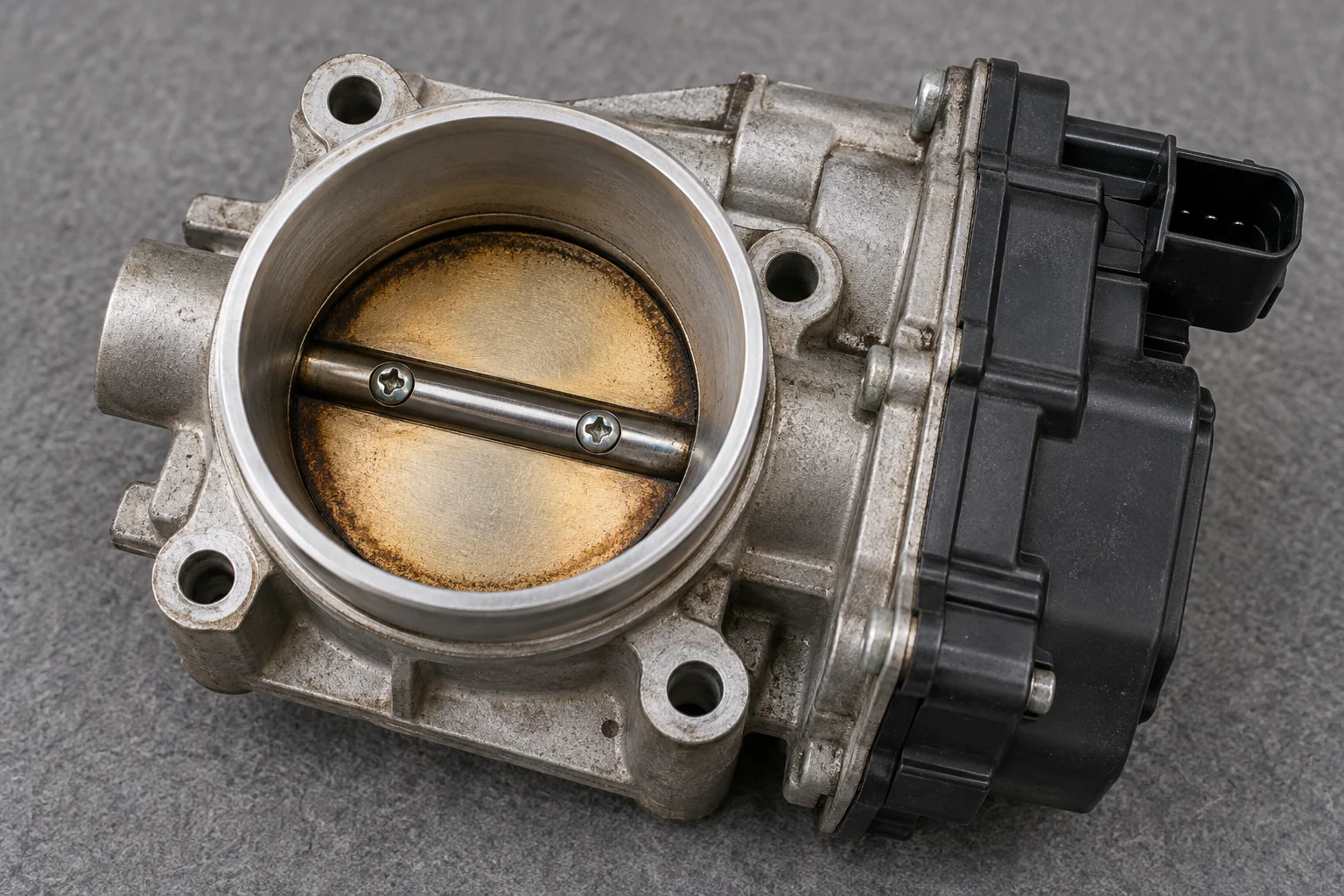
Cleaning deposits from a throttle body is different from repairing its position sensor. A worn resistance track, internal electrical fault or damaged connection is not established—or repaired—simply by spraying cleaner on the assembly.
Avoid opening or flooding the sensor and do not force a throttle plate without the prescribed procedure. If contamination or mechanical interference is suspected, have it assessed using the manufacturer’s service instructions. Repair should address the confirmed cause rather than begin with an assumed cleaning cure.
What should happen after a confirmed sensor fault?
Ask whether the sensor is serviceable separately or supplied with the assembly, and whether the procedure requires adjustment or adaptation afterward. The answer depends on the actual part and vehicle.
The shop should verify correct signal response and operation after repair. Request an explanation of the test that identified the sensor, especially if replacing the whole throttle assembly is proposed.
Sources & further reading
- Pico Technology — Throttle position sensor (potentiometer) | Automotive oscilloscope test
- HELLA — Throttle valve switch – function & troubleshooting
- MOTOR — Foreign Service | Throttle Position Sensor
- HELLA: throttle-position potentiometer diagnosis
Vehicle designs and maintenance requirements vary. Consult the owner’s manual for your exact vehicle and seek a qualified inspection for a specific fault.